Authentic $3.80 Penang Char Kway Teow By Penang-Born Hawker
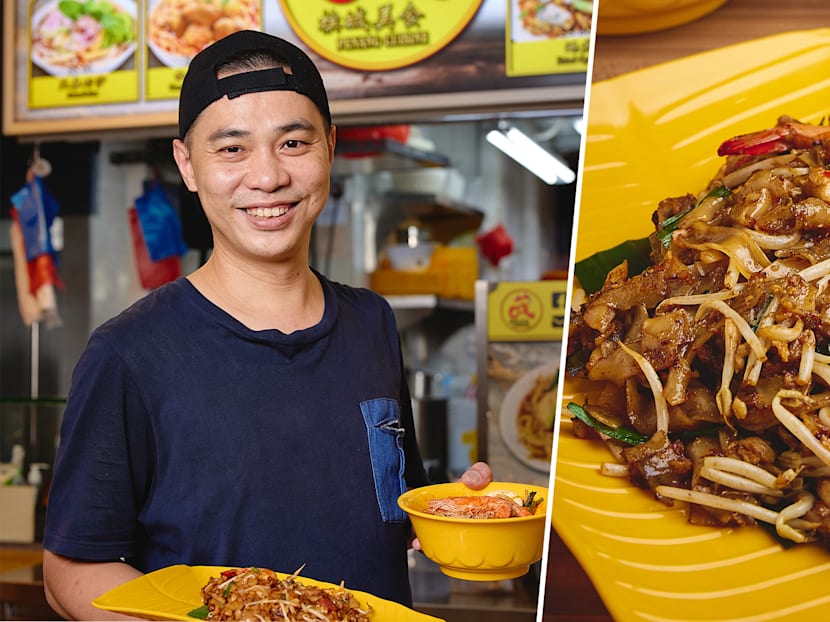
The hawker first cooked the dish when he was 12 years old.
No trip to Penang is complete without a tour of the street food paradise’s greatest hits. Prawn noodles, char kway teow and laksa are just a few examples.
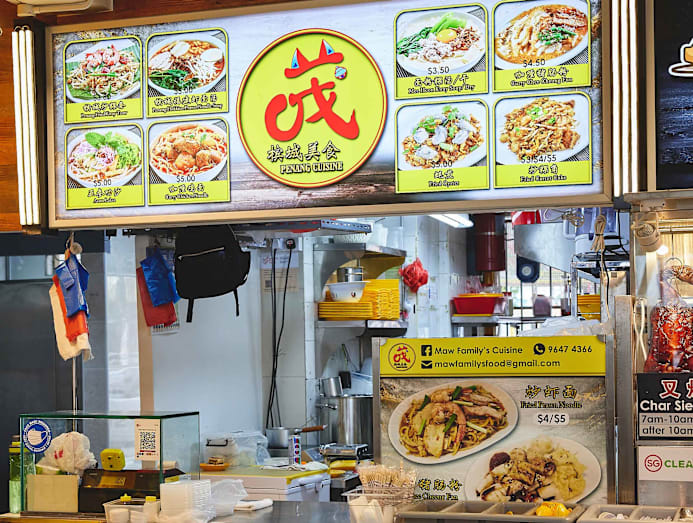
With overseas jaunts anywhere out of the question for now given the Covid-19 situation, 8days.sg looks to Maw’s Penang Cuisine, a new hawker stall opened by 43-year-old Penang-born Tan Song Maw and two partners (who declined to be interviewed) on May 15. He serves up, among other dishes, a $3.80 plate of Penang-style char kway teow – which differs from the Singaporean version mainly ’cos sticky sweet dark soy sauce is absent. Instead, you get paler noodles gently tinged with red from the chilli — fried liberally with lard up north.
All photos cannot be reproduced without permission from 8days.sg
Though the soft-spoken hawker was born on Penang island, he relocated with his family to Alor Setar in Kedah at a young age. “I’ve only got a primary school education. When I was about 12 years old, my mum started getting us to help cook at her stall,” he says in Mandarin. “That’s where I started cooking char kway teow.” She operated from a pushcart and sold prawn mee, lor mee and char kway teow, he says.
He first came to Singapore in 1996 to work for three years at a zi char kitchen, before heading back to Alor Setar. Thereafter, he cooked at his mother’s stall till 2015 and later relocated to Johor to set up his own char kway teow joint in Permas Jaya.
His younger brother eventually took over the running of that stall, and Song Maw made his way to Singapore in 2020 (“just before things were shut down”, he says) once again. The S Pass holder started working in Munch Coffeeshop at Upper Boon Keng Road. He manned the cai png stall there until the kopitiam underwent renovation earlier this year.

Post-renovation, there was a vacancy at one unit in the kopitiam. He decided to strike out on his own with his partners, who used to work at the coffeeshop, and opened Maw’s Penang Cuisine. “It’s very, very hard to find any authentic Penang food in Singapore,” he says. “And even then, most stalls only sell Penang food that locals are familiar with, like char kway teow.”
The recent news reducing dine-in capacity from five to two at kopitiams has “made doing business difficult.” “Suddenly, there’s no one. At most, people come and dabao.”
Unlike most hawker stalls in Penang, Soon Maw’s got quite the extensive menu. “In Penang, people usually focus on just a few items. But here, we need more variety so people [who aren’t used to the cuisine] can find something they like.”
He’s had a few customers asking for lesser-known Penang dishes like Hokkien lor – a concoction common in Penang where prawn mee (known as Hokkien mee there) is often sold alongside lor mee. The thick, viscous lor is mixed with the umami-laden prawn broth, resulting in a rather unique amalgamation of soupy textures. “When someone asks for that, I’ll know straight away that they’re from Penang,” he says. He eventually hopes to expand his offerings to include more of these unusual items.
Even so, he’s open to making some adjustments to suit local tastes. “Singaporeans cannot take as much spice. The first two weeks, everyone was coming back to complain about the assam laksa. So I had to tone it down,” he shares.
But there are just some things that can’t be negotiated. He says, “Some have asked me to switch the noodles from thick rice noodles to bee hoon or mee for assam laksa. The texture is completely different – it’s a different dish already.”

There are a total of ten items, ranging from the familiar – char kway teow, fried carrot cake or Penang-style prawn mee – as well as slightly harder to find dishes, like curry chee cheong fun (which hails from Ipoh).
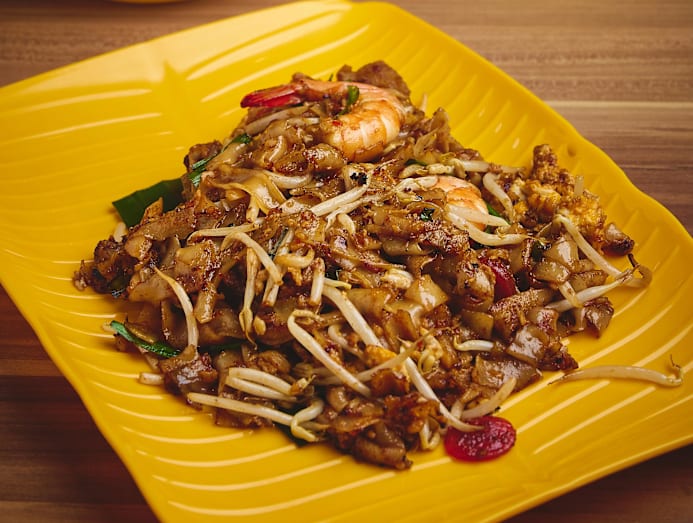
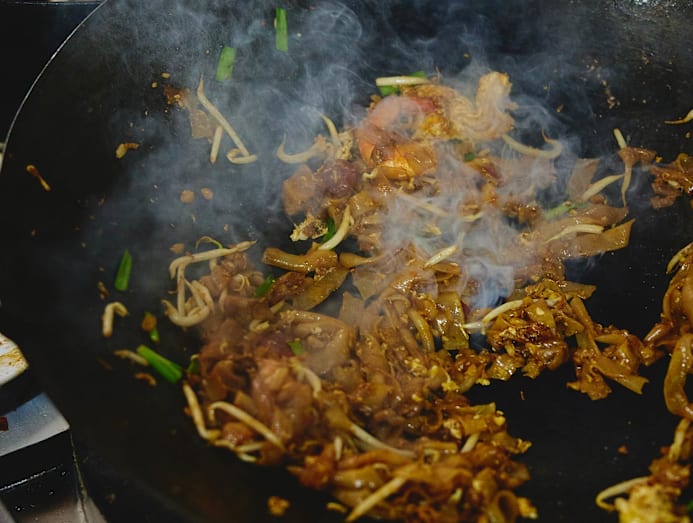
Penang char kway teow, like the local version, has just a few main ingredients. Flat rice noodles, lup cheong (Chinese sausage), chives, beansprouts, cockles and lard. Song Maw fries the ingredients at a “maximum of three plates at a time. If not, it won’t have the wok hei,” he explains simply.
He stir-fries the noodles over a roaring flame with practiced ease – after all, it’s the dish he’s spent the most time with. It's drier, less sweet, and paler than what you’d find in Singaporean versions. There’s a strong hit of wok hei, though the noodles themselves are rather light in flavour. There’s also a hint of that pork lard, with the plump cockles and lup cheong providing a bit of bite. However, the kway teow is a little darker than what you'd typically find at Penang stalls simply because that's how Song Maw's mum used to fry it back home. Quite delish, even if we can’t say it’s 100 percent as good as the best we've had up north.

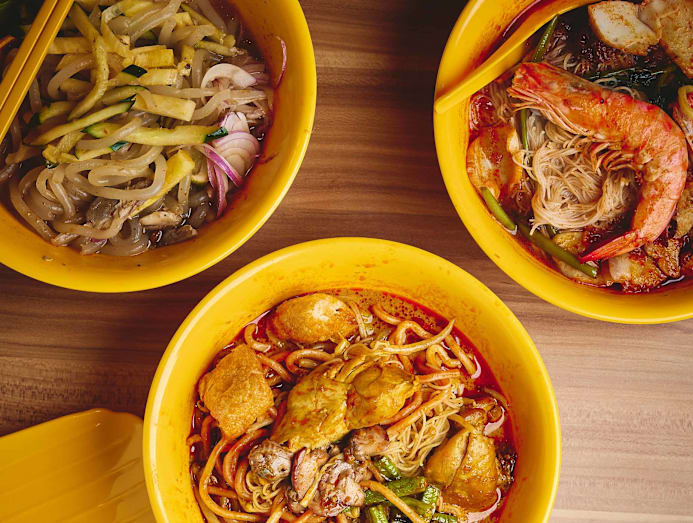
The soup base is a combination of sour (from assam, tamarind in Malay), savoury (from the addition of mackerel), and spicy. Unlike some joints, Song Maw refuses to bolster the stock with additional canned sardines, a shortcut that helps hawkers skip the lengthy deboning process when you use only fresh mackerel.
Unfortunately, the hawker’s also limited by how much he can do. He debones the mackerel himself every morning, which means that there simply isn’t enough fish to go around. The soup base suffers – it’s a tad too mild, with not enough spice or body to ward off the sourness from the assam.
The bouncy, thick rice noodles are helped along with a splash of intensely savoury, pungent, hae ko (fermented shrimp paste) and the usual fixings of julienned veg like pineapple, cucumber and onions. Not our fave.
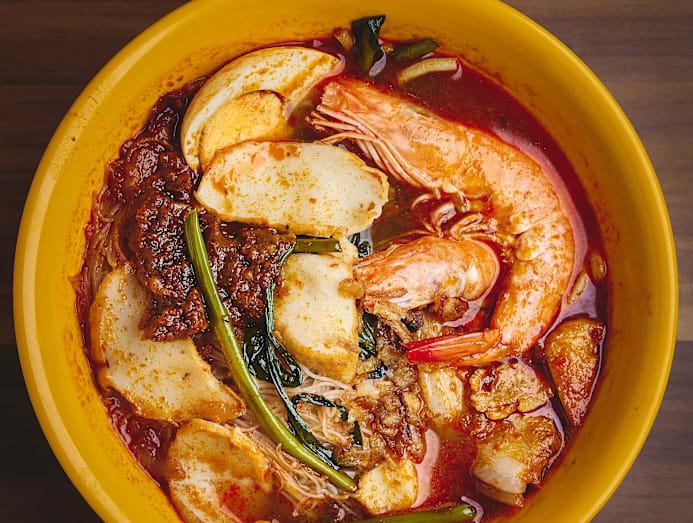
Unlike Singaporean prawn mee soup, the Penang version contains a dollop of sambal stirred into the soup, sometimes with the prawn heads blitzed to form a murky, richer broth. Here, you get a mix of sliced lean pork loin and pork belly, two prawns, fishcake and half a hard-boiled egg with your bowl of noodles (bee hoon or mee are the usual options). The stock comprises prawn shells and pork bones, boiled for “around three hours”. It’s flavourful enough with a pronounced brininess from the crustaceans, though we feel that it could be a little more robust.
The soup is stirred with an umami-laden chilli paste made with dried shrimp, which gives it a little more body with a tinge of spice. Quite good and true to the ones found in Penang, though the char kway teow is better.
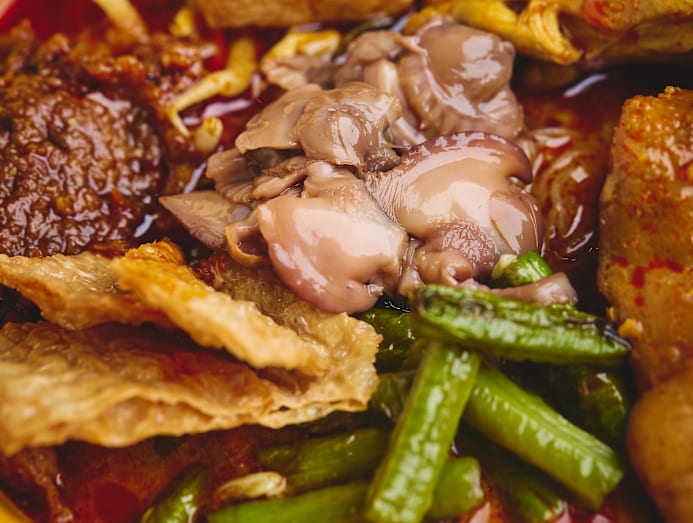
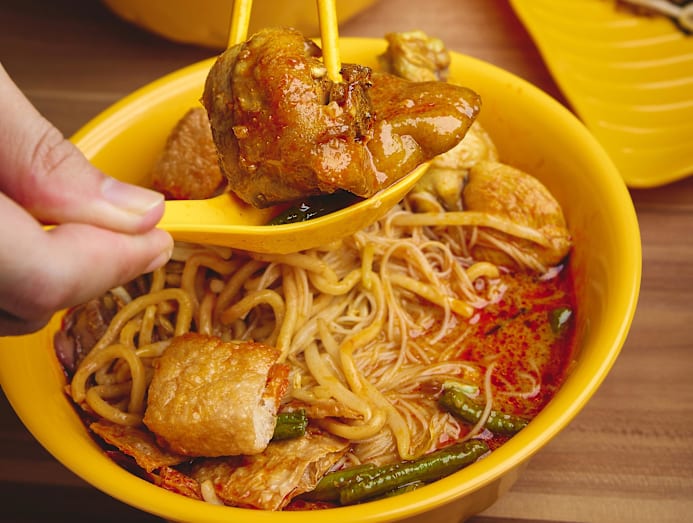
This dish is usually called curry mee in Penang – though the version here doesn't come with the usual soupy lemak broth up north (so coconutty that it’s white, flecked with bits of red) bolstered with a spicy rempah. The consistency of Song Maw’s curry mee broth is closer to a richer curry with a thick, creamy mouthfeel. “Depends on where you go [in Penang]. Some are thinner, but the one we do is thicker,” he says.
It is indeed very gao and tasty, but gets a bit jelak after a while. Accompaniments include tau pok, beansprouts, kangkong and cockles, as well as chicken.
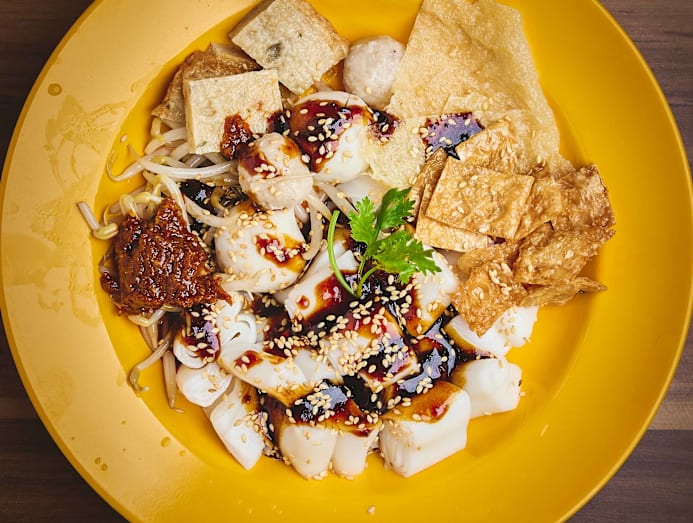
Song Maw claims to have come up with this dish himself, calling it an adaptation from “Northern-style chee cheong fun”. We’ve never had rice noodle rolls like this – you’re getting a splash of “secret sauce” (which tastes like it has hae ko in it) and various components like meatballs, tofu skin and beansprouts, plus chilli sauce. Everything from the rice noodle rolls to the bits and bobs are factory-made, though the hawker aims to “make the meatballs by hand from next month”. It’s interesting and savoury enough to share as a side dish, but not something we’d recommend in particular.
Not everything at Maw’s Penang Cuisine tastes exactly like what you’d get up north, but both the prawn mee and especially the char kway teow are yummy enough to tide you over till your next trip to the Malaysian street food paradise.