Ex-Construction Worker Serves Bangladeshi Fare With S’porean Boss At Bangla Lim
Expect milder-tasting curries served as bento sets at this new stall. Migrant workers enjoy a discount here.
While it’s easy to find authentic Indian food in Singapore – whether you’re partial to creamy yogurt-based North Indian cuisine and its proclivity for flatbreads, or spicier South Indian-style cooking – Bangladeshi fare is less common.
The country is located a little further east on the Indian subcontinent, and is known for grub that’s markedly spice-forward – though not fiery – with a focus on seafood, thanks to the nation’s proximity to the ocean and its abundance of inland rivers.
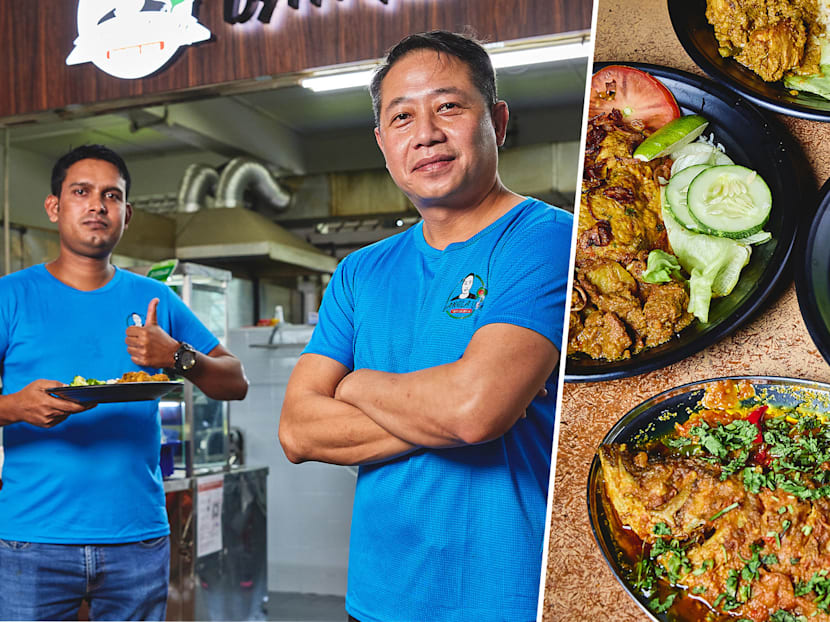
Bangla Lim, a food stall that opened on June 18 in an industrial canteen in Eunos, hopes to fill that gap. It’s fronted by Lim Boon Kian, 44, a self-professed Singaporean foodie who owns a semiconductor business, and his 31-year-old Bangladeshi head chef (who wanted to be known only as Yousof), who used to be a construction worker at a scaffolding company. Both are at the stall daily, though the cooking’s done by Yousof.
All photos cannot be reproduced without permission from 8days.sg
Like many others, Boon Kian’s business was badly affected by the travel bans due to the Covid-19 pandemic. “I used to spend about half my time running around China and Thailand,” he says. “After [Covid-19], I basically had no business.”
He eventually found work last April as a part-timer with the Ministry of Manpower for the next few months, where he helped manage migrant workers’ daily needs amid a sharp rise in Covid-19 cases concentrated in their sprawling mega-dormitories.
One of his main responsibilities involved overseeing dormitory residents as they collected their food from caterers, which is where he learned about “the differences between Bangladeshi and Indian food.” “Indian food is a lot more common here, so Bangladeshi workers usually end up eating the same food,” he says.
Once things got better “around August”, he attended a friend’s construction company event where Yousof happened to be cooking. “That really opened my eyes [to Bangladeshi cuisine]. I talked to Yousof to see how we could turn this into a business,” he says. Lim now works as a director for his friend’s construction company, and the food stall Bangla Lim is owned by said company. They applied for Yousof’s work permit to be converted into an S Pass so he could become a cook.
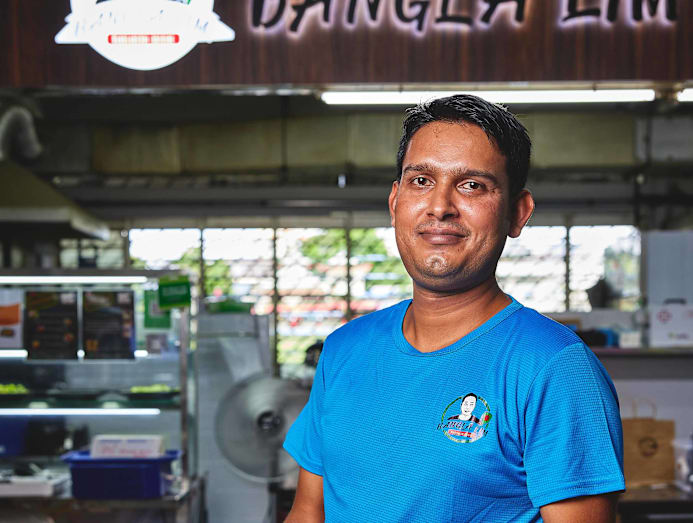
Yousof left his home in Cumilla, Bangladesh, fourteen years ago and has worked in Singapore since. “I learnt to cook after six months in Singapore – I just looked at [recipe videos] on YouTube and tried,” he says. “My boss (Boon Kian’s friend) tried my cooking once and liked it. Slowly, he asked me to cook during small parties, company events, [things] like that.”
Though he wasn’t permitted to leave his dormitory – he stayed in a smaller, 30-man dorm repurposed from an industrial building – for around “four months”, he wasn’t too nervous about getting infected with the virus as none of the others in his dorm contracted Covid-19. Food was also catered for daily by their company – cooking in the communal kitchen wasn’t permitted back then.
His main adversary was the monotony of lockdown. “All my friends [are from the] same company, we stay in the same dorm. But just bored, every day watch [videos on my] phone,” he says. To combat homesickness, he called his mother “every night”. The Bangladeshi hasn’t been home in five years — he was due back home this year to get married (via an arranged partnership), but has delayed his wedding thanks to the pandemic.
Eventually, work resumed and the use of communal facilities, including kitchens, were allowed once more. “I always had this dream to cook and sell Bangladeshi food. My only hobby is cooking, now it’s my job,” he shares. “When customers say [my food] tastes good, I’m happy.”
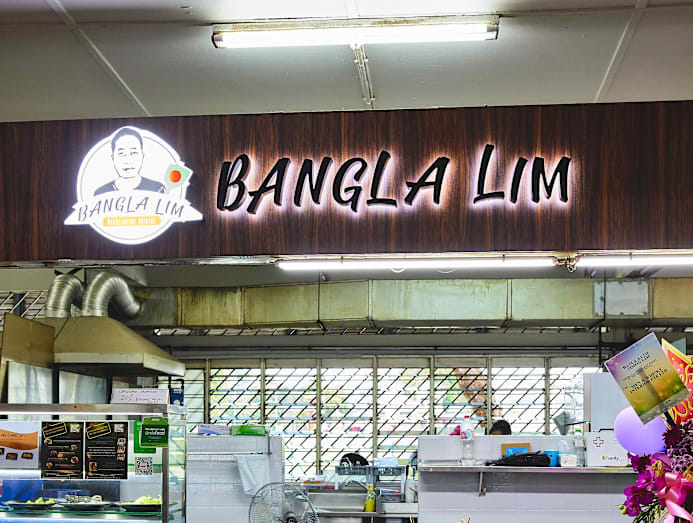
The stall’s name, Bangla Lim (and Lim's face), is everywhere — on T-shirts, paper bags and cutlery. “We wanted something with Yousof’s name, but he refused. He said ‘you’re the boss’, it should be you. I think it’s a cultural thing [about not claiming credit],” he says. “Eventually, we decided on Bangla Lim. It’s catchy and easy to remember.”
We asked if the name might stir up some controversy. “Bangla is how most Bangladeshi workers refer to themselves. It’s only Singaporeans who’ve used it as a derogatory term,” says Boon Kian. As for Yousof, he says simply, “I’m a Bangla, and [my] boss is Lim. When people see, and come, and eat, they’ll understand.”
That said, the hawker stall is fusion only in name. The recipes, Yousof proudly tells us, are authentically Bangladeshi. But he’s willing to compromise on one thing: “Maybe we’ll make something with more gravy. Singaporeans always ask for more gravy.”
The stall’s looking to provide Bangladeshi cuisine that’s a step above everyday grub. “[Migrant workers’] meals usually have a lot of rice and curry, with a bit of meat and veggies. It’s usually okay, when it’s fresh. The problem is they [collect] breakfast and lunch at the same time. So by the time they have their lunch, the veggies have turned bad,” says Boon Kian.
He adds: “We just want to serve something that’s authentic, but cheap enough to enjoy on weekends,” he says. Their food, which costs around $7 to $9 for a set, goes at a flat $5 for migrant workers. “It’s just a small gesture which we hope puts a smile on their faces,” Boon Kian says.
He also hopes that Singaporeans will come down to try the food. “We’re hoping to introduce it to anyone, [not just Bangladeshis]. Eventually, more people will get used to the food,” he says. They are in the midst of applying for a halal certification (Bangladeshis are predominantly Muslim), which is still in the works.
However, “business has been slow,” says Boon Kian. They haven’t had much walk-in business since they opened two weeks ago, with just a few orders from smaller dormitories nearby.
If you’re wondering how Bangladeshi food differs from Indian cuisine, Yousof explains: “It’s not so spicy. [Instead], it’s a little sweet, a little sour”.
Those flavours come in the form of different spice mixes used, or the addition of yogurt in some curries. “We tried to sell mutton rezala (a mild, sweet-tasting curry that’s a Bangladeshi signature), but not many people were buying it,” says Boon Kian.
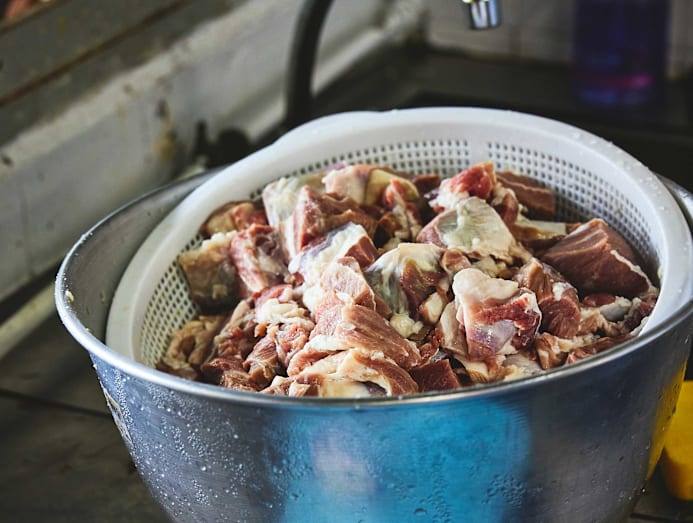
“Some people just buy [premade spice mixes] and cook. Here, we do [it] ourselves,” Yousof shares. He shows us clear plastic containers filled with powdered spices, some of which have been doled out into a mixing bowl - for mutton kacchi biryani, the Friday special.
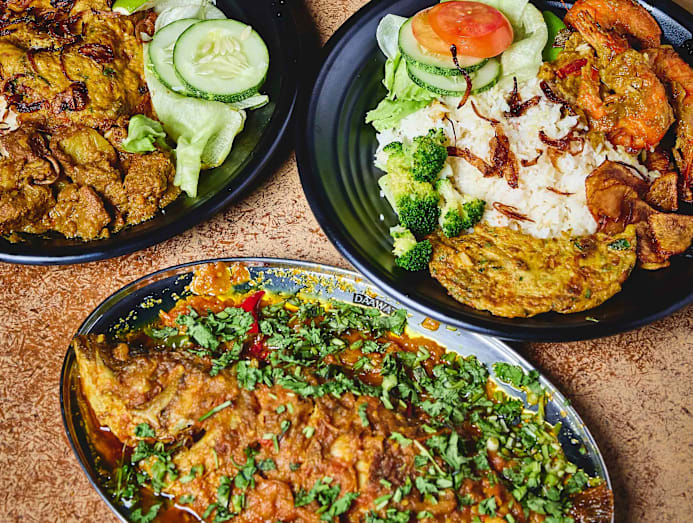
As for how the menu works, they’ve divvied up the stall’s curries into bento sets that come with an omelette, rice and veg on the side (boiled broccoli, and a simple tomato-and-lettuce salad).
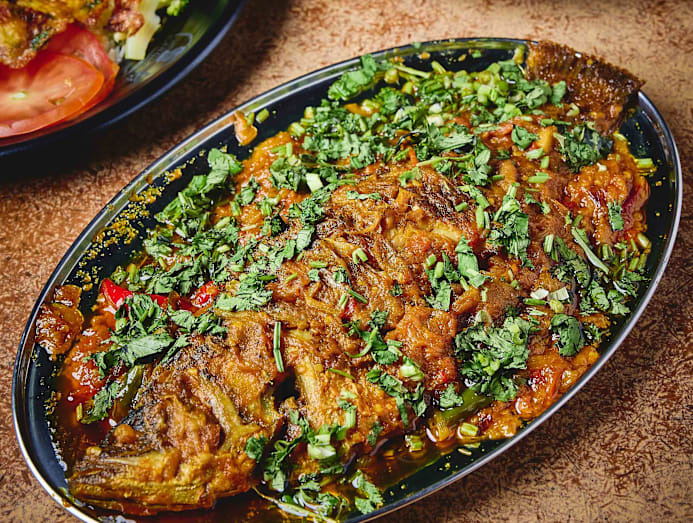
Though their menu describes it as a whole fried fish doused in a sweet and sour sauce, don’t expect something supremely crispy. The seabass is deep-fried, yes, but that just gives it some structure while it basks in the real star of the show, the tangy, spicy sauce, made with coriander powder, chilli powder and turmeric. Also luxuriating in the sauce: tomato, red and green chilli, plus onions, which pair well with the flaky fish. It’ll probably be a crowd pleaser for locals looking to get into Bangladeshi cuisine, as it’s savoury, piquant and salty without being overshadowed by accompanying spices.
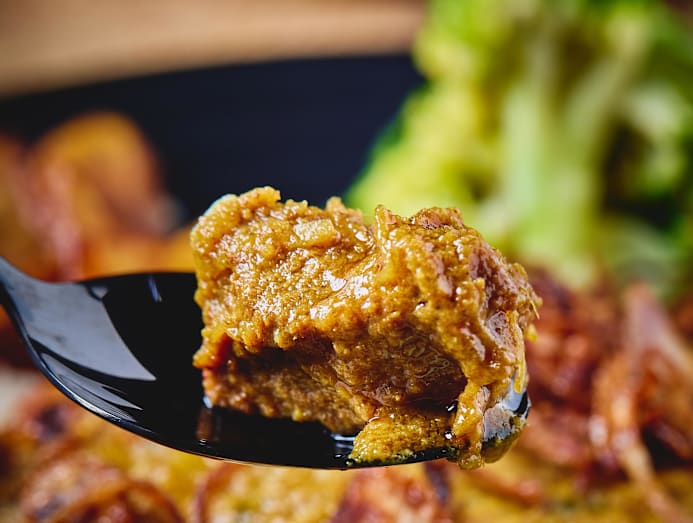
A thick turmeric-stained curry with a consistency and mouthfeel similar to that of rendang. Tender little chunks – some lean, some fatty – coupled with diced potatoes. The distinct notes of cinnamon and cardamom are obvious throughout, and it’s even stronger than the spices in southern indian curries. But unlike the latter, it’s mild on the heat.
They also serve up polao – usually spelled pulao – rice, which is one of South Asia’s versions of a dish that spread throughout much of Asia and continental Europe (pilaf, biryani and paella share its roots). It’s essentially shorter grain rice (Bangladeshis prefer that to the longish basmati favoured by Indians) cooked in a spice-scented oil, resulting in fragrant, well-separated grains with a sinfully rich mouthfeel. Make sure to get this over plain rice – it’s well worth your calories, and there’s no extra charge.
The omelette – with sliced chilli padi and onion mixed in – on the side passes muster. As for the extra veggies, they’re a little out of place, but it provides some refreshment in between bites of other oilier grub on your plate. They’ve even thrown in a lime if you need extra zing.
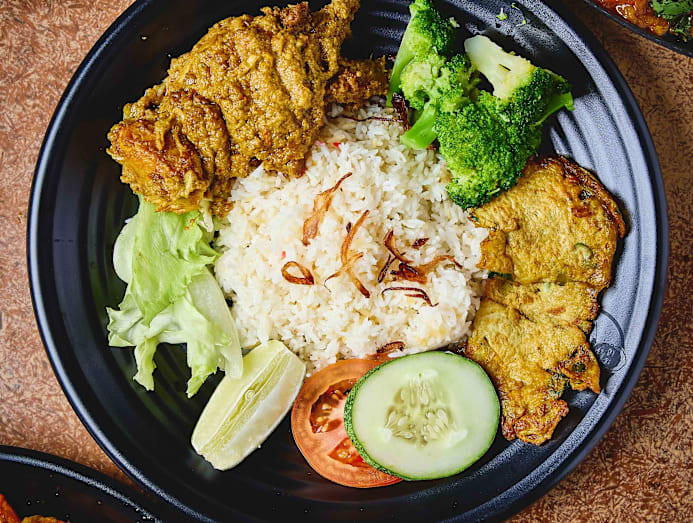
A similar curry base here is thickened with yogurt, adding a touch of creaminess to the fork-tender chicken chunks. However, we find the notes of cardamom a tad overwhelming.
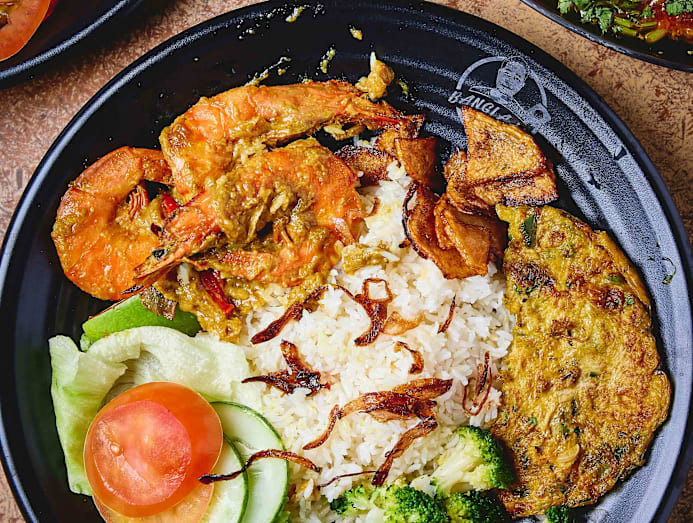
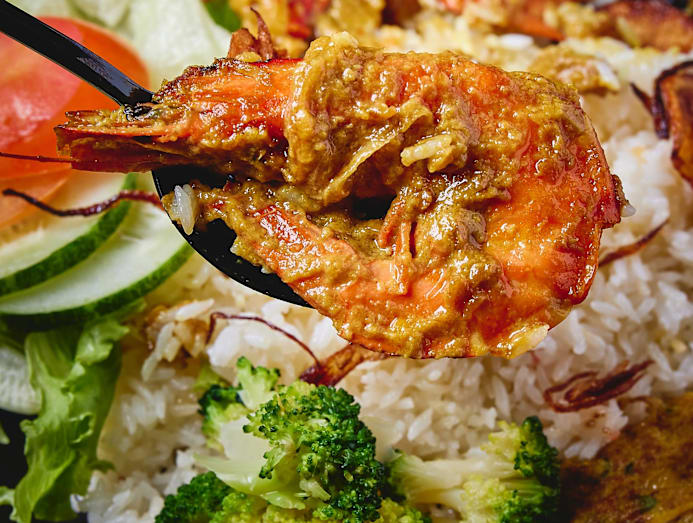
Another seafood option that we found more enjoyable – the chingri (which translates from Bengali to prawn) curry. There’s a thick, luscious gravy that seems like a cross between the fried fish sauce, and the spice-heavy curries for the meats. It’s well-balanced, and isn’t as jelak, even if the prawns were slightly overcooked.
Bangla Lim provides an accessible introduction to hearty Bangladeshi cuisine via its bento sets. The curries here are less fiery but more spice-laden than the Indian fare most Singaporeans are familiar with. We particularly enjoyed the fried seabass and the prawn curry. Pity we didn’t get to try the mutton kacchi biryani, available only on Fridays.