PappaRich CEO opening M’sia-themed food court with popular KL hawker brands in S’pore

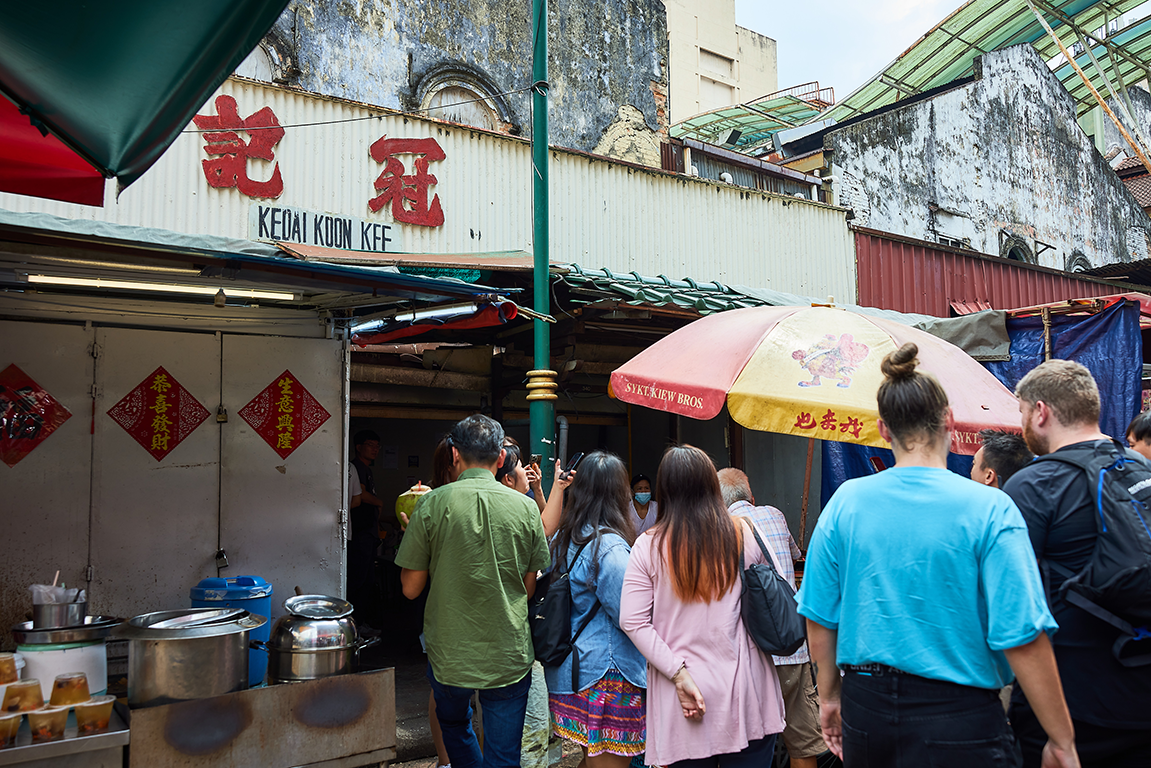
A new food court is opening in Orchard Road, and it will house stalls by seven of Kuala Lumpur’s local gem hawkers. This means that you don’t have to fly to the Malaysian capital whenever you have a craving for say, claypot herbal bak kut teh from Klang or lard-slicked wonton mee from Koon Kee, the gritty little noodle joint squeezed behind touristy souvenir kiosks on Petaling Jaya street.
Called EatAlley, the 140-seat eatery is currently still under a S$1.2mil renovation. It is slated to open this June at the basement of Orchard Gateway. “It will have a contemporary nanyang look,” shares EatAlley’s founder Sebastian Low. The Kuala Lumpur-born, 44, is also the CEO for Malaysian casual restaurant chain PappaRich.

Having grown up in KL, he frequented well-loved local hawker joints scattered around the city. “Singapore’s hawker culture is in the UNESCO list [of intangible cultural heritage], so I wanted to bring KL’s hawker brands here and put them under one roof,” says Sebastian.
He adds: “The hawkers I’m partnering with serve food that I have been eating since childhood. I’m happy that they want to join me — even my family didn’t think I would partner with my childhood food stalls (laughs).”
The hawker brands under EatAlley are not not tourist-famous like Village Park Restaurant’s nasi lemak. Instead, these are longtime joints popular in their own right with native Kuala Lumpurians like Sebastian.
 Photo: EatAlley
When the food court opens, you can find stalls headlined by Koon Kee Wantan Mee, Kam Heong Braised Duck, Hong Lai Hokkien Mee, Siong Huat Bak Kut Teh, Soong Kee Beef Ball Noodle and Ah Beh Pork Noodles (also known as Beh Brothers Pork Noodles). A seventh hawker brand will be confirmed later.
These hawkers, who are also shareholders of their Singapore stalls, will fly here to oversee the initial opening of their outlets. A team of hired chefs, together with EatAlley’s own head chef, will handle the daily cooking after being trained by the hawkers.
According to Sebastian, the ingredients used are expected to remain faithful to KL’s version, and a meal at his food court will cost “around $10 on average”. There will also be a drinks & dessert kiosk, run by EatAlley. All the stalls here are self-service, and customers can either order directly at the stalls or scan a QR code at their table.
8days.sg flies to Kuala Lumpur to check out the original hawker stalls, and tell you what’s good.

Koon Kee Wantan Mee
Tucked away in the populous Petaling Jaya stretch, Koon Kee Wantan Mee is a blink-and-you-miss-it noodle joint. It is now run by second-gen hawker Lee Keng Hui, 40, who was a student studying international commerce in Taiwan when he was called home to take over his family’s stall.
“My father passed away. It was very sudden, and there was no one to take over his shop,” recalls Keng Hui, who has an older sister (KL’s hawkers traditionally pass their business to sons).
He now runs Koon Kee with the help of his cousin and hired cooks. “As long as you are alive, you just get on with things. This is traditional food that we make ourselves,” he quips.

Wonton mee
The house-made noodles at Koon Kee are excellent, the springy strands tossed with dark soy sauce and golden cubes of delish, crunchy deep-fried lard.
Our plate came loaded with insanely good, caramelly char siew, unctuous braised chicken feet, fat braised mushrooms and slippery wontons. Very sedap, and a standout from all six hawker stalls we tried in KL. “I didn’t sleep well last night, so I’m very worried about not cooking well today,” Keng Hui tells us anxiously.
Dumpling soup
We find his wontons serviceable enough, but the dumplings here are fab. The lean meat parcels, swimming in a light broth, are wrapped in very delicate silky dumpling skin. Order this to chase down your sinfully rib-sticking plate of noodles.

Kam Heong Braised Duck
Veteran Malaysian hawker Tan Boon Seong, 73, is no stranger to doing business in Singapore. In the ‘70s, the self-professed ‘Duck King’ moved here to work as a cai png stall assistant for 15 years before returning home to open Kam Heong Braised Duck.
His eatery is visibly the most popular out of the six hawker brands, with tables snapped up by a steady flow of customers almost as soon as they were vacated. And Boon Seong is confident that his braised duck will take off in Singapore too. “There are a lot of Teochews there who like braised duck. A lot of Singaporeans come to my shop to tapow,” he says.
Boon Seong is semi-retired and has passed his business to his young son. Justin, 28, started working at his father’s eatery after graduating with a university degree in business management. But the gung-ho towkay will personally oversee EatAlley’s opening. “Aiyah, you need someone very experienced to make sure everything is in order! Making braised duck is tough,” exclaims Boon Seong.

Braised duck with ‘chicken rice’
Boon Seong’s braised duck rice is pretty unusual. Instead of plain white rice, we get ‘chicken rice’ subtly flavoured with pandan. It’s served with moreish house-made salted vegetables and even more shiok juicy fresh Perak ducks, which Boon Seong says are raised longer than usual for around 50 days so the birds develop ample “duck flavour”.
 Gravy is poured over Kam Heong’s braised duck for at least four to five times before it is served to customers.
On a typical weekend, Boon Seong sells up to 120 braised ducks. “My staff is here at 8am or 9am, but the ducks are only ready at 3pm,” he shares. “They are marinated with eight herbs, like dang gui and orange peel. You must have herbs to get rid of the duck’s gamey taste, but you can’t let customers taste the herbs in it.”

Siong Huat Bak Kut Teh
Located about an hour’s drive from central KL in Klang — famous for its herbal bak kut teh — this claypot bak kut teh shop has plenty of personality. A pet bearded dragon chills by the front entrance, which is flanked by a stall selling Mao Shan Wang durian chendol (sadly, that kiosk is not opening in Singapore).

Presiding over the open kitchen is hawker Loh Hock Huat, 66, who is assisted by his son, 23, and 42-year-old son-in-law. What is unusual at his no-frills restaurant is that you can customise the ingredients that go into your BKT, including pork ribs, pork slices, trotters, innards, taupok and even seafood. “It’s about expanding my brand,” Hock Huat explains of his decision to set up an outlet in Singapore.

Herbal bak kut teh
It’s time-consuming business cooking this bak kut teh; we spy Hock Huat boiling the pork in a vat of herbal broth first before transferring it to smaller claypots. And finally, to ceramic pots lit up with fire gel to keep the dish warm.

All that boiling creates a thick, sticky soup that’s almost the texture of tonkotsu broth. It isn’t the light, earthy version we usually get in Singapore, and gets jelak quickly. Not our favourite dish on this trip, but the concentrated herbal flavour is still pretty impressive.

Dry bak kut teh
Hock Huat also serves Klang’s famous dry bak kut teh, albeit with a lot more gravy than is typical. Not that we mind; the rich, subtly spiced gravy is good for pouring over our steamed rice. The pork — rather tough and dry in the soup BKT — is more succulent here.

Ah Beh Pork Noodles
Ah Beh Pork Noodles was founded some 38 years ago by a hawker who started out selling kway teow soup. After switching to selling zhu rou fen, Malaysia’s unique version of bak chor mee with a cloudy soup, he did well enough to buy a coffeeshop that is now called Restoran Chuan Huat.

His son Beh Chin Kiang, 53, and daughter-in-law Rachel Choo, 51, still run Ah Beh’s stall within the kopitiam. The couple plan to hand over their business to their own three children, which is also why Chin Kiang and Rachel decided to scale things up by expanding overseas.
“We have many Singaporean customers, so when we had an opportunity to set up shop in Singapore, we wanted to go and see what’s there,” says Rachel.

Pork noodles
Traditionally, zhu rou fen is served with loose minced pork, your choice of soup or dry, and carb options such as mee tai mak, bee hoon and yellow noodles. “The dry version is different from Singapore’s bak chor mee, because it has no vinegar or tomato sauce,” Rachel explains.

Also different is the soupy zhu rou fen, which is served in a very garlicky pork bone broth that has been boiled for over four hours. We find it hard to stop once we start slurping up our mee tai mak with the heady broth, crammed with clean-tasting pieces of blanched pork intestines, liver and pork slices. We foresee this being a hit in Singapore.

Soong Kee Beef Ball Noodle
This beef noodle institution is a well-known KL makan haunt. It specialises in minced meat noodles served with a bowl of beef balls, beef slices and innards.
 Curiously enough, the shop was established out of necessity right after WWII ended in 1945. “My grandfather died in a swimming accident in 1943, and my father had to support the family. It was hard to find a job after the war and he was helpless, so he turned to selling food,” recounts Soong Kee’s owner Siew Wei Hann, 66.
He now runs the eatery with his brother Wai Seong, 58, who is the main chef. Like most KL hawkers, Wei Hann has tapped his son Chin Phui, 34, to take over his business. The lad, dressed neatly in a buttoned-down shirt, was trained to cook beef noodles but now focuses on management. “It’s an AI world now! At my age we can’t keep up. We have to hand it over to the youngsters now,” chortles Wai Seong.

The family is transferring one of their cooks to Singapore permanently to helm their EatAlley stall, while Wai Seong plans to visit every few months for quality control. “We must preserve our taste as much as possible,” Wei Hann avers.

Beef ball noodles
We find the minced meat noodles here just okay — it reminds us of Korean jjajangmyeon, with a goopy bean paste meat sauce poured over alkaline-tasting mee kia.

The bowl of beef ball soup here is the star, though. The hand-squeezed beefy balls, soaked in clear, clean beef broth, have a bouncy bite. The very tender, still pink beef slices are tenderised with cornstarch (Wai Seong had to blanch them in a separate pot of water before cooking to remove the excess starch). Very fresh pig’s intestines, liver and beef tripe make up the rest of this comforting bowl.

Hong Lai Hokkien Mee
The action at Hong Lai Hokkien Mee begins before we even walk into the restaurant: Stationed at the entrance is second-gen hawker Chong Kean Guan, 40, who is manning a row of woks with the stylish finesse of a hip club DJ.
The midnight supper spot in Setapak is popular for its charcoal-fried KL Hokkien mee, cooked to a sultry hue with dark soy sauce over roaring heat. The flames from Kean Guan’s wok warm our face as we gawk at him tirelessly frying up plate after plate.

The midnight supper spot in Setapak is popular for its charcoal-fried KL Hokkien mee, cooked to a sultry hue with dark soy sauce over roaring heat. The flames from Kean Guan’s wok warm our face as we gawk at him tirelessly frying up plate after plate.

The menu here is not limited to just Hokkien mee. While the restaurant’s signature dish boasts respectable wok hei, it is the Moonlight Hor Fun here that we like. Named for the single raw golden egg yolk cracked on top of the dish, the velvety hor fun here is smoke-kissed and fried extra dark with just pork, prawn and veggies. Incredibly, Kean Guan doesn’t use pork lard at all.

“You must have talent to take over,” remarks his father Chong Yen Hong, whose uncle opened the eatery in 1970. “My son learnt all this in under a year.” Like most established hawkers, he hopes his children can help keep the family business going. “Or else our customers won’t be able to eat our Hokkien mee anymore,” he jokes.
Kean Guan, who will be stationed at EatAlley for a few days during the opening period, intends to continue using charcoal to cook in Singapore. “That’s the only thing I use,” he avers.
EatAlley opens circa June 2023 at #B2-12 Orchard Gateway, 277 Orchard Rd, S238858.
Photos: Alvin Teo