Retrenched general manager & wife sell super chewy hand-torn Mee Hoon Kueh in Toa Payoh kopitiam
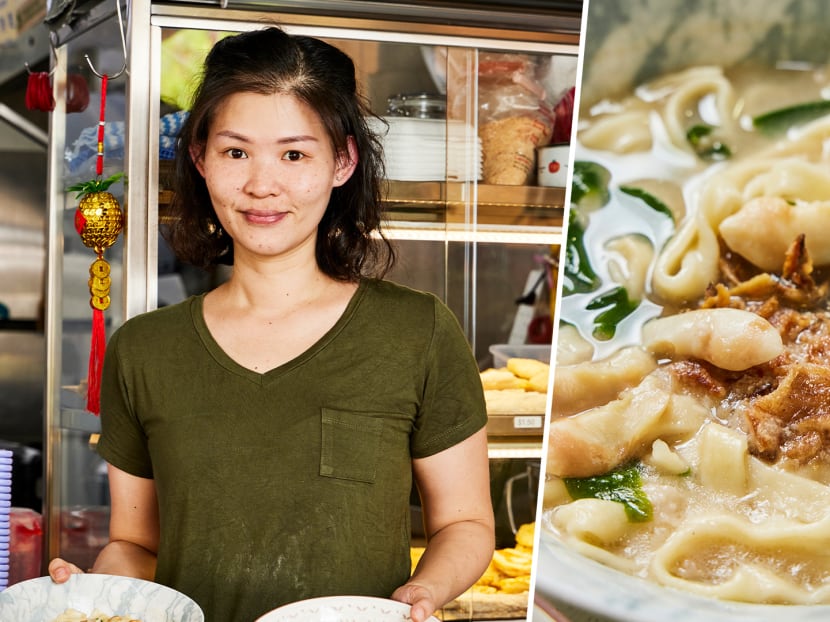
After Ricky Tan (who declined to be photographed for this story), 50, was retrenched as a general manager at a Japanese MNC in the printing industry last April, he decided to start a hawker stall selling ban mian with his homemaker wife, Ivy Chong, 42. “I felt that it would be quite difficult to find a job at my age, so we should start something of our own rather than be at the mercy of someone else. Unlike my previous job in the printing industry, which is on the downtrend, F&B will never die. We decided to sell ban mian ’cos our friends and family like my wife’s mee hoon kueh,” he tells 8ays.sg.
It took him a couple of months to look for a suitable space and by end October, Wu Da Ma Xiao Chi (loosely translated as Madam Wu’s Snacks in Mandarin) was up and running in a Toa Payoh coffeeshop, where the popular Ocean Curry Fish Head stall resides.

They invested $20K to start the biz, which is named after Ricky’s mum as the “home-style” ban mian is based on her recipe. If you’re wondering if the granny on the signboard is modelled after her, Ivy says her mother-in-law looks much younger. “We wanted to feature an older granny ’cos our food is homely and made with a grandma’s recipe,” she shares.
Besides ban mian and mee hoon kueh, they also sell ngoh hiang. Ricky, who is currently also studying full-time for a degree in international business, runs the stall in the morning, while Ivy and her mum take over at lunchtime. The stall, he says, “is for Ivy”, and he hopes to return to the corporate world after he graduates in May: “Of course, it will be better if I can get a full-time [corporate] job. If I can’t, at least we still have this business.”
No part of this story or photos can be reproduced without permission from 8days.sg.
Friends advised them against going into hawker trade
Ricky had always toyed with the idea of starting his own F&B biz. When he was still a GM, he considered opening a cafe serving western food with friends, but the plan was never put into action as there was “never an urgency”. Things changed when he got laid off.
However, friends advised the couple against becoming hawkers due to the hard work and long hours involved. “They said I would feel demoralised if the returns are low, but if you don’t try, you don’t know. I have a good level of endurance, I’m not defeated easily,” says a determined Ivy, who used to work in retail before becoming a stay-at-home mum to her daughter and son, aged 12 and 11 respectively.
The key, she says, is not to put too much pressure on yourself and treat it as a learning process. She roped in her mum, who is retired, to run the stall with her and the experience has been “quite fun”. Ivy enjoys interacting with elderly customers and they have given her a lot of feedback and advice on her food.
Takes four hours daily just to prep veggies
“I thought my soup was already very good, but when we first opened the stall, customers told us that it was too bland, and we should add MSG. But I don’t use MSG ’cos it’s not healthy. They also gave me a lot of suggestions on how to improve the taste,” she says.
Ivy spent several months tweaking the recipe to cater to the seniors in the neighbourhood. Previously, the soup was cooked with cabbage and radish, but a lot of old folks don’t consume these vegetables as they are too ‘cooling’. So now the broth is made by simmering soybeans with dried anchovies.
She even goes the extra mile to shell prawns for customers. “Many customers said they will not eat the prawns if they are not shelled, so now we do it for them. We are in the service line so we should try to please our customers. We are happy when we see that they enjoy our food,” she shares.
That said, the couple admit that running a hawker biz has been more laborious and time-consuming than expected.
“We serve our ban mian with mani cai (a veg often used in the dish) and plucking the leaves and cleaning them alone takes us four hours. We also fry our own ikan bilis and make our ban mian from scratch. We had planned to make our own ngoh hiang too, but we simply don’t have the time. We only make the prawn fritters now, everything else is from a supplier,” laments Ricky.
Business has been slow
Despite pretty decent footfall in the area, Ivy says business is just “average”. “Most of the people here go to the hawker centre [at the next block] or patronise Ocean Curry Fish Head. We are just the ‘side dish’. We just manage to break even each month. I’m not sure if we can sustain the business," shares Ivy, adding that the family has been relying on their savings since Ricky was retrenched.
She adds: “Our friends tell us our food is good, so my husband is wondering why things aren’t happening for us. But I think we just need time for the business to grow. We have regulars who come by three times a week, so that keeps us moving forward. I believe if we push on, we can make it.”

The menu
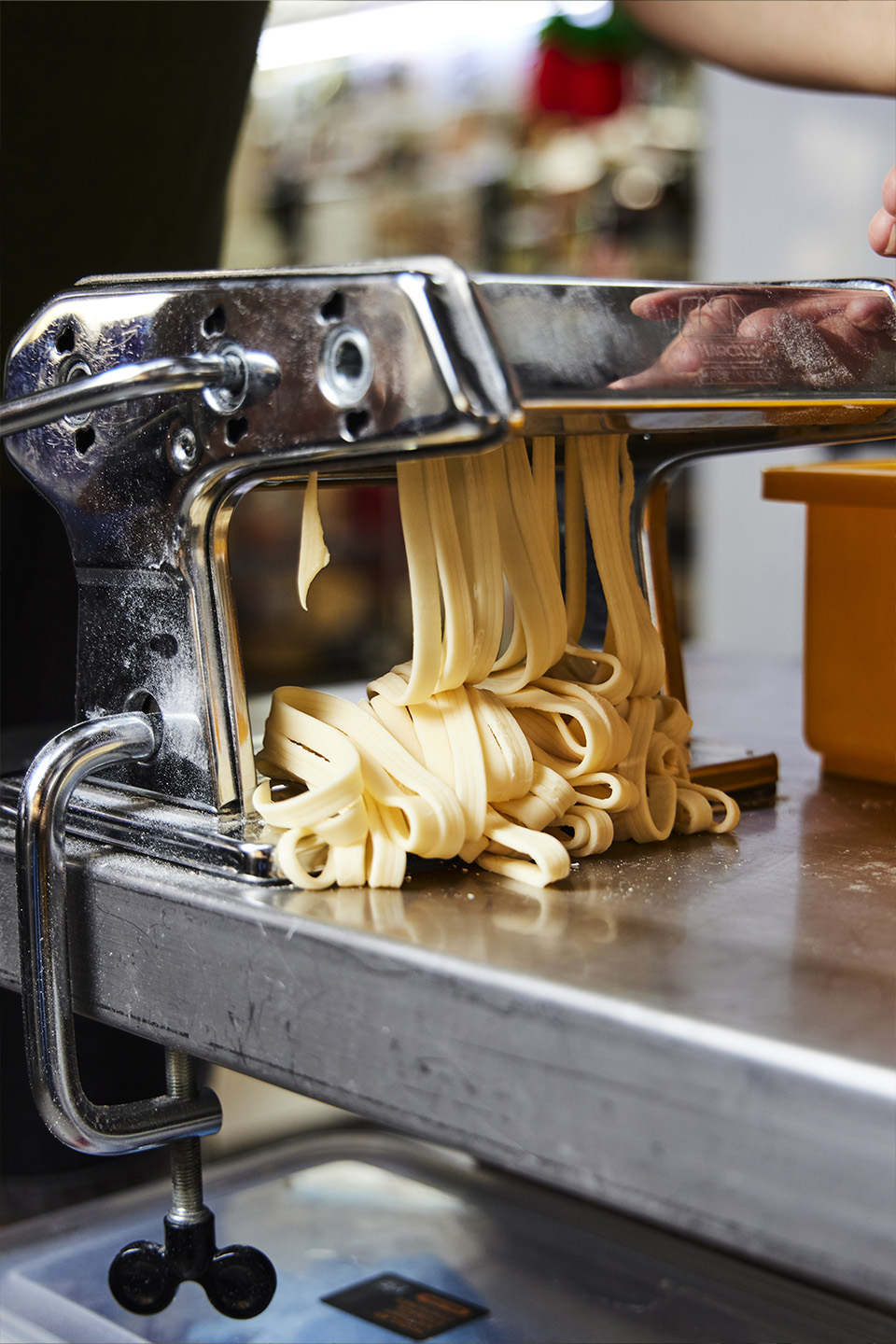
Wu Da Ma offers just three types of toppings: minced meat ($4), prawn ($5), and razor clams ($6). You can have them soup or dry, with your choice of carbs: mee hoon kueh, ban mian, you mian, beehoon, mee sua and yi mee. The first three are made fresh on-site daily using an electric mixer before being stretched with a noodle maker. Add $1 for an upsized portion.
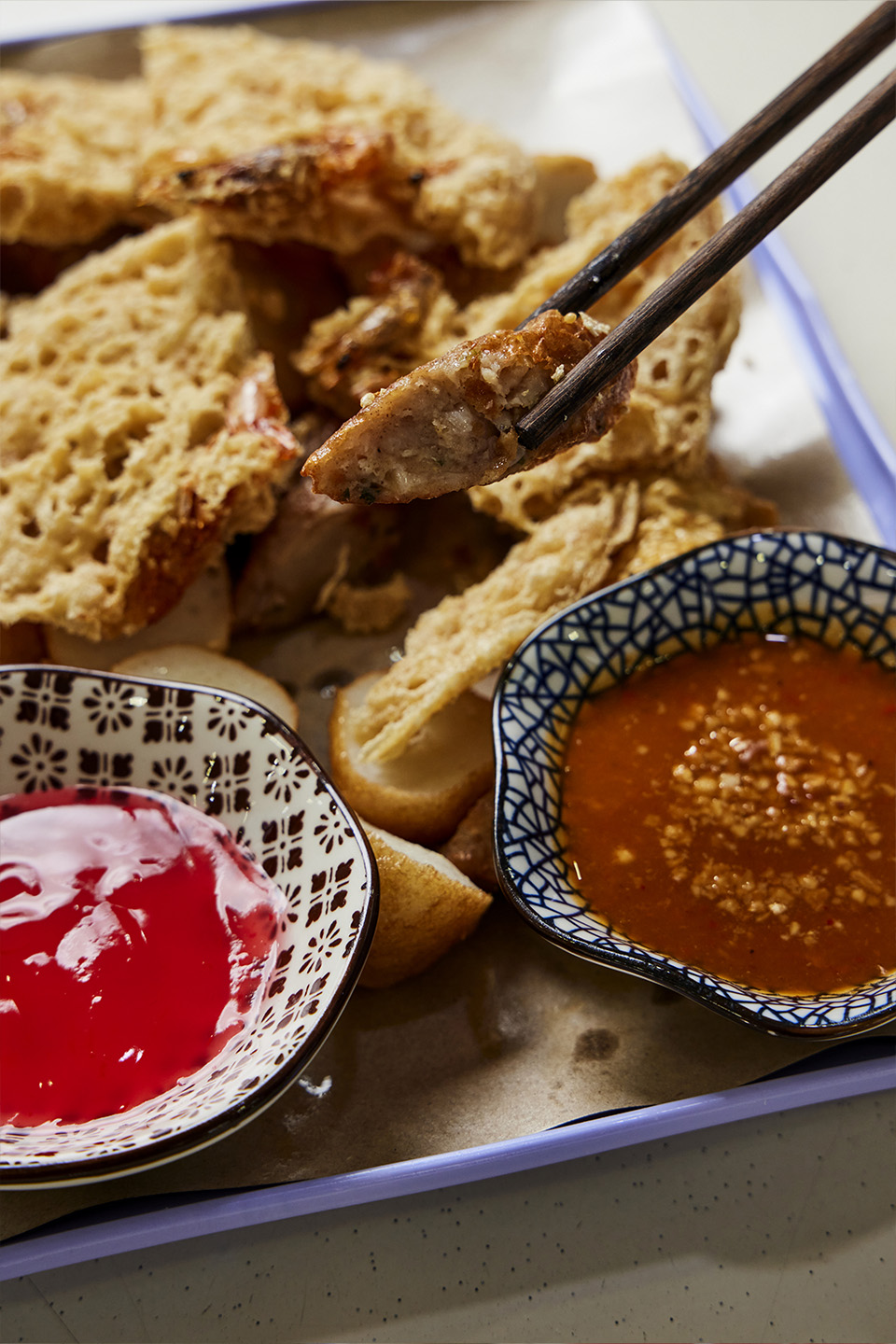
 The stall also sells ngoh hiang to pair with your noodles. There are around 15 varieties of fritters like crispy prawn cracker, water chestnut cake and liver rolls on offer each day, with prices starting from $1. Snacks like fishballs, mini ngoh hiang and fried nuggets are available at three for $1.50.
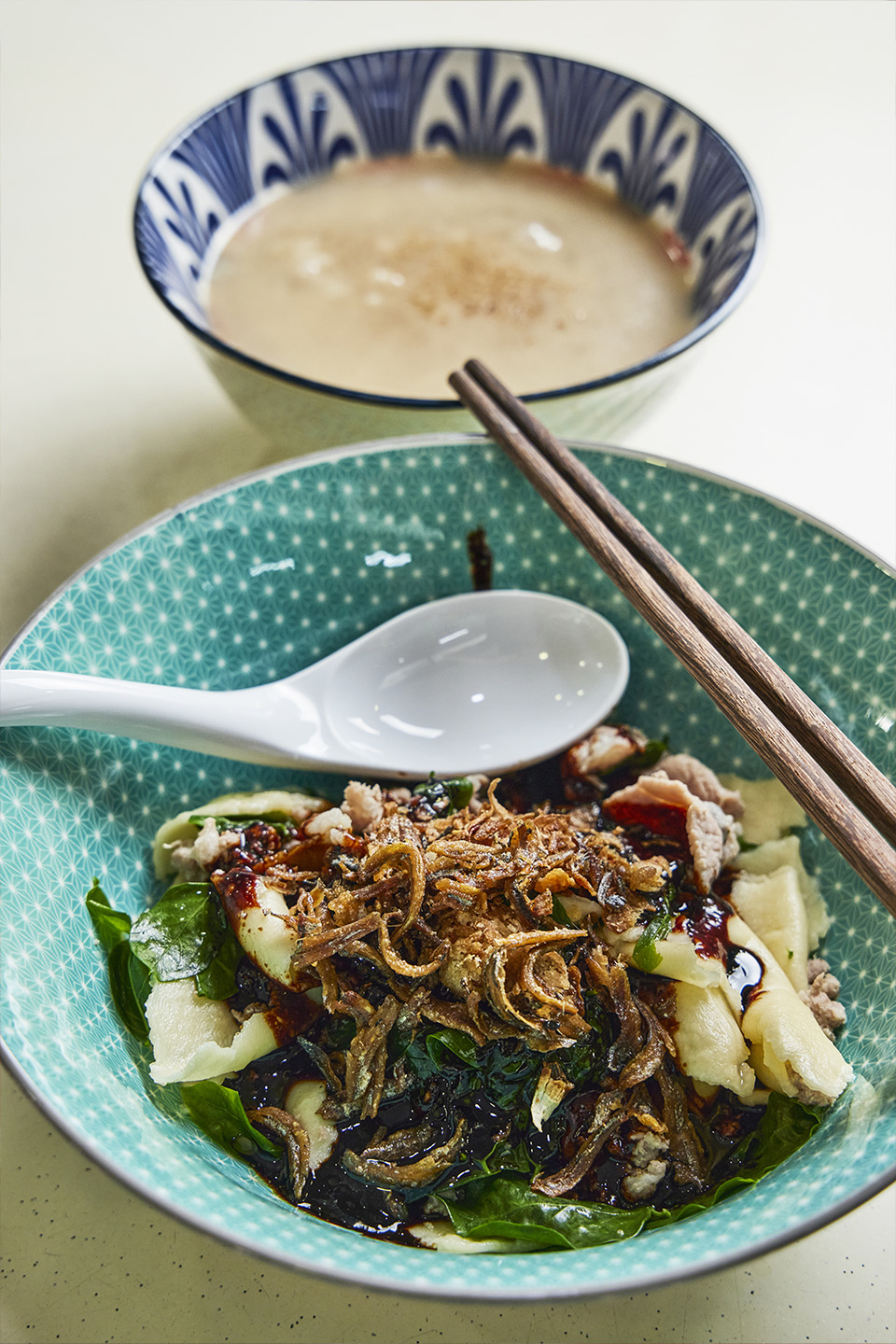
Minced Meat Mee Hoon Kueh (Dry), $4 (8 DAYS Pick!)
We love mee hoon kueh and this is one of the chewiest versions we’ve tried. Instead of using pre-cut kueh, Ivy hand-tears every single piece upon order, and it’s delightfully QQ, with a good bite. The secret, she says, is in the wheat flour, which she stumbled upon in a group buy: “A lot of Chinese families buy this flour to make dumplings, so I decided to try it. It gives our mee hoon kueh a very good mouthfeel and chewiness.”
You can specify how you’d like your noodles made and cooked. “If customers tell us they want the mee hoon kueh to be very chewy, we won’t flatten it with the roller ‘cos this affects its texture. Some old folks like it smooth and thin ‘cos they have weak gums,” says Ivy.

Slathered with a light sweet-savoury dark sauce and served with chewy mani cai, seasoned minced and sliced pork, fried anchovies and fried shallots, the mee hoon kueh is kinda like Malaysian pan mee. We recommend adding 50 cents for an egg, which is dropped into the soup and cooked till runny on the inside. The yolk, when mixed with the mee hoon kueh, adds richness to the dish.
Though the murky soup, made by simmering soybeans, dried and fried anchovies for at least five hours, is homely and wholesome, it can afford to be more robust. Request for more tossing sauce and mix a little into the soup to elevate the flavour.
 Another highlight is Ivy’s homemade chilli. Made using chilli padi, fish sauce, sugar, and lime juice, the fiery, zingy condiment is thick and packs a punch. “A lot of people have asked to buy our chilli but I refuse to sell it. I don’t add preservatives to it, so I don’t want to be responsible if it goes mouldy,” she says.
Prawn Mee Hoon Kueh (Dry), $5
This is served with the same trimmings plus two regular-sized frozen prawns which come deshelled. While it’s great that they left the heads on so we can suck the umami juices, the prawns are not succulent the way we like them.
Razor Clam Ban Mian (Soup), $6 (8 DAYS Pick!)
If you want your noodles with soup, we suggest having it with canned razor clams, which add a hint of brininess to the broth. We enjoy the ban mian too which is toothsome and cooked just right.
Ngoh Hiang, from $1 a piece
Complementing the stall’s noodles are assorted ngoh hiang and fritters, only available from Thursday to Monday. We appreciate that the offerings are fried once more before serving and not greasy at all.
All the items are from a supplier except the heh piah (prawn fritters), which is made with Ivy’s mum recipe. Pre-made once a week and frozen, the palm-sized fritters ($1.50) are crisp on the outside and slightly dense on the inside. The prawns give the fritters an added crunch.

The sotong you tiao ($1.50) and classic ngoh hiang ($1.50) are pretty good too. The latter features five-spice powder flavoured pork filling and comes studded with crunchy and sweet water chestnuts. It pairs well with the punchy belacan-spiked chilli sprinkled with crushed peanuts, which we prefer over the standard gooey pink sweet sauce.
Bottom line
The decently-priced mee hoon kueh and ban mian here boast a good springy mouthfeel. While the wholesome, MSG-free soup tastes homespun and will appeal to the health-conscious who like lighter broths, we prefer the more robustly-flavoured dry kueh and noodles — it’s shiok paired with the kick-ass chilli. If you’re still feeling peckish, the stall’s ngoh hiang is not bad, too.
The details
Wu Da Ma Xiao Chi is at #01-264, 92 Lor 4 Toa Payoh, S310092. Open daily except Tue, 7am – 8pm.
Photos: Aik Chen
No part of this story or photos can be reproduced without permission from 8days.sg.