Monet, Renoir, Degas and more: National Gallery Singapore hosts Southeast Asia’s largest Impressionist showcase
Into the Modern: Impressionism from the Museum of Fine Arts, Boston, features over 100 original works by celebrated French artists.
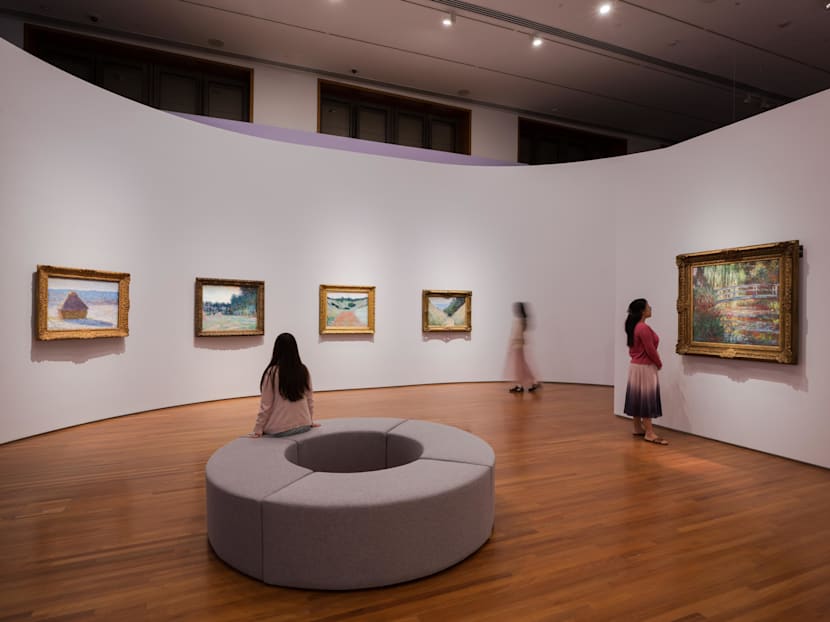
Installation view of the Monet – Moment and Memory section, Into the Modern: Impressionism from the Museum of Fine Arts, Boston, at National Gallery Singapore. Photos: National Gallery Singapore

This audio is generated by an AI tool.


Brought to you by

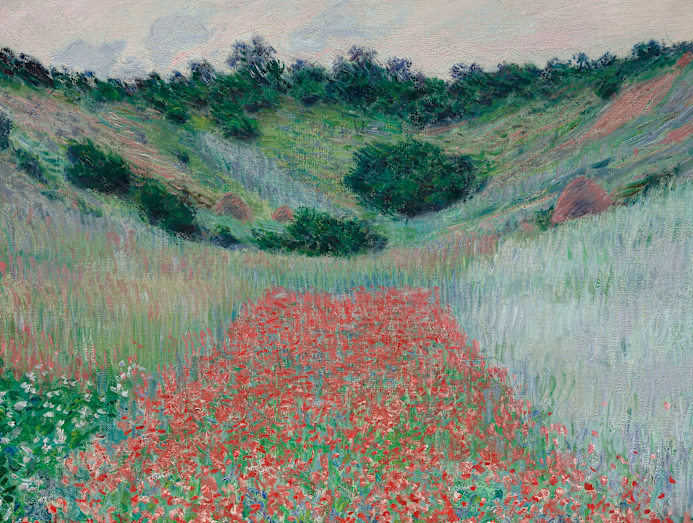
The light in Claude Monet’s Poppy Field in a Hollow near Giverny is almost tender – delicate strokes of red and green that emerge and softly blend into surrounding forms. This fleeting quality embodies a defining aspect of Impressionism.
Into the Modern: Impressionism from the Museum of Fine Arts, Boston (MFA Boston), now on at National Gallery Singapore until Mar 1, 2026, explores how the Impressionists experienced life as it unfolded – and why their vision of modernity still resonates.
Jointly developed by National Gallery Singapore and MFA Boston, the exhibition brings together more than 100 original works by 25 of the movement’s artists, including Claude Monet, Pierre-Auguste Renoir, Paul Cezanne, Edgar Degas, Edouard Manet, Henri de Toulouse-Lautrec, Camille Pissarro and Berthe Morisot. It is the largest exhibition of Impressionist art ever staged in Southeast Asia.
The works come from MFA Boston’s historic Impressionist collection, shaped in part by pioneering collectors who supported the artists during their lifetimes.
Instead of a chronological overview, the exhibition invites visitors to experience the world through the eyes of these artists. “The Impressionists were the first to witness and depict the emergence of the modern world,” said Dr Phoebe Scott, National Gallery Singapore’s lead collaborating curator for the show. “Their paintings reveal shifting landscapes, urban transformation and evolving gender roles – themes that continue to resonate today.”
MODERNITY THROUGH AN IMPRESSIONIST LENS
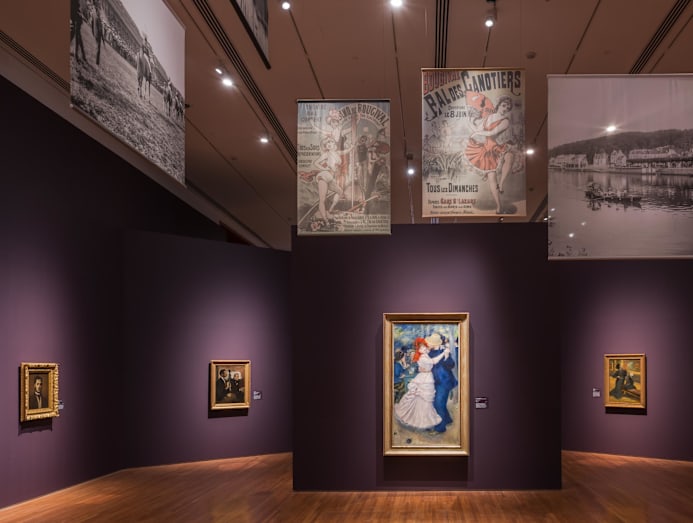
The Impressionists broke with tradition, turning their gaze from historical grandeur to ephemeral moments – sunlight on water, dancers mid-step and the quiet dignity of work. Into the Modern traces this shift across seven sections: Seeking the Open Air, Plein Air Impressionism, Labour and Leisure on the Water, Shared Ambitions, Modern Encounters, Reimagining the Commonplace and Monet – Moment and Memory.
Many of the scenes the Impressionists painted – of daily routines, changing landscapes and lives in transition – still feel familiar today. “The artists were responding to rapid urban change, just as we are,” said Dr Scott. “Their art reminds us that modernity is still in progress. We continue to experience it.”
The exhibition design echoes this idea. Cool-toned galleries shift from shadow to light, evoking the visual transitions the Impressionists captured and the new ways of seeing they helped introduce.
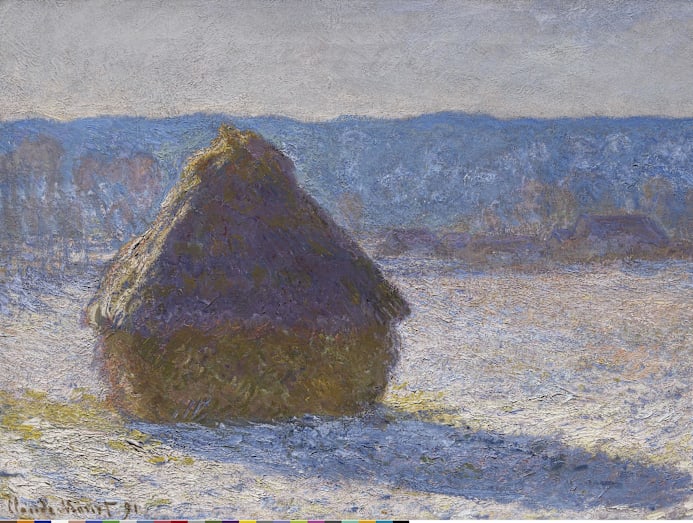
Into the Modern features 17 works by Monet, nine of which come together in the concluding section, Monet – Moment and Memory. His grainstacks, coastal skies and poppy fields reflect hours of silent observation. Built up with layers of brushwork, these canvases capture light changing over time.
Elsewhere, Renoir’s Dance at Bougival invites a second glance. Beneath the elegant swirl of a dancer’s skirt lie burnt matches and unfinished glasses of beer. “We encourage visitors to look twice,” said Dr Scott. “What at first seems proper or formal is, in fact, a glimpse of a lively, relaxed kind of social life.”
The exhibition also brings attention to lesser-known figures such as Victorine Meurent – a recurring model for Manet’s paintings who was also a painter in her own right. Shown alongside Manet’s Street Singer, her rare self-portrait offers another perspective on a woman long viewed only through the eyes of others.
Among the artists featured, Pissarro stands out for Dr Scott. Though his scenes are often picturesque, she describes his work as grounded in a strong sense of humanism. Living in the French countryside while supporting a large family, he was familiar with the struggles of rural life. His empathy shows in canvases built from countless small strokes, rich with light and texture. “His works are immediately appealing,” said Dr Scott. “But they also carry a deeper social ethic that feels very relevant.”
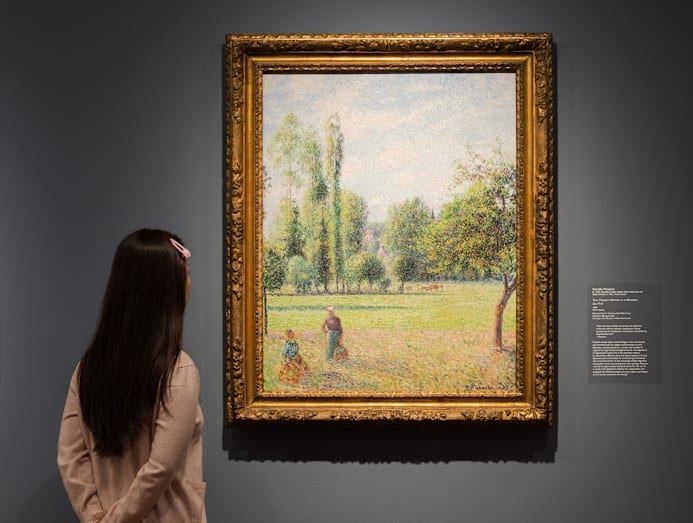
Into the Modern also explores how Impressionist working methods influenced artists in this region. In the Artelier learning zones, visitors can watch an animated film on the spread of plein air (outdoor) painting to Vietnam, and try sketching inspired by the practice of Singaporean pioneer artist Georgette Chen, who often painted on location at sites such as the Singapore River.
Dr Eugene Tan, CEO and director of National Gallery Singapore, and project director of Into the Modern, said: “The exhibition’s opening coincides with National Gallery’s 10th anniversary, and we are proud to host and present these evolving narratives of Impressionism through major works from MFA Boston. Our collaboration brings these important artworks closer to local and regional audiences, invites deeper engagement with Impressionism, and creates opportunities for dialogue between global art and Singapore’s cultural landscape.”
Into the Modern: Impressionism from the MFA Boston runs from Nov 14, 2025, till Mar 1, 2026, at the National Gallery Singapore. Tickets are priced at S$15 for Singaporeans and permanent residents, and S$25 for foreigners.