Commentary: Another Biden or Trump term poses its own challenges to Singapore
In the US, there will be stark differences between a Biden or Trump second term. For Singapore and Southeast Asia, either administration brings their own challenges, says Steven Okun of APAC Advisors.
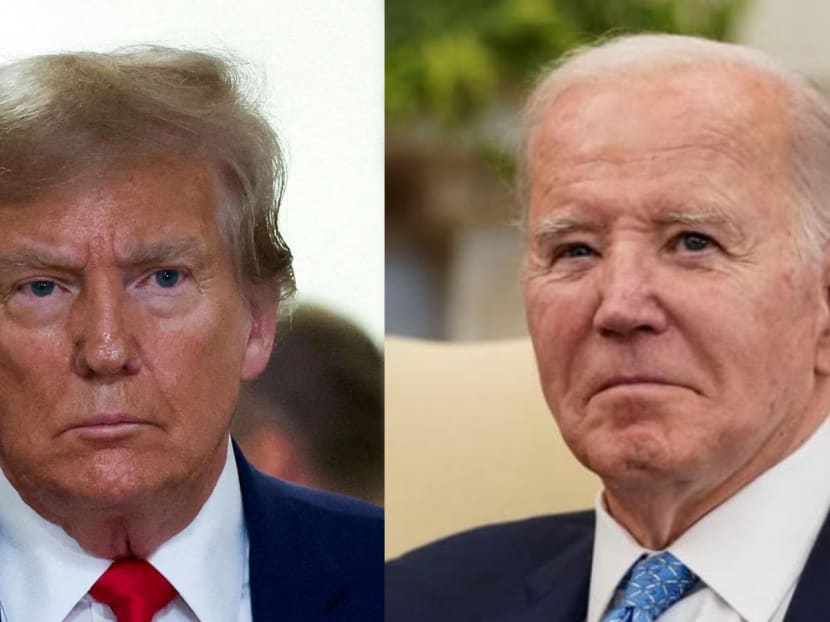
Former US president Donald Trump (left) and US President Joe Biden. (File Photos: Reuters/David Dee Delgado, Shannon Stapleton)

This audio is generated by an AI tool.


SINGAPORE: The 2024 US presidential election will be a rematch between US President Joe Biden and former president Donald Trump after both men won enough delegates from their respective parties on Tuesday (Mar 12).
While who will win remains too early to call, governments, businesses and investors around the globe must prepare for either a second Biden or Trump administration. The election’s outcome will impact Singapore and Southeast Asia, even though neither the country nor the region will likely be mentioned during the campaign.
Regardless of who gets inaugurated in January 2025, Singapore’s precarious balancing of geopolitics will continue.
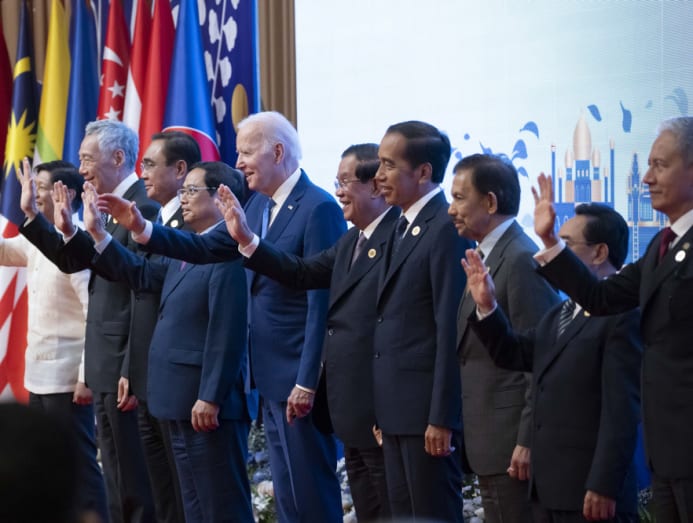
AVENUES THROUGH WHICH BIDEN CAN WIN
During presentations on the US presidential campaign I have given in Singapore and around Southeast Asia over the past few months, I always end with a poll question for the audience: Who do you think will win, Joe Biden or Donald Trump?
Without fail, at least 80 per cent to 90 per cent presume victory for Mr Trump.
Given Mr Biden’s historically low approval ratings, the overwhelming number of Americans who believe the country is headed in the wrong direction, and Mr Trump outpolling the incumbent in handling immigration and inflation, observers abroad believe Joe Biden has little to no chance of winning again.
They should not be so certain. Three avenues form a path for the Biden campaign to win a second term.
First, so long as the economy continues to improve, with a corresponding increase in consumer confidence, Mr Biden’s approval rating should improve with them, increasing his electoral outlook.
Second, a significant number of women will vote solely on the issue of protecting their reproductive freedoms, which will increase Mr Biden’s odds of winning. The Democrats have won or outperformed in nearly every significant election since the Supreme Court eliminated the previous Constitutional right to abortion through Trump-appointed justices.
As Mr Biden said in his State of the Union address: "Those bragging about overturning Roe v Wade have no clue about the power of women in America.”


Third, the Biden campaign wants this election to be less a referendum on the president’s first term and more a choice on a second Trump term, given his predecessor remains unpopular nationally as well. Trump’s undisciplined call for cuts to social security are one such example of his making it easier for Biden to execute on that strategy.
WHAT TO EXPECT FROM A SECOND TRUMP TERM
In the US, a return to power of Donald Trump would have significant consequences domestically.
A Trump victory will result in efforts to root out the so-called “deep state” of civil servants, impacting the US government’s ability to function as it does now. His planned harsh crackdown on immigration will cause domestic pain socially and economically, as will a pullback from international affairs and climate action.
With global security risks more delicate than usual, there will be considerable impact on the rest of the world as well.
A second Trump term would mean weakened commitment to Ukraine and a significant reduction of US engagement in the North Atlantic Treaty Organization (NATO), if the US were to remain at all.
The fallout from such a shift would hit Asia as well, with countries such as Japan and South Korea likely to seek their own nuclear weapons, which would impact their relations with China and could have a spillover effect regionally.
In the Middle East, a Trump administration would be less likely to get involved in restraining Israel in its retribution against Hamas' Oct 7, 2023 attack, which the Biden administration has started to do more publicly. This could lead to further escalation of the conflict, which would directly affect Singapore’s maritime industry.