After changing the menu from Japanese dishes to dry laksa, this stall in Hougang now has long queues
Ah Huay’s Dry Laksa also brings in “a few hundred [dollars] more” daily averaging about S$1,000 a day, a significant jump from when the hawkers were offering Japanese dishes.

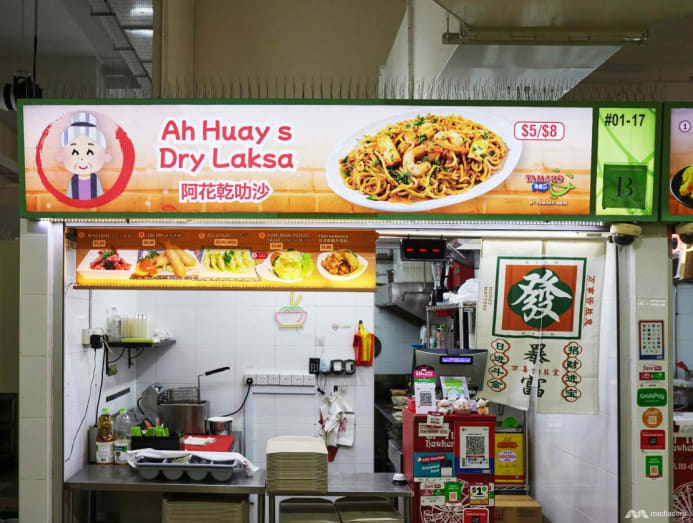
Ah Huay's Dry Laksa is located in Hougang. (Photo: 8Days/Kelvin Chia)
A new stall at Ci Yuan Hawker Centre in Hougang has been drawing long queues lately, and it sells only one dish, dry laksa, with customers waiting up to 45 minutes during peak hours to get their order.
But up until March this year, Ah Huay’s Dry Laksa was a generic Japanese food stall called Tamako Ramen-Ya. Its young owners Xavier Teo, 34, and Jacky Luong (pictured below), 33, decided to convert the stall to sell dry laksa because it’s “something not every eatery has”. The duo had also noticed that a laksa stall at Ci Yuan had closed down, and took the chance to propose setting up a new laksa business to the hawker centre’s management team, who approved their request.
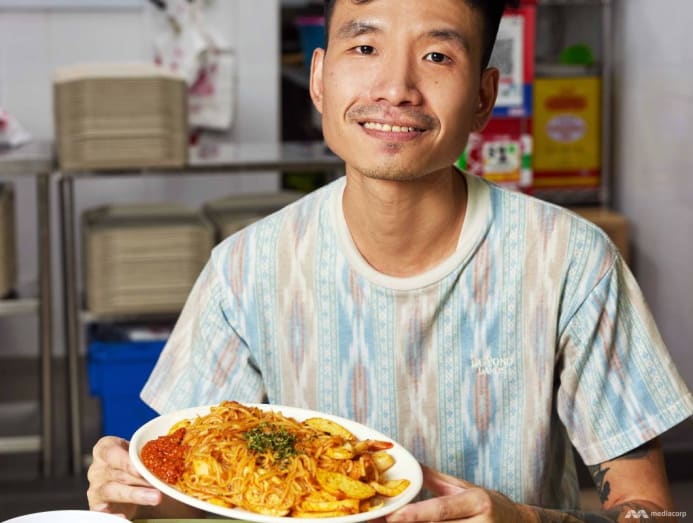
Typically, you will have to fork out more money to order dry laksa from higher-end restaurants like National Kitchen by Violet Oon, or home-based businesses like Let’s Jiak.
It is relatively less common in a wallet-friendly hawker setting, which Teo reckons is because it requires “more steps than making soup laksa”. To make their dry laksa, he explains they have to “cook the noodles first, put it in a tub to absorb the gravy, then fry it one more time [when people order it]”.
Luong saw a good business opportunity in serving this unique dish, which explains why he wanted to “bring it to a hawker centre to see if people like it”. He broached the idea of opening a dry laksa stall to Teo, his F&B pal with whom he had been working for eight years. Prior to Ah Huay’s Dry Laksa, Luong used to work at Teo's Thai restaurant Nakara Thai Cuisine.
BETTER BUSINESS SINCE MAKING THE SWITCH
Ah Huay’s Dry Laksa has received quite a bit of traction since the hawker started selling the noodle dish three months ago. Luong says the stall now brings in “a few hundred [dollars] more” daily averaging at about S$1,000 a day, a significant jump from when it was offering Japanese dishes. He reckons it’s because “Japanese food only [appeals to] youngsters”, while laksa has a mainstream appeal and draws older customers as well.

GRANDMOTHER’S LAKSA RECIPE
Luong tells 8days.sg that the stall is named after his granny Ah Huay, from whom he learned how to cook dry laksa. As his retired grandmother used to run a street stall selling dry laksa in Penang, he wanted to spread the popularity of her recipe in Singapore.

DRY LAKSA WITH JAPANESE SIDE DISHES
While Ah Huay’s Dry Laksa only offers one signature main dish (S$5/S$8), Luong and Teo kept five side dishes from their previous Japanese-centric menu. This includes Homemade Potato Salad (S$3.80), Age Gyoza (S$3), Mini Tako (S$5.80), Ebi Fry (S$5.80) and Tori Karaage (S$5.80). Luong tells 8days.sg that they decided to retain a few side dishes to “let people know we used to have this Japanese brand”.

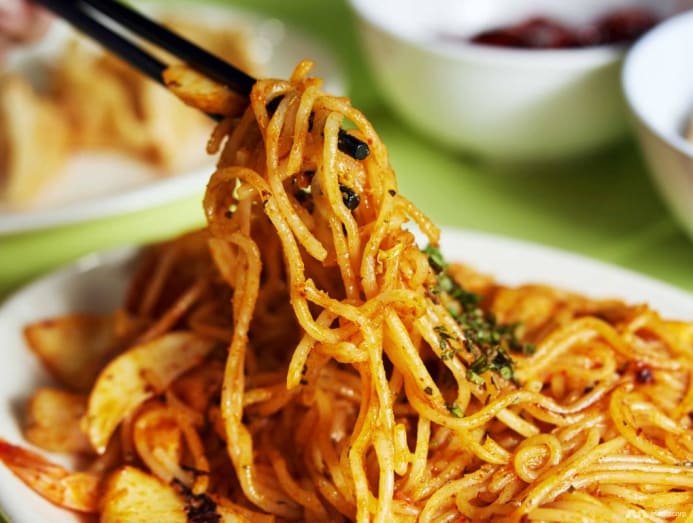
DRY LAKSA, S$5/S$8
Instead of a bowl, our lightly spicy dry laksa was served on a plate. There is no gravy, but the thick al dente bee hoon soaked up the rich flavour of the robust rempah paste. We wish there was a more generous coating of it, though. While we like the springy fish cake and fresh prawns, we find ourselves hankering for a little more laksa oomph. The spongy tau pok, however, catches more of that toothsome thick paste.
HOMEMADE POTATO SALAD, S$3.80
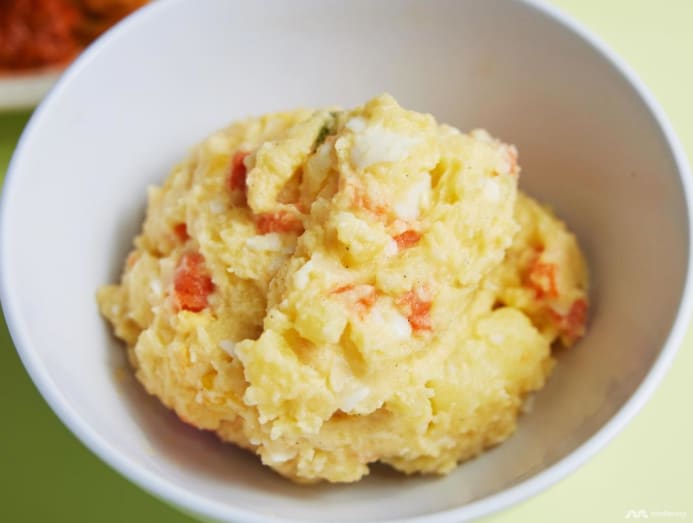
There is nothing to nitpick about this standard-issue Japanese potato salad, which is tossed with mixed beans and mayonnaise. Yummy enough, but too carb heavy together with the dry laksa.
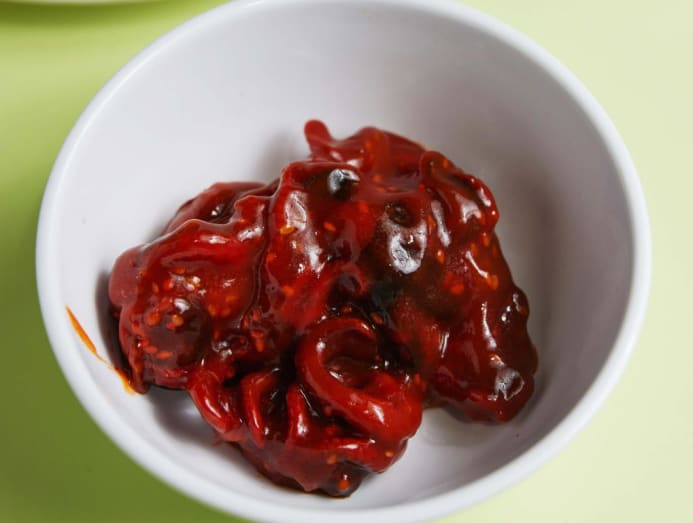
MINI TAKO, S$5.80
An izakaya favourite in a hawker centre. The chewy baby octopus, marinated in a sweet teriyaki sauce, is slathered in a savoury black bean paste to serve. Seafood lovers would probably enjoy this side, but some may find the overpowering taste of the black bean paste a little too strong to pair with the laksa.
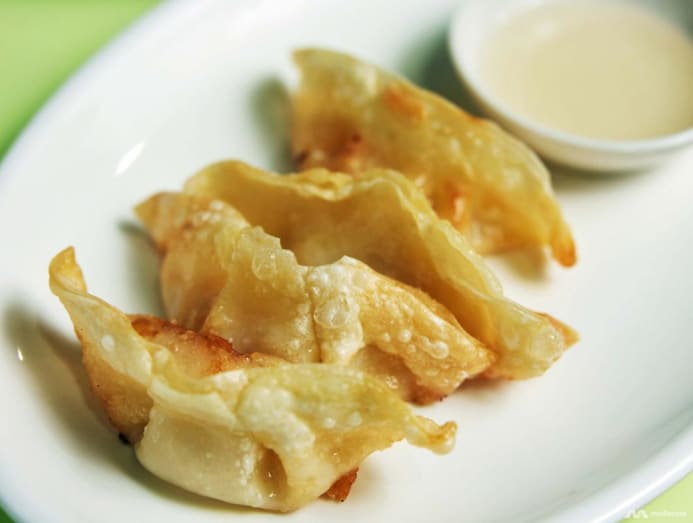
AGE GYOZA, S$3 FOR FOUR PIECES
The nicely crispy pan-fried gyoza here is stuffed with juicy minced pork, fish paste and veggies. Not bad for the price.
BOTTOM LINE
While Ah Huay’s Dry Laksa has great rempah-infused flavour, it could do with a heavier lashing of laksa paste to make up for the comforting milkiness of soupy laksa. Make sure to tell Luong you want more ‘sauce’.
Ah Huay’s Dry Laksa is at 51 Hougang Avenue 9, #01-17, Ci Yuan Hawker Centre, Singapore 538776. Open daily except Monday 11am to 2pm, 6pm to 9pm.
This story was originally published in 8Days.
For more 8Days stories, visit https://www.8days.sg/