An emotional win for theatres, Hollywood: Inside Out 2 scores US$295 million global opening
The animated sequel from Disney and Pixar earned US$155 million (S$209.6 million) in ticket sales in the United States and Canada, making it the biggest movie opening of 2024.
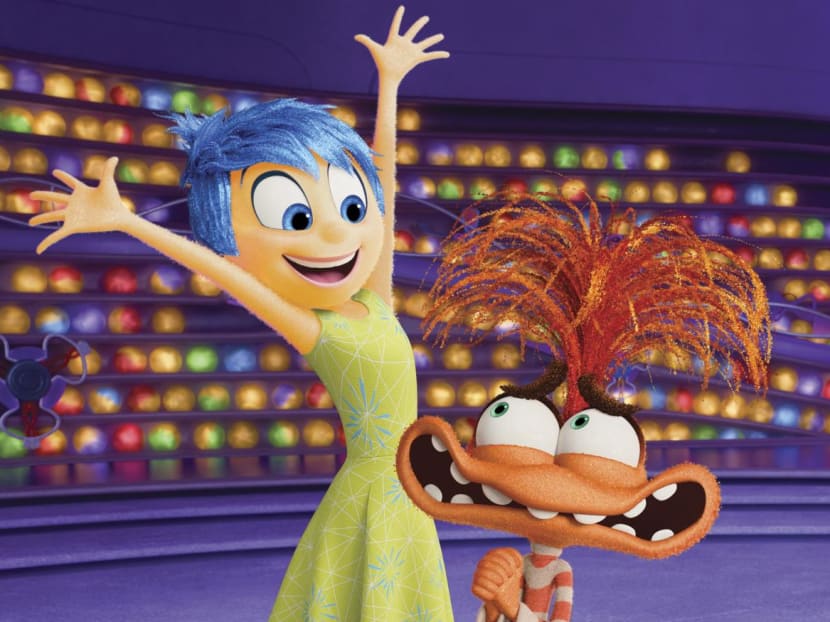
Joy, voiced by Amy Poehler, left, and Anxiety, voiced by Maya Hawke, in a scene from Inside Out 2. (Photo: Disney)
Hollywood’s summer movie anxieties gave way to joy this weekend with the massive debut of Disney and Pixar’s Inside Out 2. The animated sequel earned US$155 million (S$209.6 million) in ticket sales from 4,440 theatres in the United States and Canada, according to studio estimates on Sunday (Jun 16).
Not only was it the second-highest opening weekend in Pixar’s nearly 29 years of making films and the second-biggest animated opening ever (behind only the US$182.7 million launch of Incredibles 2 in 2018), it’s also the biggest of 2024, which has not had any films debut over US$100 million.
With an estimated US$140 million from international showings, Inside Out 2 had a staggering, and record-breaking, US$295 million global debut.
The success is significant for Pixar, marking a much-needed return to form for a studio that has had a string of underwhelming launches including Elemental, which did eventually become a success, and Lightyear, which didn’t.
It’s also vitally important for the greater Hollywood ecosystem and the health of theatrical exhibition, which had been running at a 26 per cent deficit before this weekend. Inside Out 2 marks the biggest opening since Barbie launched to US$162 million last July.
"This is a monumental weekend for movie theaters," said Paul Dergarabedian, the senior media analyst for Comscore.
Kelsey Mann directed Inside Out 2, which picks up with Riley as she turns 13. That means the arrival of new emotions like Anxiety (Maya Hawke), Ennui (Adèle Exarchopoulos), Envy (Ayo Edebiri) and Embarrassment (Paul Walter Hauser) to the mix. Amy Poehler once again lent her voice to Joy in a cast that also includes Tony Hale, Lewis Black and Phyllis Smith as Sadness.
It got glowing reviews from critics (92 per cent on Rotten Tomatoes) and polled audiences who gave it an A CinemaScore, suggesting that this won’t be a first-weekend wonder either. With kids out of school and an open market until Despicable Me 4 enters the ring over the Fourth of July, Inside Out 2 is just getting started.
Inside Out 2 is estimated to have cost around US$200 million to produce, which does not account for the millions spent on marketing. Going into the weekend, it was tracking for a debut in the US$90 million range, which would have been in line with Inside Out’s first weekend in June 2019. Even that would have been considered a terrific achievement, and enough to claim the biggest opening of the year – finally unseating March releases like Dune: Part Two and Godzilla x Kong.
It got off to a huge start with US$13 million from Thursday preview showings, which started at 3pm. As the only major release of the weekend, its theatrical footprint was equally impressive playing on 400 IMAX screens, over 900 “premium large format” screens and over 2,500 3D screens.
“The family audience still loves going to the movies,” Dergarabedian said. “As an outside of the home experience, it’s still a relative bargain.”
This recommitment to theatrical comes after Disney sent several Pixar films straight to its streaming service, Disney+, over the pandemic including Soul, Luca, and Turning Red. Last month, the New York Times reported that Pixar had decided to return its focus to feature films and not produce shows for Disney+ and that it had laid off 14 per cent of its workforce – about 175 employees.
“As important as this weekend is for the industry at large, for Pixar this is huge. They’ve been trying to get their groove back since the pandemic,” Dergarabedian said. “Pixar had for decades one of the most impressive box office track records ever. They’ve really come back big.”
Second place went to Sony's Bad Boys: Ride or Die, now in its second weekend with US$33 million, down only 42 per cent from its opening. In just 12 days, it's already earned over US$112 million domestically and US$214 million globally. As of Friday, the four-film franchise had crossed the US$1 billion mark.
Bad Boys' success last weekend was the start of a higher-earning turnaround for the lagging summer movie season. For Hollywood, the summer season, which runs from the first weekend in May through Labor Day, usually represents about 40 per cent of the yearly box office. The deficit is still significant, with ticket sales down 28 per cent for the summer and 24 per cent for the year (and this is still before “Barbenheimer”), but it's progress in a more promising direction nonetheless.
“We're not going to get there overnight,” Dergarabedian said. “But it’s good news for theatres. And we have some big movies on the way.”