2026 Michelin Guide Thailand: German restaurant Suhring wins coveted three stars
The German restaurant headlines a Michelin Guide unveiling marked by new promotions, poignant speeches, and a dining scene growing in depth and ambition.

(Photo: Michelin Guide Thailand)

This audio is generated by an AI tool.


Suhring rubber-stamped its credentials as arguably the top German fine-dining restaurant in the world today by joining Sorn as Thailand's second three-Michelin-starred venue.
The upgrade, the clear headline moment of the 2026 Michelin Guide Thailand launch ceremony held today at the Ritz Carlton Bangkok, prompted an emotional tribute from twins Mathias and Thomas Suhring, who dedicated the achievement to their grandmother, the woman who first inspired their love of cooking.
The nod to family mirrored last year’s ceremony, when Sorn chef-owner Supaksorn “Ice” Jongsiri dedicated his own third star to his young son. Different restaurants, different stories, but the same sense of lineage shaping Thailand’s ongoing culinary ascent.
If Suhring’s elevation felt inevitable, it’s because the restaurant has long operated at a three-star level.
Although billed as “German,” Suhring swerves bierkeller kitsch and stodgy Central European cliches. Instead, the twins chose a beautifully preserved garden villa down a leafy Sathorn side street as the home for their sophisticated, almost dreamlike interpretation of their homeland’s food.
The house retains its original floorplan, giving diners a procession of intimate rooms; the mezzanine, framed by floor-to-ceiling glass overlooking the tropical garden, is one of Bangkok’s most seductive dining spaces. The open kitchen at the back of the home, where the brothers move with the practised calm of artisans, adds another layer of charm.
Their cooking plays out as a sequence of highly refined small plates that reinterpret German tradition with modern precision. Old-school techniques such as pickling, curing, smoking and fermentation are pushed into elegant contemporary territory, delicate, inventive, quietly playful.
And while the chefs jokingly insist there is “zero local influence” in their flavour palates, they’re the first to say that the ambience, the sense of fun and ease, is entirely Thai in spirit.
“Wow, I mean, what can I say?” Mathias said on accepting the award. "There was no phone call to tip us off about this, so it comes as a total surprise. This award comes after years of shaping and sacrifice. Years full of emotion and ups and downs. We’re so happy we went through all this and are standing here today.”
They thanked their team, their guests, and Thailand for giving them the creative oxygen to build something unique.
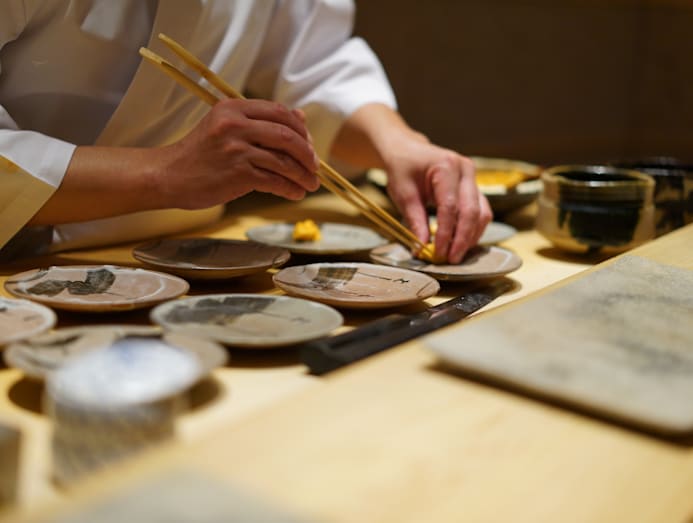
Two restaurants were promoted to two stars: Contemporary Indian Inddee, whose head chef, Sachin Poojary, called the upgrade a “dream come true,” and Anne-Sophie Pic at Le Normandie, the signature French fine dining venue at the Mandarin Oriental. They now sit alongside R-Haan, Chef's Table, Gaa, Cote by Mauro Colagreco, Mezzaluna, and Baan Tepa, adding depth to a category that continues to strengthen year on year.
At the one-star level, there was a mix of returns, debuts, and emotional moments. Gaggan, always a gravitational force in the region’s dining conversation, re-entered the starred category with one star. Bo.lan, revived after a hiatus, also secured a single star. David Thompson retained his star for Aksorn and received the Mentor Chef Award, delivering a warm, wry speech in Thai about working with “damn awkward young cooks who turned out to be quite exceptional. They’ve taught me much more than I could have taught them.”
New one-star entries included Sushi Saito, the Bangkok iteration of the renowned Tokyo venue; Etcha, where Giacomo Primante curates a “borderless dining” experience, combining European technique and Thai ingredients; Juksunchae, whose chef Henry Lee described the award as “a huge step forward for Korean cuisine in Thailand”; and Cannubi by Umberto Bombana, the signature Italian fine dining venue at the recently revamped Dusit Thani Bangkok hotel.
Nusara, Thitid “Ton” Tassanakajohn’s tribute to his late grandmother, also made a poignant debut on the one-star list. “I didn’t expect this,” Ton said. “This was a promise to her.” He also retained his star for Le Du, continuing an extraordinary run across multiple projects.
The full roster of one-star venues included Aksorn, AVANT, Coda, Gaggan, Jay Fai, IGNIV, Mia, Maison Dunand, Saneh Jaan, Bo.lan, Aulis, Samrub Samrub Thai, Signature, Suan Thip, etcha, Chim by Siam Wisdom, Blue by Alain Ducasse, Potong, Sushi Saito, GOAT, Haoma, Juksunchae, Pru, AKKEE, 80/20, Cannubi by Umberto Bombana, Resonance, Nahm, Nawa, Elements Inspired by Ciel Bleu, Wanna Yook, Le Du and Nusara.
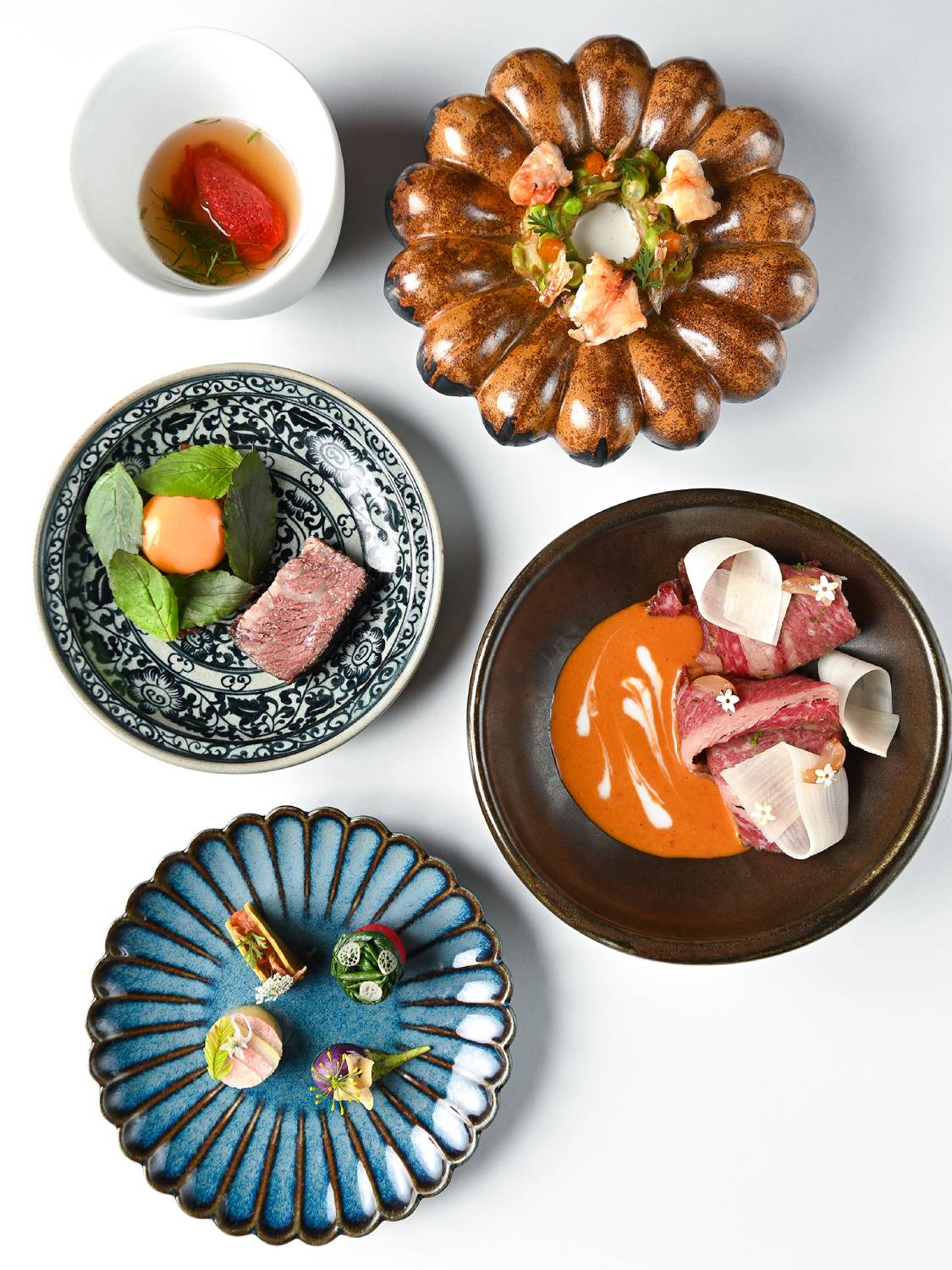
Pru remained, along with Aulis, the only one-star venue outside Bangkok. Led by Dutch chef Jimmy Ophorst, PRU also retained its Green Star for its community-to-fork ethos, underscoring Phuket’s ongoing contribution to the national dining map.
Other distinctions added colour to the afternoon. The Michelin Green Star list, recognising sustainability pioneers, included Baan Tepa, Haoma, Jampa, PRU, and newcomer GOAT. Tan-Parkorn Kosiyapong of GOAT thanked the guide for acknowledging the team’s efforts and promised to “keep trying to do the least harm to our earth.”
Service Awards went to Arsen Brahaj of Aulis. The Young Chef Award went to Suwijak Kunghae of Royd. Wilfrid Hocquet of Margo claimed Opening of the Year.
The ceremony itself unfolded against a backdrop of milestones. Michelin is marking the 125th anniversary of the guide, while its Thai edition celebrates nine years in the Kingdom.
Opening via video message, Gwendal Poullennec, International Director of the Michelin Guides, offered condolences for victims of floods in southern Thailand as well as the recent passing of Her Majesty Queen Sirikit, The Queen Mother, before paying tribute to the country's vibrancy and diversity.
He highlighted increasingly collaborative relationships between chefs and producers, a deeper commitment to mindful sourcing, and continued innovation in beverage pairings, especially the rise of sophisticated non-alcoholic programmes built around the country’s botanicals and herbs. Thailand’s dining scene, he said, “from street food to fine dining, is vibrant, dynamic and full of life.”
Thapanee Kiatphaibool, governor of the Tourism Authority of Thailand, expanded on the partnership that began in 2017. She said Michelin’s presence had elevated the country’s tourism profile and supported the wider economy, linking the ceremony to the TAT’s “Amazing Thailand: Unforgettable Experience” campaign. “Thailand is not only a place to visit but a place to feel,” she said. “This is how this country can heal you. Your passion and creativity have enhanced Thailand’s global reputation. You bring our story to life.”
This year’s guide lists 468 entries, up from 462 last year, reflecting the slow but steady expansion of restaurants operating at a level worthy of inspection.
The 2026 Bib Gourmand list, announced earlier, recognised 137 restaurants across the country, including 13 newcomers spanning Bangkok, Ayutthaya, Chiang Mai, Nakhon Ratchasima, Udon Thani, Surat Thani and Phang-nga. Poullennec emphasised the breadth of affordable, high-quality dining as one of Thailand’s defining strengths, noting the rise of chef-driven casual venues and the constant emergence of new independent operators.
When Thailand signed an initial five-year, THB143.5 million (US$4.64 million; S$5.4 million) agreement to host an annual Michelin Guide, some observers questioned the cost. The impact is now unmistakable. The country has nurtured a generation of young chefs, elevated older institutions, and built a dining culture that commands global attention.