Gods and grapes: Exploring the wines of Greece
CNA Luxury takes a wine-fuelled journey across Greece and discovers a world of fascinating indigenous grape varieties and scenic lands with Greek legends.
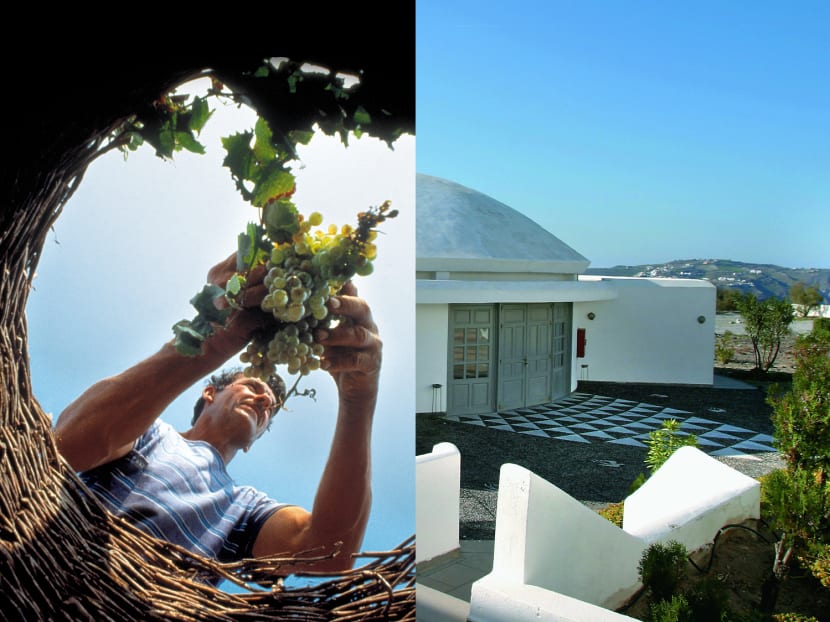
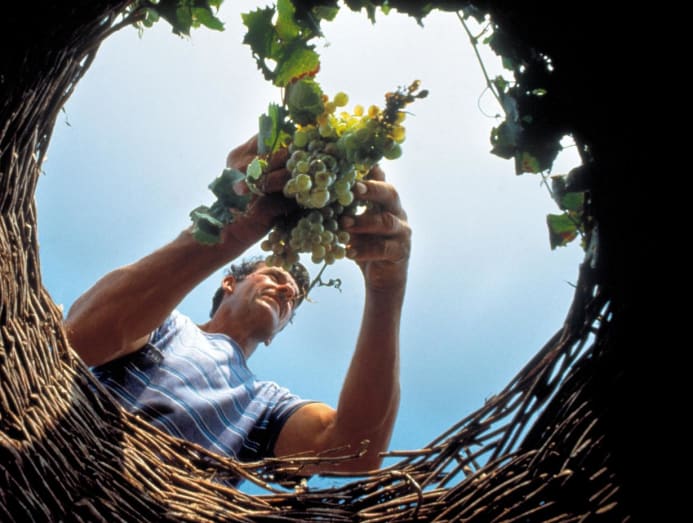
Boutari Winery in Santorini. (Photos: Boutari)

This audio is generated by an AI tool.


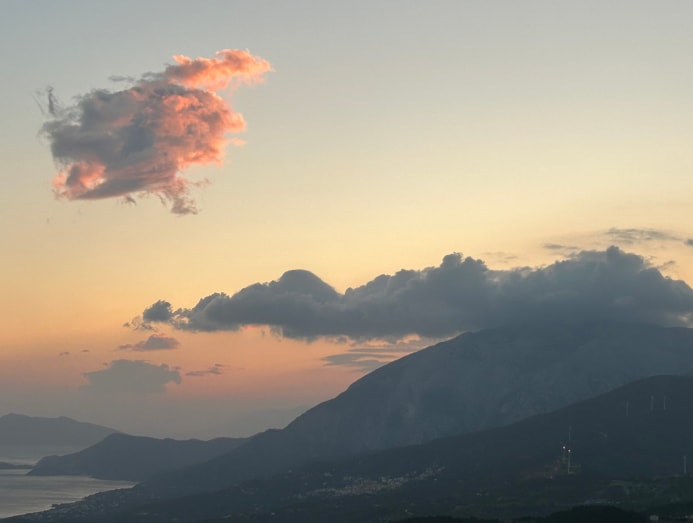
On the mountainous Greek island of Samos, our jeep swung onto an uphill hairpin, presenting us with a postcard-worthy view of the azure waters off the coast. The car radio crackled and picked up an upbeat song from a Turkish radio station. Our driver toggled a button until broadcasting sovereignty was restored with a Greek number.
Samos, located in the eastern Aegean Sea, is the closest island to Turkey. The Mycale Strait, a passage of water only 1.6km wide, is all that separates the southeastern corner of the island from the Turkish mainland. From Samos’ harbour town of Pythagoreio — named after the mathematician Pythagoras who was born on the island — you can see Mount Mycale on the Turkish side. In ancient times, the island stone’s throw to Anatolia meant it drew the attention of neighbouring empires, bringing conflict, invasions, and new dominions to its land. Today, people come to Samos for the beaches and wine. The island has more than 2,000 years of winemaking history. According to local legend, the first person to teach viticulture to the islanders was Agkaios, a member of the Argonauts, a group of seafaring heroes in Greek mythology.
SUN, SAND AND SWEET WINES
Because of Samos’ mountainous terrain, many vineyards are planted on terraces. One such terraced vineyard we visited belonged to Stelios Michalenas, a grower who works for United Winemaking Agricultural Cooperative of Samos (UWC Samos), one of the oldest and biggest winemaking cooperatives in Greece.
Located near the northern coast, Michalenas’ vineyard, which was handed down to him by his grandfather, sits on an altitude of 200m above sea level; low enough to pick up the sea breeze that cools the vines during summer. Michalenas grows only Muscat grapes here, turning them into Samos Grand Cru Vin Doux Naturel, one of the sweet fortified wines (vins doux) synonymous with the island. These wines are made by adding a neutral spirit to the wine must, which stops fermentation and leaves a high residual sugar content. The Grand Cru has a residual sugar of 130 grams per litre (g/l).
Muscat’s grapey, floral character lends itself well to sweet wine production. For a Grand Cru Vin Doux Naturel, only grapes from exceptional vineyards are used, and a low yield of not more than 530kg per acre is strictly followed.
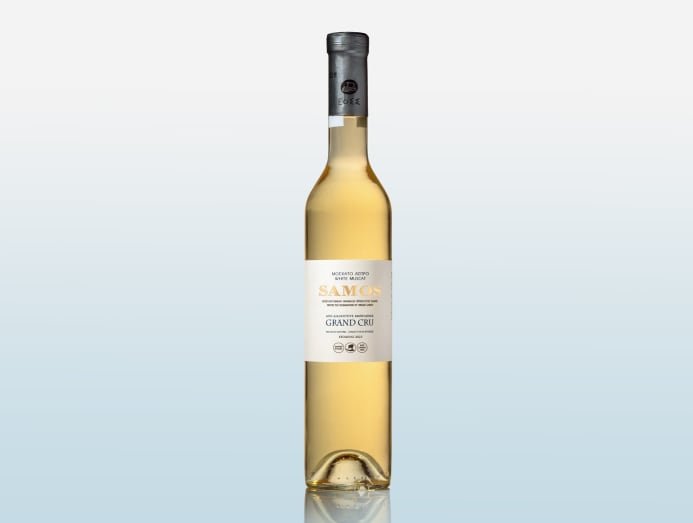
The Grand Cru is one of four sweet wine styles found in Samos — the others are the classic Vin Doux, with a residual sugar of 200 g/l; Vin Doux Naturel, with a sugar content of 150g/l; and Vin Naturellement Doux or “Nectar”, which isn’t fortified but made from sun-dried or rasinated grapes, with 150 to 170 g/l of residual sugar. The wines are aged in barrels for at least three years.
Over a wine-pairing dinner, we got to try a Samos 1963, a Vin Doux Naturel that was matured in barrels for 57 years. The ambrosia was stunning: It had a deep, brown hue reminiscent of a dark roast coffee. On the palate, the delicious notes of caramel, toffee, honey and nuts were wrapped up in an unctuous texture.
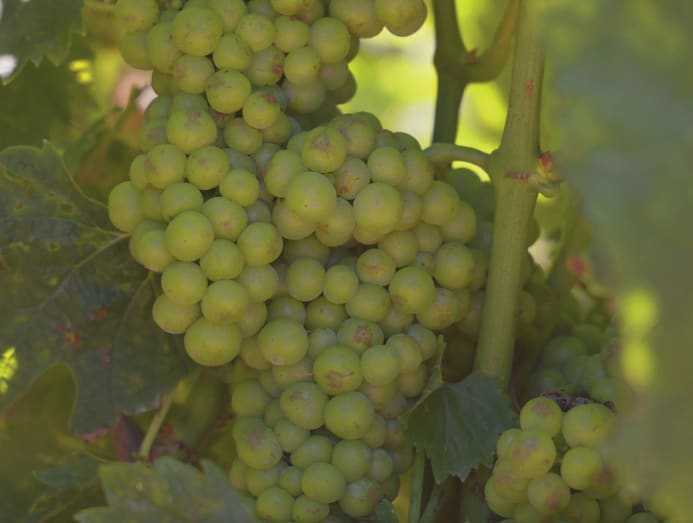
While sweet wines form the core of UWC Samos’ business, the cooperative expects its dry wines, which comprise 40 per cent of their production, to grow. The cooperative produces three natural wines, one of which is the Hermitis, a minerally and elegant Muscat from a biodynamic vineyard. Also noteworthy is the Primordial Soils (so named because of the ancestral vineyard in which Muscat is grown), a wine matured in concrete egg tanks for a year and bottled unfiltered.
MAKING GREEK GRAPES ACCESSIBLE
Arguably the most well-known grape variety of Greece, Assyrtiko (Ah-seer-ti-ko) is something of a rebel in the world of white grapes: It thrives in hot and dry climates without losing its crisp acidity; a rare quality for a white variety. It bears a close resemblance to Riesling or — if given a long slumber in barrels — an aged Chablis.
Originating from the volcanic island of Santorini, Assyrtiko has since spread all over the country, from the Peloponnese peninsula in southern Greece to Central Macedonia, and across the Aegean Islands. While it is usually made as a varietal wine, it is also increasingly common to find it as part of a blend, where its acidity lends texture and structure to the wine.
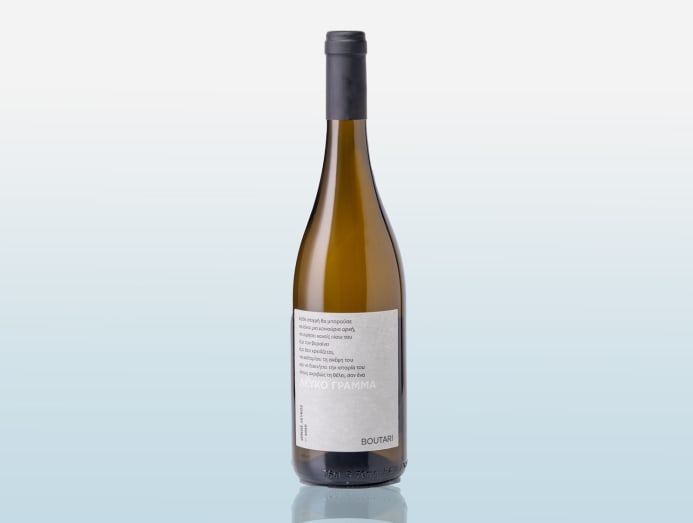
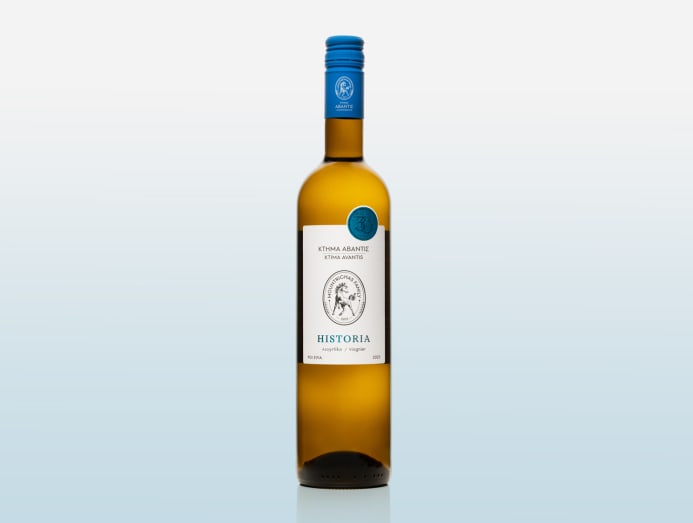
Avantis Estate is run by husband-and-wife winemakers Apostolos Mountrichas and Lenga Grigoriadou. Mountrichas’ great-grandfather began wine cultivation in the region in the 19th century, handing down winemaking know-how from generation to generation. From 60 hectares of vineyards, Avantis grows a variety of international and indigenous grapes, the latter of which includes Mavrokoudoura, an ancient red variety of Evia revived by Mountrichas.

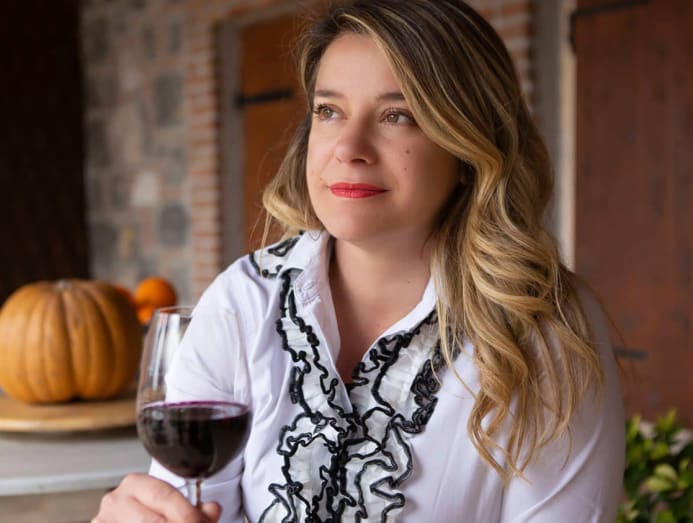
A clone of Mandilaria (a red variety commonly found in Crete and the Aegean Islands), Mavrokoudoura is one of the few black or red grapes with a red flesh — the majority of red grapes have white or pale flesh. In the past, locals used the grape juice to dye their clothes. The grape produces a medium- to full-bodied wine with pronounced notes of black fruit and spices. Tannins can range from firm to velvety, depending on the soil in which it is cultivated as well as its barrel ageing regimen. The sandy-clay soils from Avantis’ vineyard give rather soft tannins to the Avantis Estate Mavrokoudoura.
With more than 300 indigenous Greek grape varieties, newbies may not know where to start. But if you need to know just one red Greek grape, then it should be Agiorgitiko (Aye-yor-yee-ti-ko), the most widely planted indigenous red variety in Greece. In Peloponnese’s Nemea region, the grape is sometimes called “Blood of Hercules”, a reference to the half-god who supposedly drank Agiorgitiko after he killed the Nemean lion. The grape is known for its profile of cherries, liquorice, and light to medium tannins. It pairs well with red meat, game and pasta, but a young Agiorgitiko, one that is aged in oak for a year or less, is easy drinking on its own, too.
The search for the perfect region to grow red grapes like Agiorgitiko in Central Greece was what brought renowned winemaker Costa Lazaridi to Attica in 2000. In 1992, he had established his eponymous estate in Drama, where, according to the local myth, Dionysus, the god of wine, had introduced viticulture to the local aristocrats. In Attica, Lazaridi settled for a spot in the rustic town of Kapandriti, where he planted 20 hectares of vineyards on clay-limestone soils — an ideal turf for red grapes — at varying altitudes between 200m and 300m. He named the estate Oenotria Land. The vineyards face Lake Marathon, a reservoir that has been supplying water to Athens since the 1930s. A body of water retains heat, so the lake helps moderate temperatures in the vineyards; it provides some humidity to the vines, which is vital in cold weather.
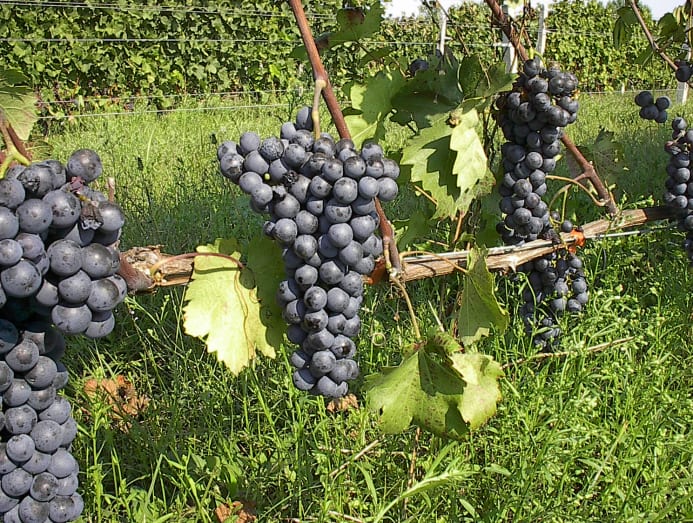
The Kapandriti estate makes a Syrah-Agiorgitiko blend, while its winery in Drama makes a straight Agiorgitiko under its Chateau Julia label. The 2021 Agiorgitiko from Drama spent a year in oak and is very approachable, with notes of strawberries and liquorice. Christos Fotiadis, facilities manager of the Kapandriti winery, said their Agiorgitikos “are generally more fragrant and easier to drink than those from other regions”.
The Kapandriti estate’s proximity to Athens — a 40-minute drive — means it is within easy reach for tourists from the capital. The winery also has a wine museum, a two-level 1,500sqm space that offers rich insights into the region’s winemaking history.
THE LITTLE REGION OF SPARKLING WINES
In the early 19th century, the English poet Lord Byron visited Zitsa, a village in the mountainous region of Ioannina in north-western Greece and became so enamoured with the hamlet and its wines that he wrote a poem dedicated to the town. Byron was effusive over the wines that were served to him while he was staying in a local monastery.
Located 26km away from the regional capital of Ioannina, Zitsa has a history of winemaking that dates back to the 16th century. It was the first region in Greece to cultivate Debina, a white grape known for its Granny Smith apple notes and moderate to high acidity. Currently, Zitsa is the only Greek region making dry and sparkling wines from Debina under Zitsa PDO (Protected Designation of Origin, the highest tier in Greek wine appellations), a status it gained in 1972.
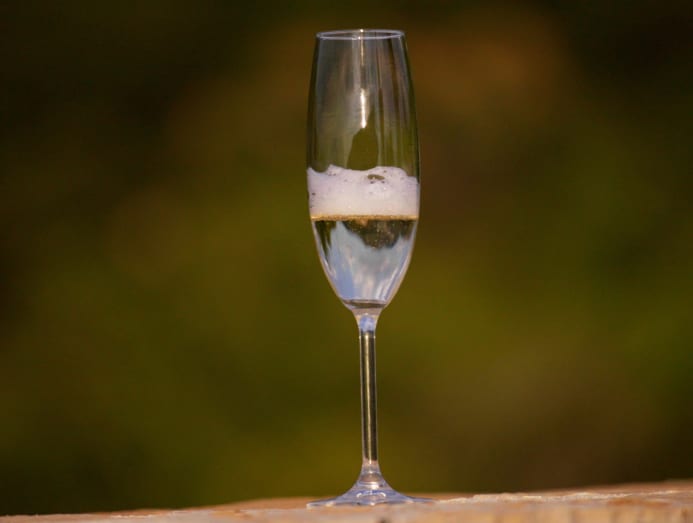
“We get a very high acidity with Debina here, which makes it good for making sparkling wine,” said Sintou Eleni, oenologist of Zitsa-based Zoinos winery. Zoinos was once part of the Agricultural Cooperative Union of Ioannina that was established in 1974; it left the union in 2006 to become an independent winery.
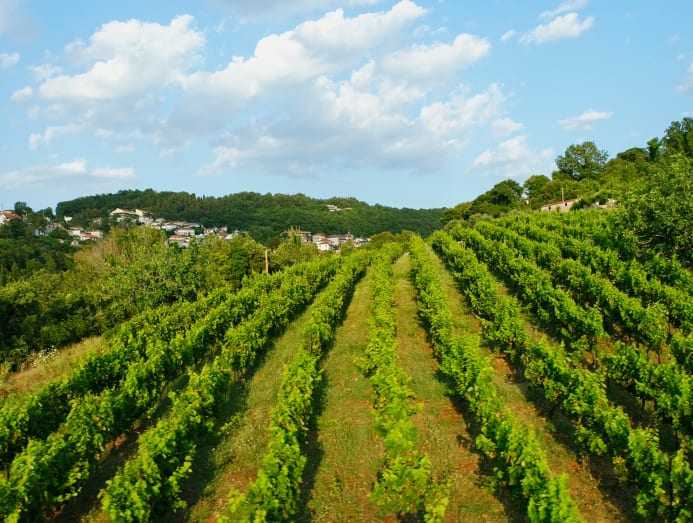
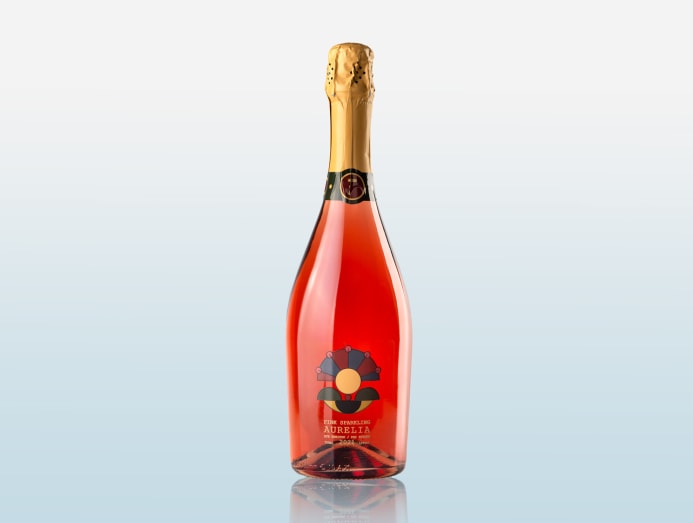
“Debina is unique to Zitsa; no other place grows this variety,” said Eleni. “In the 1980s, many producers in the region wanted to grow international varieties, but we are glad that they now want to focus on indigenous grapes.”