Are you familiar with Japanese wines? Here’s why they should be on your radar
Japan is producing delicate award-winning wines from international and native grapes, and they are available in Singapore.
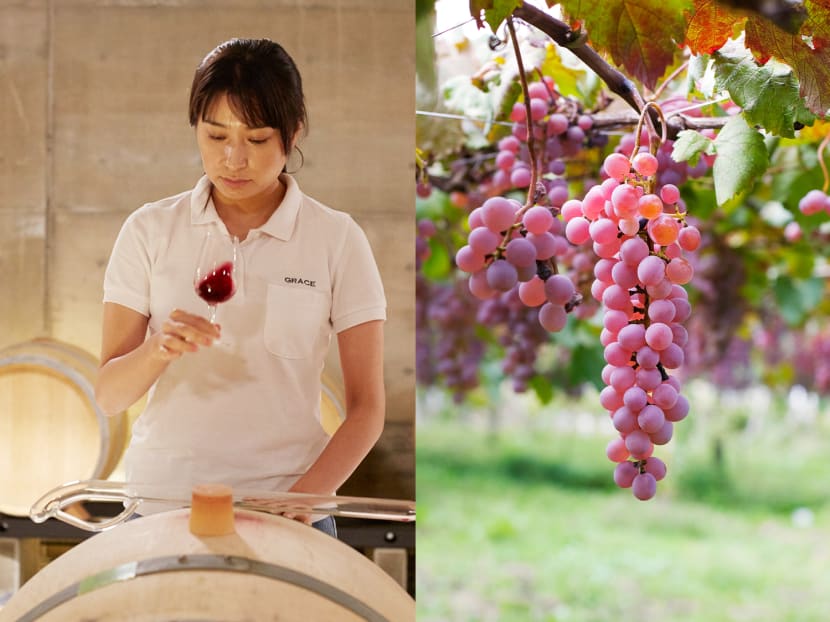
Japanese wineries have tripled over the last decade to almost 500, popping up all over the nation, some with French-trained winemakers and consultants. Ayana Misawa (left) is a French-trained winemaker. (Photos: Grace Wines & Koshu of Japan)

This audio is generated by an AI tool.


Beyond its clean cuisine, pristine sake and revered single malt whiskies, Japan is now carving a niche for itself in the wine world. Japanese wineries are producing a diverse array of wines from light whites to medium-bodied reds, from skin-contact orange wines to a plethora of natural wines. Some of these are also winning international awards.
Such is the interest and demand in local viticulture that wineries have tripled over the last decade to almost 500, popping up all over the nation, some with French trained winemakers and consultants. The prefectures of Yamanashi and Hokkaido are the garnering worldwide attention, with more wines coming out of Toyama, Nagano, and Yamagata.
At the recently held Japan Wine Expo in Osaka, over 100 wineries came down to pour their best. I was surrounded by Japanese renditions of pinot noir, chardonnay, sauvignon black, merlot, albarino and then indigenous and hybrid varietals (produced by crossing two grape species) of Koshu, Muscat Bailey A, Delaware, Black Queen, Bijou Noir and more.


“Japan is making some really interesting wines, both from hybrids and vinifera varieties,” surmised Dr Jamie Goode, renowned wine author, speaker, and guest emeritus of the expo. “The attention to detail in the vineyard and winery is really astonishing, and because of the challenges of the growing season here (warm, with high humidity and rainfall), there needs to be a precise approach. I love the delicacy of many of the wines.”
We also know that delicacy permeates Japanese cuisine and sake. It should come as no surprise that the same descriptor has found its way into wine. Could it just be the natural extension of the Japanese ethos? I am leaning that way.
As for Dr Goode, who sits at the forefront of the wine world, he is all but certain there is a bright future for Japan ahead: “The world is open to new wines. There will be a place for Japanese wines,” he asserted.
The wines have made their way to Singapore and are attracting attention and you will find them listed in fine dining restaurants like Odette and Zen, and also at wine centric establishments like Park 90, Fool, Kumi Den and Le Bon Funk.
But before you reach out for your first bottle, here are five things you need to know about Japanese wines.


JAPAN HAS A LONG HISTORY OF WINE PRODUCTION
As it turns out, viticulture is not a recent pursuit in Japan. Commercial winemaking started 146 years ago in the Meiji era when two young Japanese men from Yamanashi prefecture journeyed to Burgundy and Champagne in France to learn the art of winemaking. Others posit that viticulture traces back 5,000 years, based on earthenware found from the time, which shows traces of winemaking. In modern times, the Japanese winemaking industry is still in its nascence but growing fast.
KOSHU AND MUSCAT BAILEY A ARE THE FLAGSHIP INDIGENOUS NATIVE GRAPE
International grapes are grown alongside native Japanese grapes, of which Koshu and Muscat Bailey A are prominent. Dr Goode informed: “Koshu and Muscat Bailey A are just unique. They are only really grown in Japan and are ideally suited to the climate here with good bunch architecture (the berries are spaced nicely in the cluster), thick skins, and large berries. When handled well, they have the ability to make wines of high quality, but with unique personalities.”

The best expressions of Koshu – a pink-skinned white grape – come from Yamanashi, located an hour away from Tokyo. Compared to other prefectures, the region affords better climates, lower rainfall during the growing season, and a slight temperature drop from morning to evening, necessary for grapes to develop flavour. Here, Koshu delivers a swath of styles ranging from light and delicate to pithy lees-stirred styles and skin-contact orange wines. Moreover, Koshu pairs near-perfectly with sushi and sashimi. Some of the best examples I tasted come from Grace Winery, Lumiere, and Chateau Mercian.
Muscat Bailey A, a hybrid red grape developed for the Japanese climate, also grows in Yamanashi and produces light, low-tannin fruity reds with confected strawberry candy notes on the nose. Other emergent hybrids and crossings include the strawberry-toned Delaware, luscious Bijou Noir and Black Queen, which shows cherry notes and a good tannin structure.

HOKKAIDO IS THE REGION TO WATCH FOR PINOT NOIR AND CHARDONNAY EXPRESSION
The cold and precipitous Hokkaido produces high-quality wines from international grapes. “Most of the highly sought-after allocated wines usually come from Hokkaido region, mainly because the production area is very suitable for pinot noir and chardonnay,” said Mason Ng, wine director at Park 90. So much so that it has attracted the attention of Burgundy producers Etienne de Montille of Domaine de Montille, who bought 30 hectares in the region and produce a stunning pinot noir under the ‘de Montille and Hokkaido label’.
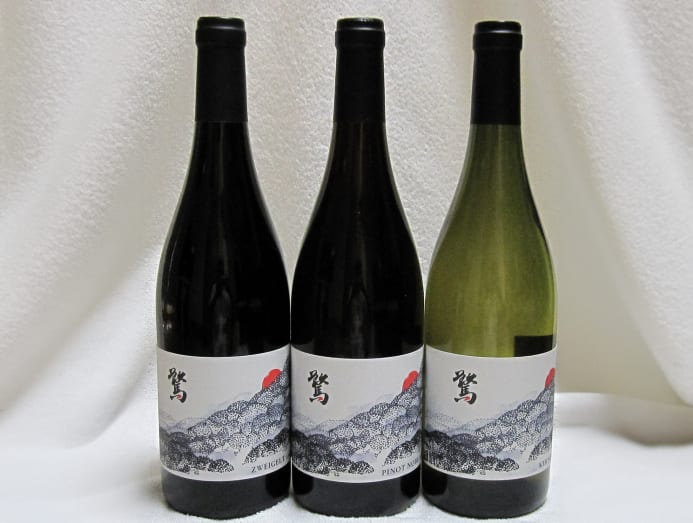
Being a cold region, Hokkaido is also home to German and Austrian hybrid varieties like Kerner, Blaufrankish, and St Laurent. Ng, who was recently appointed the first international ambassador for Hokkaido wines, is keeping a close eye on the region and points to key producers available locally, including the organically grown Domain Takahiko, Burgundy-trained Japanese vignerons’ Nora-Kura, Hirakawa winery, Yamazaki, and Niki Hills.
LIMITED PRODUCTION IS RAISING PRICES
Producing wines in Japan is not cheap. The growing conditions are challenging and untraditional, primarily because of humidity and unseasonal rainfall, which require extra care and maintenance.
Japanese vignerons have found ingenious workarounds without compromising their overarching noninterventionist winemaking philosophy. Some vines have steel frames built around them, which hoist plastic rain shelters to protect the bunches. In other parts, you can spot wax paper umbrellas painstakingly tied over grape bunches to protect from rain. Grapes are frequently grown in pergola structures, a vine training system deployed in parts of Spain, Italy, and Argentina to ward off humidity and risk of diseases like mildew and require hand harvesting.
Moreover, vineyard plots are usually small, and their outputs are even smaller, resulting in miniscule production, which barely satisfies the local market needs. As for the quality, around 15 per cent to 20 per cent of the wines sampled were beautiful, refined, and delicate, and the remaining are works in the making.

THE BEST WINES ARE AVAILABLE IN SINGAPORE
According to wine importer Artisan Cellars’ Jeanne Kiock, there is a real attraction and curiosity for Japanese products in Singapore, and people are willing to try them. “When our clients start their journey with Japanese wines, it's easier for them to understand and compare the grapes they already know, such as the conventional grapes,” she shared. Among native grapes, Koshu is proving to be a real attraction for its crisp and aromatic profile.

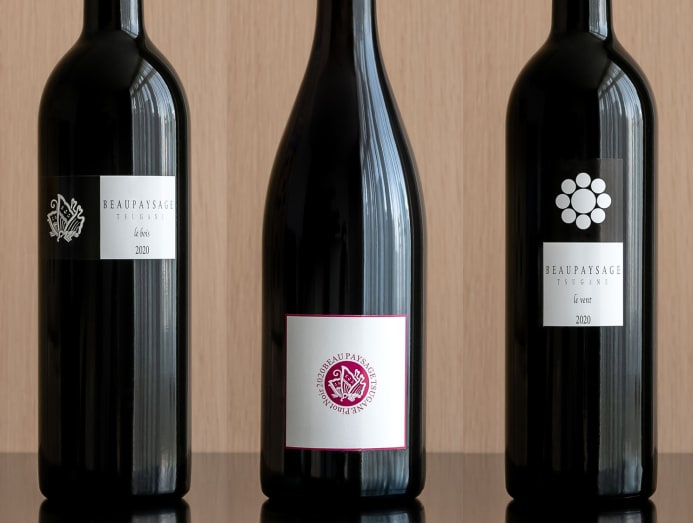
Yamanashi’s Beau Paysage, Tochigo’s Coco Farm and Hokkaido-based Domain Mont are some of the known labels available in the market, but since allocation are small, the best wines sell out quickly.
As for food pairings, you can play safe and pair with Japanese cuisine of sushi, crispy tempura, and uni, or enjoy the wines with Western cuisines. Sine the wines veer towards the delicate and pack a signature umami kick, they are best enjoyed with seafood, salads, and elevated vegetarian dishes.