Martell’s latest cognac is the first edition of a new collection that honours France’s chateaus
Martell’s new L’Or de Jean Martell - Reserve du Chateau de Chanteloup is a blend of more than 1,400 eaux-de-vie. CNA Luxury visits the maison to find out more about the making of its latest cognac.

Martell's new L'Or de Jean Martell - Reserve du Chateau de Chanteloup. (Photo: Pernod Ricard)

This audio is generated by an AI tool.


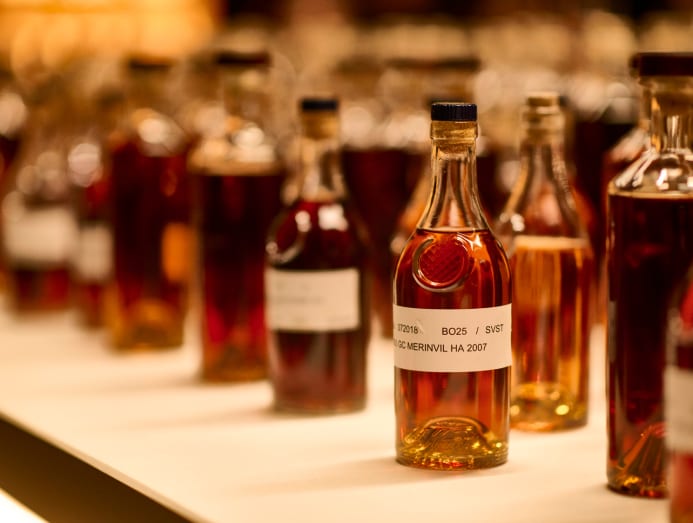
In the labyrinthine Maison Martell in Cognac, the air smells ancient and musky but it is here that the old becomes new, especially in the Atelier, a glass-walled room where the maison’s blenders nose, taste, and blend eaux-de-vie (the spirits distilled from wine made from Ugni Blanc grapes) of different ages for a new cognac. Among the 540 bottles of eaux-de-vie on a table, I spot one that is dated 1949, prompting a Charles Trenet song to play in my head. This precious liquid will eventually become part of a reserve blend, which gets incorporated into another blend of eaux-de-vie. The final assemblage then becomes a new edition of a Martell spirit, such as the L’Or de Jean Martell - Reserve du Chateau de Chanteloup, the maison’s new luxury cognac.
The L’Or de Jean Martell - Reserve du Chateau de Chanteloup pays homage to what the maison calls the “French art de vivre”. It is the first iteration of the maison’s new collection that honours France’s most prestigious chateaus. Located in Borderies, the 16th century Chateau de Chanteloup was the historic home of the Martell family, and thus chosen as the emblematic estate to kick off the collection. The Reserve du Chateau de Chanteloup will be launched in Singapore on Feb 29 2024; only 1,000 individually numbered decanters are available worldwide.
THE ART OF THE BLEND
Established in 1715, Maison Martell is the oldest of the great cognac houses. A stunning amount of care has been dedicated to the upkeep of its archives — Tolkien-esque tomes of copies of letters and notes written by the late founder Jean Martell and his successors since the maison’s founding. Geraldine Galland, Martell’s archivist, shared that if they lined up all the documents starting from 1715, they would have 5km of archives.
“The most significant record we have is a letter dating back to 1720, where Jean Martell talks about the importance of visiting the different regions or crus in Cognac — Borderies, Petite Champagne, Grand Champagne, and Frambois — and tasting with the growers,” said Galland. “[It lets us] understand his values. Some of the family-run growers mentioned in the document are still working with us today, 300 years later.”
It is this 300-year-old craft of making fine cognac that the maison hopes to capture in the Reserve du Chateau de Chanteloup. The challenge fell largely upon Christophe Valtaud, Martell’s cellar master — and only the ninth cellar master since the maison’s founding. Valtaud, a Cognac native and son of grape growers who “grew up among barrels”, said inputs from the marketing team helped him conceptualise the product. “The marketing side understands consumer expectations perfectly and that helps to start the creation process,” he said, adding that the product brief was defined more than two years ago.
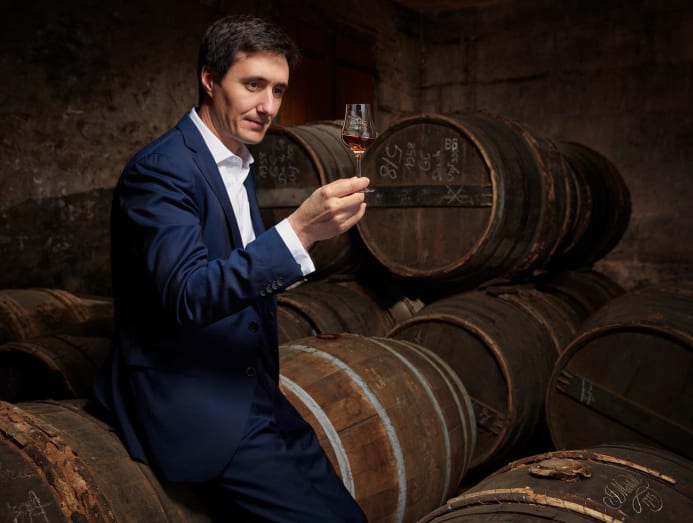
Fans of Martell would remember that Valtaud had lent his expertise to the maison’s previous special releases like the L’Or de Jean Martell Zodiac collection, which was launched in 2022. Released annually since, the Zodiac edition is a blend that includes eaux-de-vie drawn from different years of the animal in the Chinese zodiac for the corresponding year. For example, 2024’s Zodiac is named the Assemblage du Dragon, which includes eaux-de-vie from the years of the Dragon.
Valtaud said the Zodiac was a bit more formulaic and precise, while the Reserve du Chateau de Chanteloup allowed him to be more creative. The Reserve du Chateau de Chanteloup is a blend of more than 1,400 eaux-de-vie that have been aged in 300-year-old oak barrels. Valtaud was coy about the oldest eau-de-vie in the assemblage but shared that it is over a century old.
How does one blend 1,400 eaux-de-vie? It’s easy to picture them being mixed together at the same time but that would be near impossible and — for Valtaud and his team of blenders — a perversion. The blending team first divides the eaux-de-vie into groups of reserve blends, their recipes each created by previous cellar masters, to develop a specific base profile. Recreating each reserve is no easy task: In the Reserve du Chateau de Chanteloup, there are nine reserve blends; one of them is the Classe de Borderies, which alone comprises 60 eaux-de-vie.
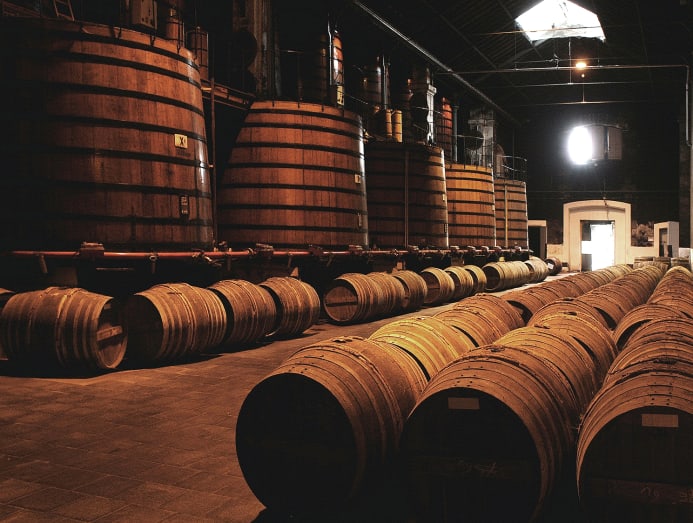

The reserve blends are then combined with younger eaux-de-vie in several stages to enhance the overall complexity of the spirit. The exact order in which one blends can also impact the final taste; everyone in the blending team has to follow the same sequence, said Valtaud. “It’s like adding butter to your food before or after cooking it; you don’t get the same taste each time,” he quipped.
There are a couple of cardinal rules in blending: One should only blend the eaux-de-vie according to age, for example, by grouping the older ones together and similarly for the younger ones, before the final assemblage. One should never blend eaux-de-vie from two different crus or terroirs, such as Borderies and Grand Champagne, together.
The Reserve du Chateau de Chanteloup comprises eaux-de-vie from four crus. “Borderies gives a kind of floral elegance; Grande Champagne gives structure and power; Petite Champagne offers a kind of style similar to Grand Champagne but less intense; and with Frambois, you get a fruity character,” explained Valtaud.
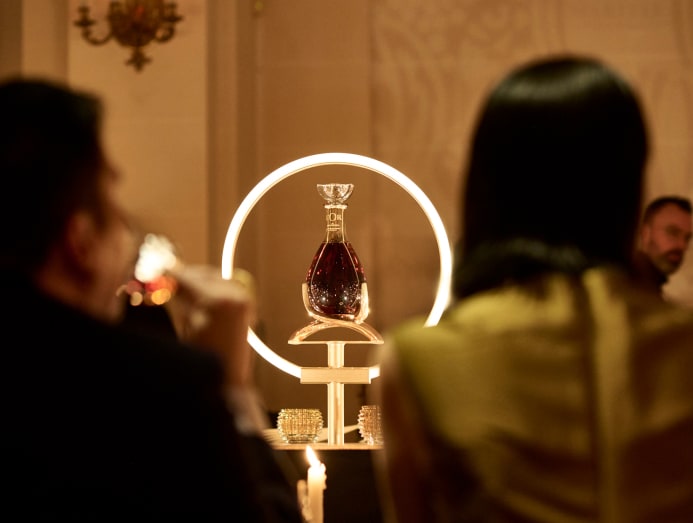
CNA Luxury had the opportunity to taste the Reserve du Chateau de Chanteloup when it was unveiled to the media at a gala dinner at Chateau de Chanteloup last December. The cognac offered an inviting bouquet of honeysuckle, cherries, and liquorice. Right off the bat, the rich, velvety texture of the cognac was apparent on the palate; the flavours of caramel, dried herbs, cedar, and vanilla were very well-integrated and seamless. Valtaud and his team seem to have pulled off something spectacular here. This is a precious cognac you’d want to open on special occasions.
The bottle design is also a conversation starter. A collaboration between luxury crystal maker Baccarat and Martell — their sixth partnership since 1949 — the crystal decanter has a sleek profile with a neck wrapped in 19-carat gold and topped by an elegant stopper. It is presented in an ornate wooden box.
“When I joined Martell seven years ago, I was hoping for a chance to make a new L’Or de Jean Martell edition so I started preparing the reserves [for the Reserve du Chateau de Chanteloup],” said Valtaud. “I learned from my predecessor that it is important to take your time [to make cognac], and to not work for ourselves but for those that come after us — that’s why we created so many reserve blends so we can share them with future cellar masters.”
L’Or de Jean Martell - Reserve du Chateau de Chanteloup, S$9,888 (US$7,338). For more information, visit Martell's website
CNA Luxury was at Maison Martell in Cognac at the invitation of Pernod Ricard.