Luxury travel for less: Insider tips to score discounted business class flights and hotels
Business class airline tickets for half-price? From credit card hacks to savvy booking strategies, these expert tips from travel pros and finance strategists prove that you too can travel like a VIP, without breaking the bank.
Redeem points, book smarter, and use hotel loyalty benefits to cut costs. (Art: CNA/Chern Ling; Photo: iStock)

This audio is generated by an AI tool.


On a recent holiday to Europe with her son Jake, 12, Tjin Lee saved about half her business class airfare. How did she do it? By transiting in Bangkok first. “Flights out of neighbouring airports can often cost more than 50 per cent less,” read the caption on her Instagram reel.
Lee, the founder of marketing and digital agency Gusto Collective, paid S$2,725 (US$2,130) for a one-way ticket from Bangkok to Tivat, Montenegro, with a two-hour,10-minute layover in Istanbul, Türkiye. And that was the more expensive option; a cheaper, S$1,625 fare involved transferring airlines.
Hubbing through neighbouring airports to take advantage of cheaper, long-haul business class flights is a common travel hack among those in-the-know. “I have friends who have been doing this for years,” Lee explained. “But I only started doing it myself this year.”
This was because Lee was planning a trip to Mt Kilimanjaro, Tanzania. The cheapest business class flights departing Singapore to Nairobi, Kenya on Qatar Airways cost more than S$10,000. But rerouting through Bangkok yielded tickets that were S$3,700. “We fly economy as a family for shorter flights,” said Lee. “We only ‘splurge’ when it’s a red-eye flight and I need to be rested.”

It’s a strategy that savvy travellers like Aaron Wong, founder of travel hacking site The MileLion, also employs. “Sometimes what I’ll do is look out for these ‘bargain’ fares out of nearby cities, and I just buy a cheap budget ticket so I can position myself in Kuala Lumpur or Bangkok, and then I fly the rest [of my journey] in business class,” he shared.
AFFORDABLE LUXURY TRAVEL: SMART BOOKING STRATEGIES THAT SAVE YOU MORE
According to online travel agency (OTA) Booking.com’s Travel Trends 2025 survey, one in four travellers in Asia prioritise luxury accommodations in their destinations. But one in two prioritise good value for money.
“This suggests that while premium experiences remain desirable, travellers are becoming increasingly strategic about when and where they book to stretch their budgets without compromising on comfort,” said Anthony Lu, regional director for Southeast Asia and China of Booking.com.
Cyndi Hui has one golden rule for booking smarter. The senior director, commercial for flight fare aggregator Skyscanner, offered: “Be as flexible as possible – with your travel dates, destinations and even departure airports – to unlock the best deals.”

For Lu, it means setting up flight alerts and finding great value in underrated destinations. He recommended locales like Kuala Lumpur and Ho Chi Minh City, which offer five-star hotels and upscale experiences at lower prices compared to more traditional luxury hotspots.

When it comes to redeeming business class tickets, finance influencer Jiax The Piggy Banker suggested considering non-traditional destinations such as Cape Town, South Africa. “It costs almost the same amount of miles as a Singapore-Japan redemption, but you’re getting twice the flight time,” he explained.
At the very least, this means an additional meal service. “Plus, that route is not that competitive compared to more popular destinations. South Africa is super underrated and one of the top destinations I’ve been to. You can get a super luxurious experience there on budget pricing.”
BEST CREDIT CARD STRATEGIES AND MILES HACKS FOR CHEAP BUSINESS CLASS FLIGHTS
Credit cards have become one of the most powerful tools in the savvy traveller’s arsenal. With the right combination of sign-up bonuses, strategic spending, and airline transfer partnerships, it’s now possible to turn everyday expenses into business-class flights and five-star stays.
The trick? Understanding which cards earn the most valuable points, and how to redeem them like a pro.
When it comes to miles hacking, Jiax said that it’s best to start with a card that offers four miles per dollar (mpd) on categories that you typically would spend the most on every month. For example, the UOB Preferred Platinum Visa for dining and grocery shopping, or the Citi Rewards Card for online spending or shopping.
“These are super beginner cards that have a minimum spend of S$1,000 a month [to trigger the 4mpd earn rate], so if you max out S$1,000 per month, that’s 4,000 miles per month. In 13 months, you’ll have 52,000 miles, which is enough for an economy saver redemption [ticket] from Singapore to Japan,” he explained.
On his travels, Jiax typically pairs the Instarem Amaze card with his Citi Rewards Card for spending up to S$1,000. Beyond that amount, he switches to his Citi PremierMiles Card to take advantage of the 2.2mpd offered.

Another tip? Stack your rewards. Occasionally, said Jiax, travel experience platforms like Pelago give an additional six to eight mpd on bookings. “That’s a total of 12mpd… and you can book for your friends as well… so your true earn rate is even higher,” he continued.
Wong is careful to emphasise that playing the miles game is “more about getting more back on your spend, and not about spending more”. He also recommends the UOB Preferred Platinum Visa and Citi Rewards Card, as well as the UOB Visa Signature and the DBS Woman’s World Card, which, he said, men are also eligible for.
“Between these four cards, I have covered around 90-plus per cent of my day-to-day spend,” said Wong. “And if you do the math, the total bonus cap across these four cards… is up to S$5,500. So S$5,500 at 4mpd translates to 22,000 miles per month [or 264,000 miles per year].”
Be sure to look out for sign-up bonuses as well, said Wong. These are the one-time bonuses that reward new users with air miles, hotel stays, airline lounge access and other benefits.
FREQUENT FLYER MILES AND HOTEL LOYALTY PROGRAMMES: HOW TO MAXIMISE REWARDS

Joining a frequent flyer programme costs nothing, but the perks – such as priority boarding, lounge access, free upgrades and flight redemptions – can be worth thousands of dollars. With many airlines now offering family pooling or accelerated status through credit card tie-ups, it has never been easier to climb the ranks.
Here, Wong advised travellers to look beyond membership with Singapore Airlines’ Krisflyer. “There’s nothing [inherently] wrong with Krisflyer. It’s just that, depending on where you want to fly to, a different frequent flyer programme could offer superior value,” he said.
Travellers should think of frequent flyer programmes as different tools in the toolbox, he added. “For example, if you want to fly from Singapore to the US in business class, Singapore Airlines will charge you 107,500 miles each way. But if you repeat that same itinerary with, say, EVA Air through their Infinity MileageLands programme, it’s 75,000 miles.”
Hotel loyalty programmes, on the other hand, call for a different strategy. Most, if not all of them, said Wong, have “gone into a bit of a hyperinflation mode” post-pandemic, making it difficult for members to get good value by doing what they were doing before the pandemic.

The programmes now reflect dynamic pricing, which, based on supply and demand, means they now vary based on the cash rates. However, Wong says that the big hotel groups – such as IHG, Hilton, Hyatt and Marriott – occasionally sell their loyalty points at a discount.
A hotel room in the Maldives that goes for US$2,000 (S$2,600) a night could be had for as little as US$600 a night, using points redemption. For certain groups, such as Hilton and Marriott, you also get the fifth night free, Wong said. “That means you pay for four nights but redeem for five nights.
“Let’s say a hotel room costs 120,000 points a night. You’ll pay 480,000 points, which works out to US$480 – if you buy points at half a cent each – a night for a room that usually costs four or five times that.”
What if your preferred hotel doesn’t belong to any major group or chain? Wong’s advice is to book through luxury travel agents such as HoteLux or Virtuoso. Membership with one of these OTAs offers benefits such as room upgrades, complimentary breakfasts, early check-in and late check-outs, as well as US$100 hotel credits.
HOW TO USE OTAS AND METASEARCH ENGINES FOR THE BEST TRAVEL DEALS
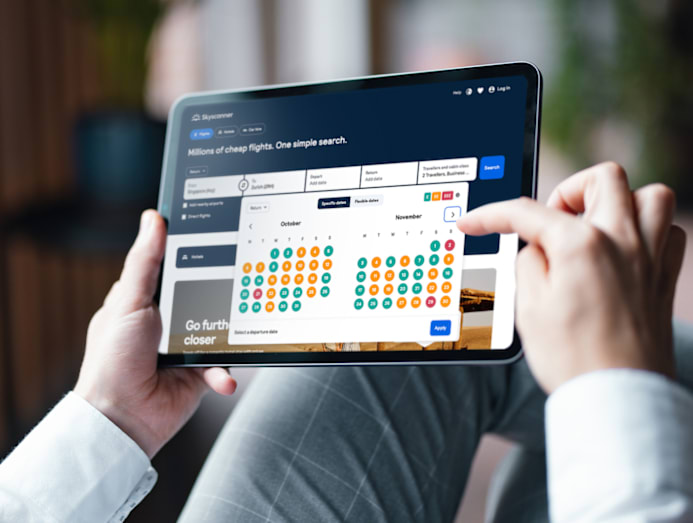
OTAs like Booking.com, Expedia and Trip.com, as well as metasearch engines like Skyscanner have revolutionised how we book travel. But not all platforms are created equal. With the right filters, fare alerts, and date flexibility, travellers can unlock serious value.
Lee is a fan of Expedia, Google Flights and Skyscanner. “I always sort [my travel plans] according to shortest flights, or least [number of] connections, then compare all the rates for value and most convenient connections,” she says.
Conventional wisdom suggests that booking your ticket as early as possible will score you the best fares. Certainly, this is what Lee abides by. “I try to plan travel eight-to-10 months ahead for the school holiday season, knowing that many other families will be looking for similar comforts in March, June, September and the year-end. I’ve already booked trips for the September and December holidays, and am currently planning for next March,” she said.

However, conventional wisdom runs counter to what the data indicates. “When it comes to how far in advance you should be booking your ticket, there’s a sweet spot,” explained Expedia’s Lavinia Rajaram, who’s the platform’s director of global brand communications. “The best time to book international flights is 61 to 70 days before departure – this can save Singapore travellers up to eight per cent. Booking too far in advance (more than two months) could actually cost you more.”
And if you ever wondered if there was a right day to book your flight, well, there is. “Thursdays are the best days to depart for the biggest savings. Domestic travellers who fly on a Thursday instead of a Monday can save up to 15 per cent. For international flights, Thursday departures can save you up to 31 per cent compared to flying on a Sunday,” said Lavinia.

Hui pointed to Skyscanner’s Month View as a gamechanger for flexible travellers. It reveals the cheapest days to fly at a glance: Think Jeju in September (from S$262 return) to Zurich in October (from S$705).
On the app, the DROPS feature highlights flights that have fallen at least 20 per cent in price, and is updated hourly. A search conducted on Jul 7 revealed that flights to Shanghai between Sep 20 and Sep 27 were going for S$835, down S$273. Similarly, Tokyo registered a drop of S$660 for flights between Nov 7 to Nov 15.
Over at Booking.com, Lu highlighted the platform’s Genius loyalty programme, which rewards members with perks such as 10 per cent to 20 per cent discounts, free breakfasts, room upgrades and priority customer support.
New AI-driven features such as Smart Filters and its AI Trip Planner also allow travellers to describe their ideal stay in their own words, while large language models offer personalised recommendations based on real-time user input.
Meanwhile, Trip.com Singapore’s general manager Edmund Ong urged travellers to take advantage of “double-dipping” when they book flights on the platform – earning both Trip Coins and airline miles. Additionally, the platform’s Telegram group occasionally releases coupons exclusively on the channel.
With accommodation bookings, the platform’s filters can sieve properties that are Muslim-friendly, offer free cancellations, and even how recently the property opened or underwent a renovation.
MULTI-CURRENCY DIGITAL ACCOUNTS: SWIPE SMART, SAVE BIG – BUT USERS BEWARE

Once the domain of seasoned business travellers, multi-currency digital cards and wallets such as Instarem, Revolut, Wise and YouTrip have gone mainstream. They let travellers manage multiple currencies (useful if your trip involves a few border hops) and avoid poor exchange rates and foreign transaction fees.
The MileLion’s Wong appreciates the fact that these accounts “allow you to lock in today’s rates for tomorrow’s spend,” he said. “If I believe that today’s Singapore dollar to Japanese yen rate is good, I can go ahead and buy some yen now and spend it six months later. That is something that credit and debit cards don’t offer.”
However, Wong cautioned that there is a trade-off involved. “If you use a multi-currency debit card, you will enjoy better rates than a credit card, but [you won’t reap the same benefits]. If you use a traditional miles card, you’ll incur a 3.25 per cent foreign currency transaction fee, but then you’d also earn miles, as much as 4mpd in some cases,” he explained.
Jiax, too, is a fan of miles accumulation. “I usually prioritise miles as rewards,” he said. “The only time [I use the e-payment system] Changi Pay is in China, because it doesn’t charge you three per cent on transactions over 200 renminbi (S$36).” Changi Pay is an e-wallet built into the Changi Airport app that facilitates payment through the Alipay network.
There is also an increased risk of fraud, especially with multi-currency debit cards. “With debit cards, any transaction, whether legitimate or fraudulent, is immediately deducted from your balance. With credit cards, there’s no actual cash outflow from your end.”

TRAVEL LIKE YOU MEAN IT
In 2025, luxury travel no longer belongs exclusively to the elite. With a little homework, it’s entirely possible to fly business, stay in style, and enjoy the finer things for far less than you’d expect. Once you’ve experienced what’s possible, there’s no going back to full-fare anything.
“A big misconception about the cost of luxury [travel] is that it’s always about price tags or exclusivity,” said Lee. “The truth is, true luxury often lies in the experience, the time enjoyed, discovering a special place off-the-beaten path, or simply in deeply personal, meaningful moments.”