This retired couple’s home is a retro haven after 40 years of collecting, restoring and selling vintage items
What does a home filled with decades of nostalgia look like? CNA Lifestyle takes a peek inside the treasure-filled home of husband-and-wife duo Tan Yan Khim and Molly Yap, who have been collecting and restoring old items for over 40 years.

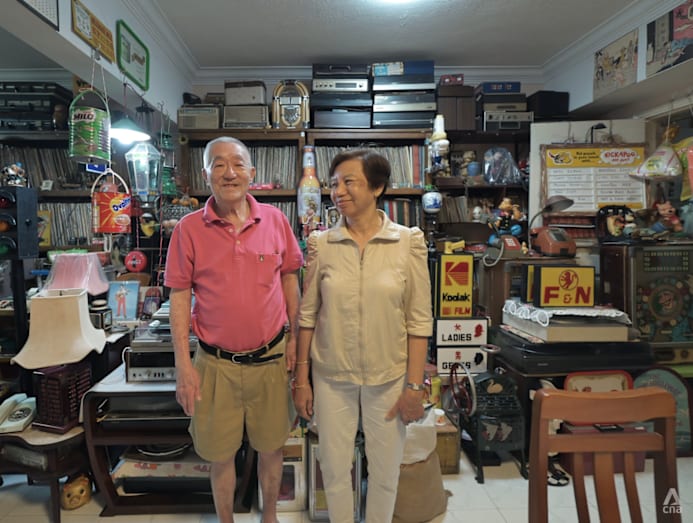
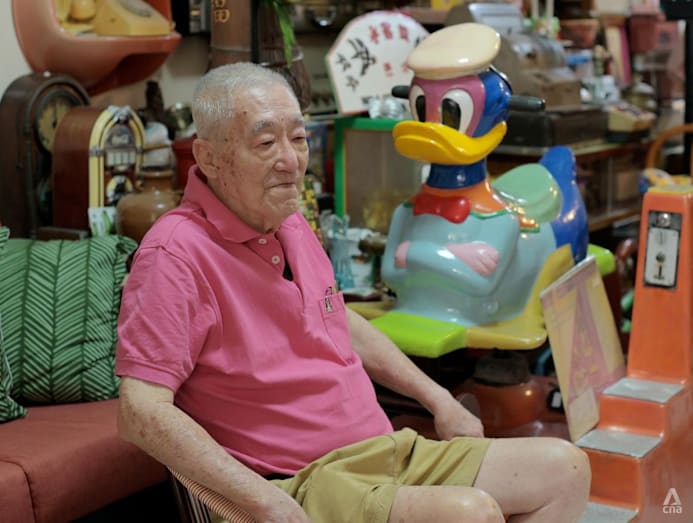
Husband-and-wife duo Tan Yan Khim and Molly Yap have filled their home with retro items amassed over the past 40 years. (Photo: CNA/Joyee Koo)

This audio is generated by an AI tool.


Stepping inside the home of Tan Yan Khim and his wife Molly Yap feels like walking straight into a retro time capsule, one so densely packed that your eyes barely know where to land first.
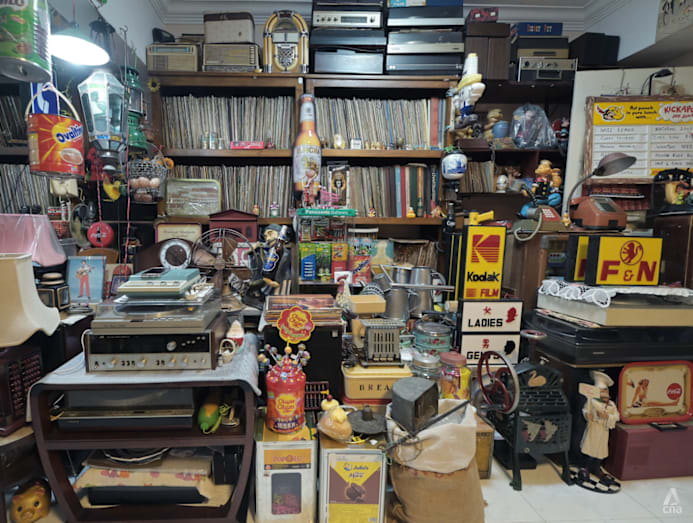
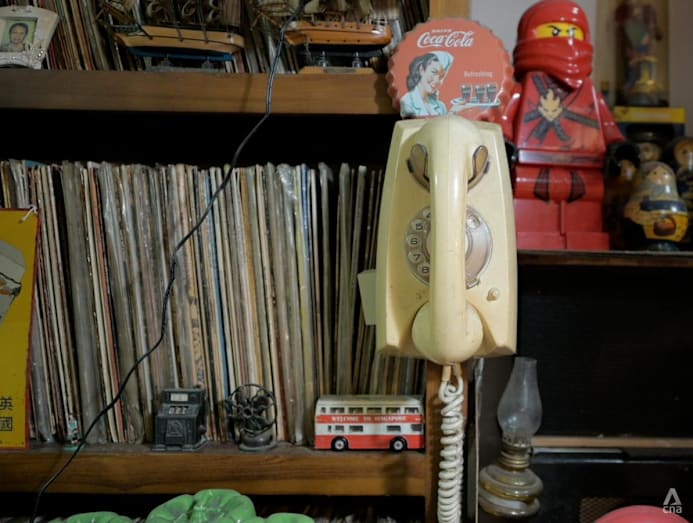
Nearly every wall of their terrace home in MacPherson is adorned with nostalgic signboards, clocks, old light fittings and vintage advertisements. Old-school furniture fills the space, from kopitiam tables and chairs to well-worn cabinets.
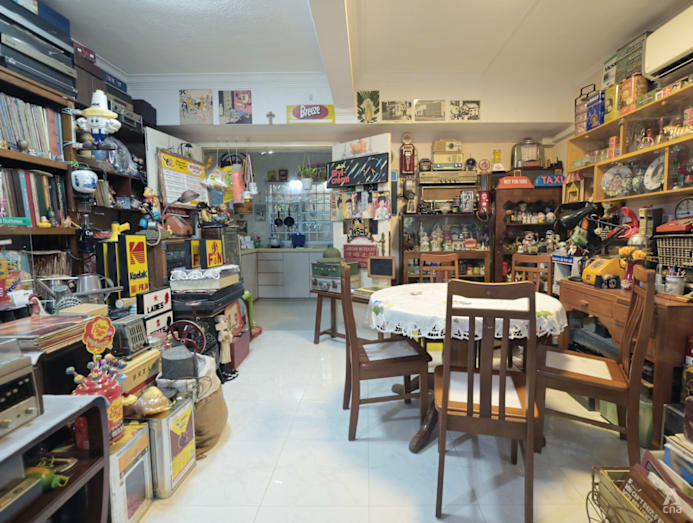

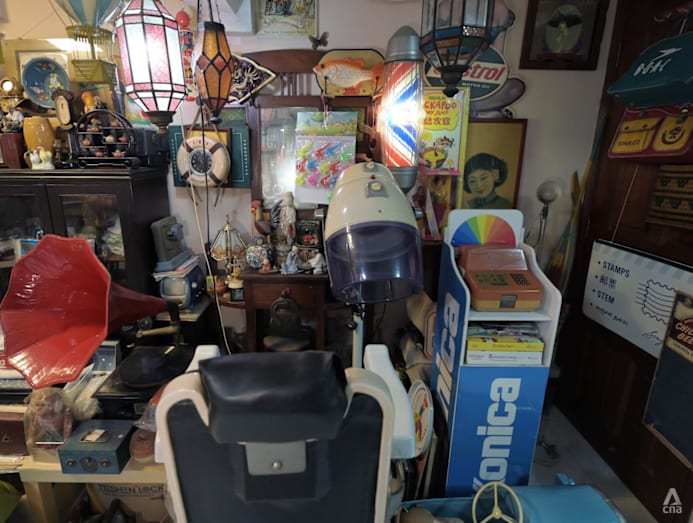
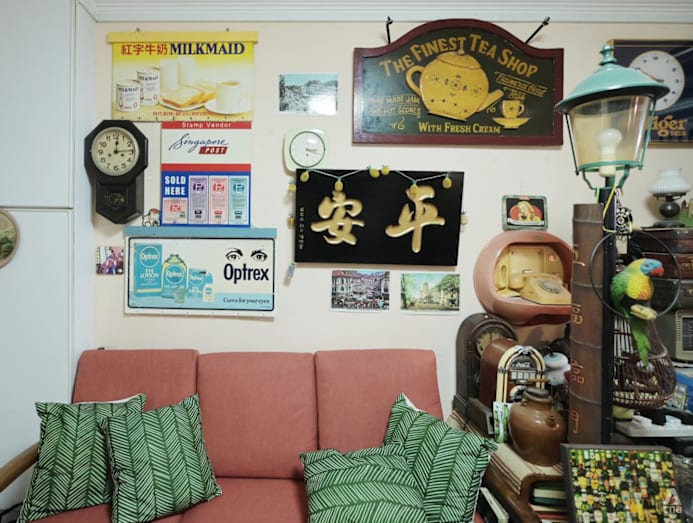
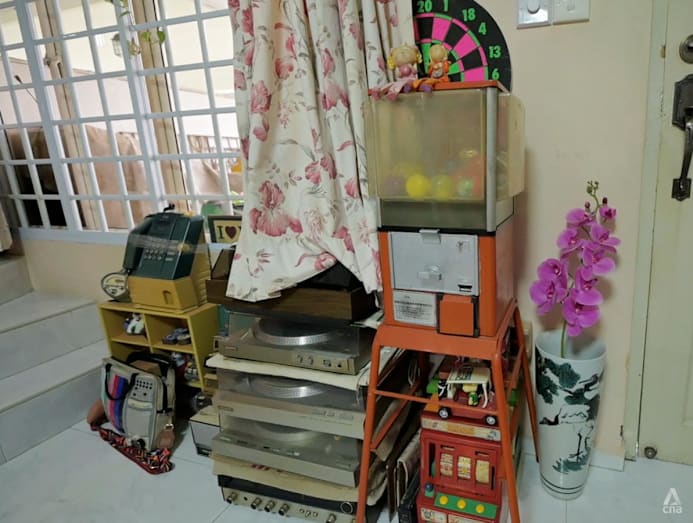
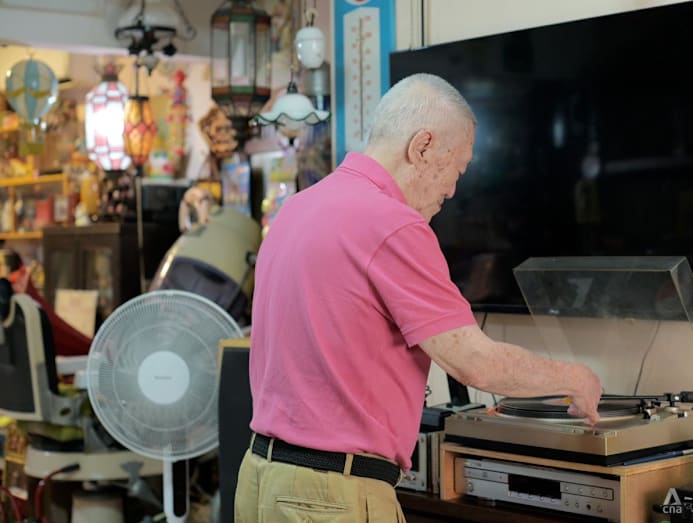
Thousands of vinyl records are stacked, shelved and displayed throughout the home, accompanied by record players. In the middle of the living room is a coin-operated kiddie ride, the kind that instantly transports you back to childhood. Another standout is a full barber set-up, complete with a retro chair, a hooded hair steamer and a spinning barber pole.
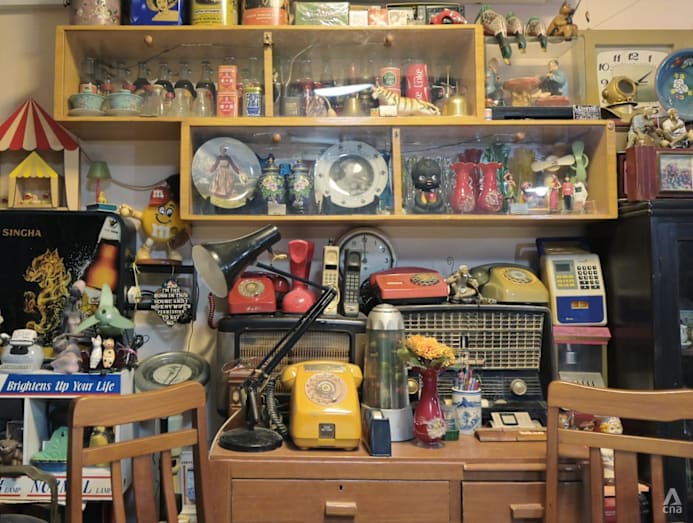
Look closer and you’ll spot even more: telephones, film cameras, lamps, radios, cookware and household items from decades past. The collection is so extensive that, in fact, the only modern things you’re likely to find in their living area are their air-conditioning units, television and a standing fan.
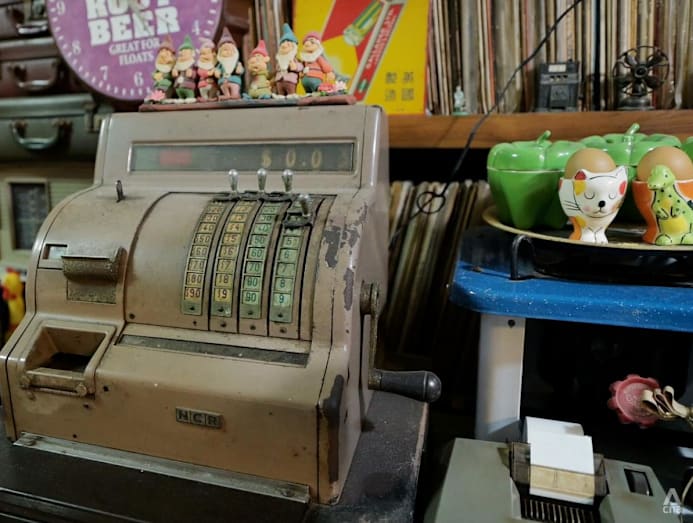
WHEN COLLECTING BECAME MORE THAN A HOBBY
The 80-year-old Tan first developed an interest in retro items in his late 30s, when he would wander around the old Sungei Road flea market after work, while waiting for his wife, now 74.
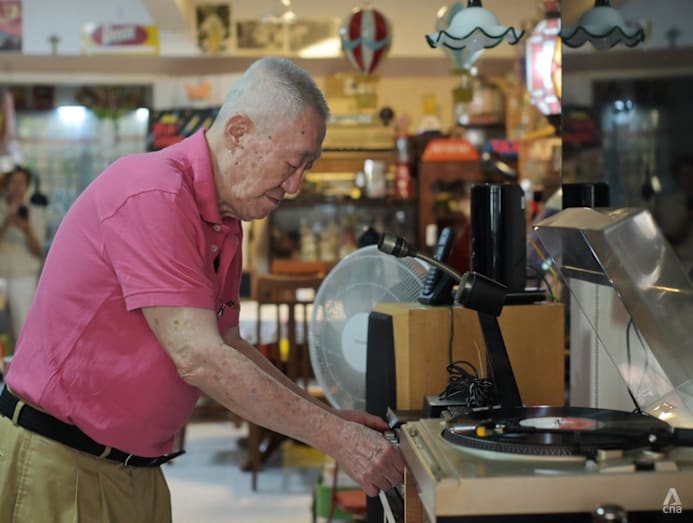
He started collecting items that were nostalgic to him, recalling how his father also used to buy these things like record players and grandfather clocks when he was young. What began as casual browsing eventually led to a small collection.
Aside from Sungei Road market, he also found many gems along Dickson Road, where karung guni (rag-and-bone) sellers would lay out items from their lorries. Over time, he struck up friendships with them. “If there’s anything they don’t want, they would just come to me,” he said.
At the time, Tan was working at IBM. When retrenchments began happening across the company, he started thinking seriously about his future.
“I don’t want to just sit in the coffee shop, talk to friends and end up having a dispute, quarrel with other people. I’ve seen this,” Tan said.
With that in mind, he opened a shop in 2000 as his wife was also keen to try her hand at selling. Initially, Yap did not see the appeal of these objects for sale. But her interest eventually grew after managing to sell some pieces and realising they held real value. Today, she is arguably even more invested in the collection than her husband.
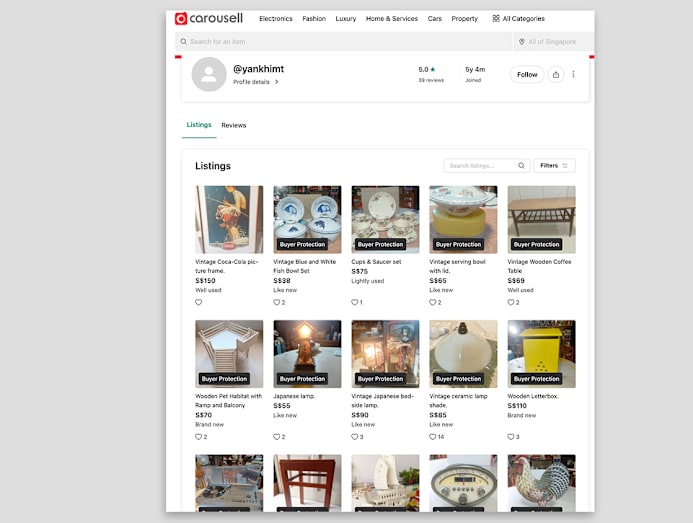
The shop, however, lasted only two years as rental costs rose. They went on to open a couple more shops at different locations, but business was still not enough to cover the rent. Eventually, they shifted to online marketplace Carousell, where they now sell under the account @yankhimt.
FINDING FULFILMENT IN FIXING OLD THINGS
When it came to buying objects, Tan was careful not to spend too much.
“Some of the sellers on Sungei Road knew me as the ‘cheapo’. They would tell me, ‘You cannot afford them lah,’” Tan shared. “I would look for cheap things that are worth paying and worth buying, and that I’m able to restore. If I cannot restore, I won’t touch it.”


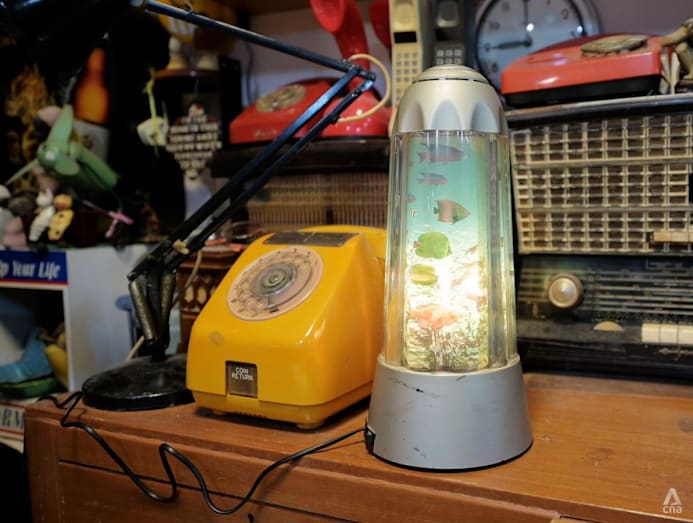
With a background in electronics, Tan had the basic skills to identify what could be repaired. Over the years, he has restored vinyl players, jukeboxes and lamps, among other items. The process often required time and patience, but when it worked, the reward was personal.
“When I do it, I feel a sense of fulfillment,” he said.
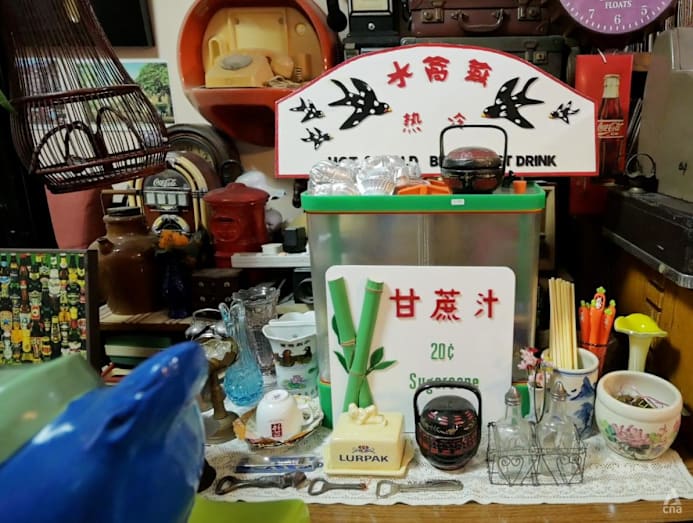
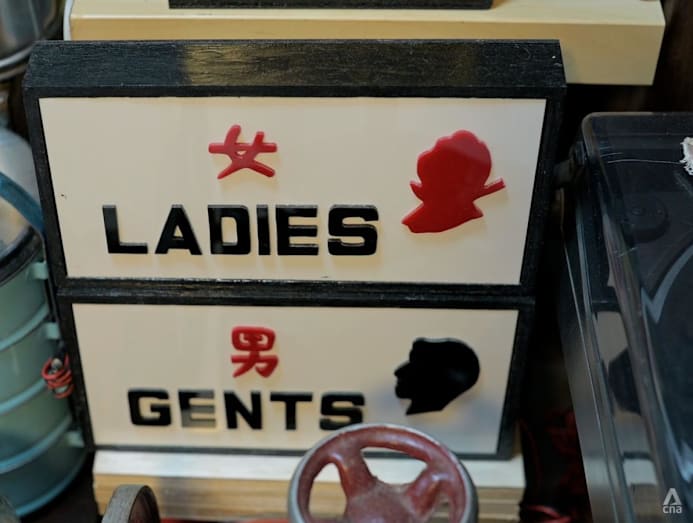
Beyond electronics, Tan also picked up new skills along the way. After he retired, he began visiting shops that specialised in acrylic signboards, observing their work and chatting with the craftsmen there. They shared materials with him, and over time, he learned to restore the old signboards he had collected at home and even created many of his own.
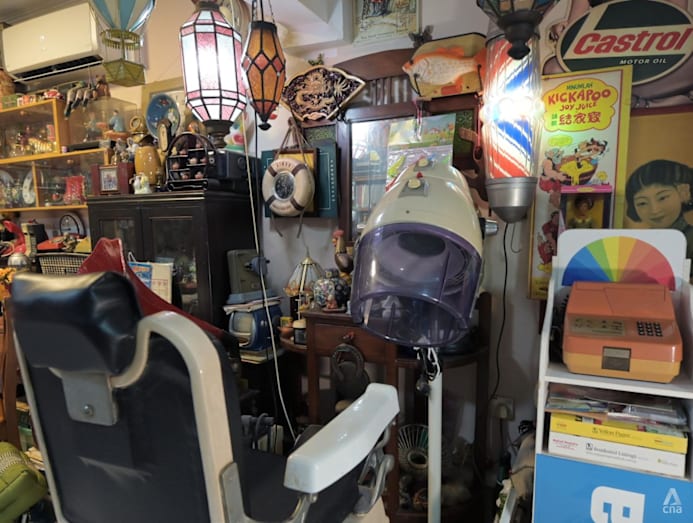
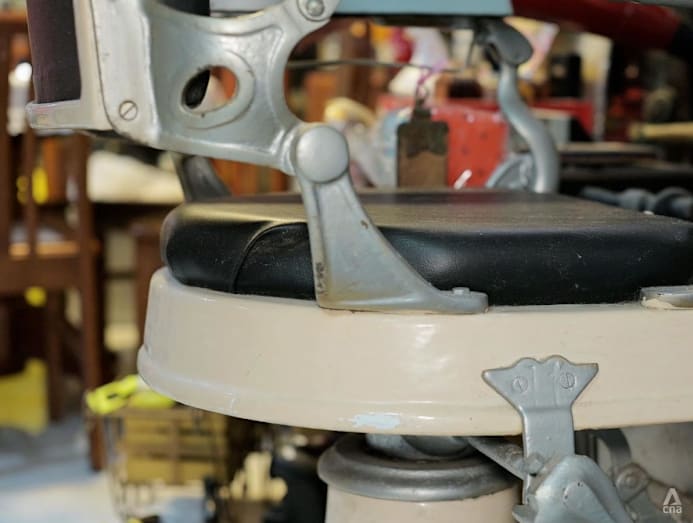
Another notable example is the barber chair in his home. When he first received it, it was little more than a “skeleton”, stripped of its cushioning and upholstery. Tan took on the restoration himself, handling the upholstery work from start to finish. Today, it stands as a complete, fully restored piece once again.
THE ART OF SELLING NOSTAGIC FINDS
If Tan’s strength lies in restoration, Yap’s is in selling, and she is candid about what motivates her.
“The money,” Yap said with a laugh.
Yap manages their Carousell account and handles customer enquiries, from setting prices to negotiating sales. These days, she is also the one keeping an eye out for new finds, and is often the one doing the buying. In fact, Tan sometimes has to rein her in.
“When she buys, she expects me to restore it,” Tan laughed. “But when she sells it, she takes all the money.”


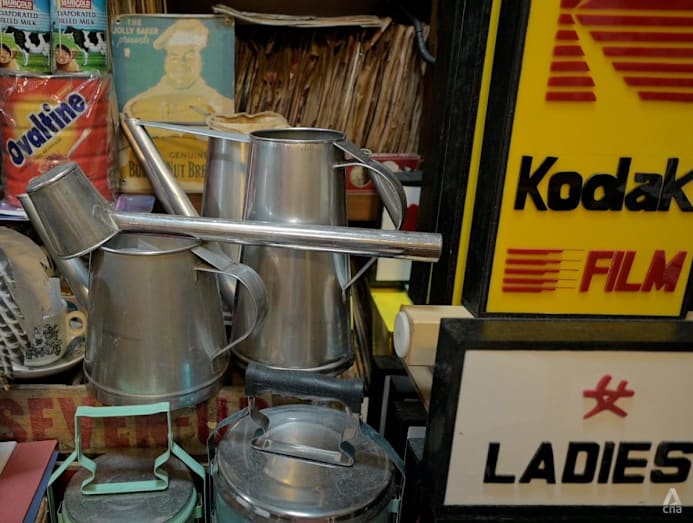
Years in the trade have taught Yap that selling nostalgic items is not about hard selling. It is about understanding demand, building trust and knowing when to say yes. Over time, she has built a strong network through word of mouth, repeat customers and personal recommendations. More recently, she has also begun renting pieces out to event organisers and production houses looking for props.
“When they need it, they will call me. If I don’t have it, I’ll try to look out for it.”
SELLING ON, NOT HOLDING ON
The antiques scene, Tan admits, is competitive, especially within a small circle of seasoned collectors and dealers, most of whom are around the same age. Many buy and sell among themselves, and whoever eventually reaches the customer stands to make the most money.
But for Tan, profit has never been the main driver. The real satisfaction still comes from restoring an item and seeing it move on to a new owner.

The couple have two sons, but neither is interested in taking over the business. They are pragmatic about it and have no intention of forcing the collection on the next generation.
That practicality extends to their collection too. When asked if there is anything they would never sell, the answer is almost everything is fair game.
“Maybe a few records I will keep,” Tan shared. “That’s all.”