British designer Max Lamb and Potato Head transform Bali’s waste into design gold
The celebrated British designer brings his experimental flair to Bali, turning discarded materials – from plastics to glass – into a visionary collection that redefines sustainable luxury.
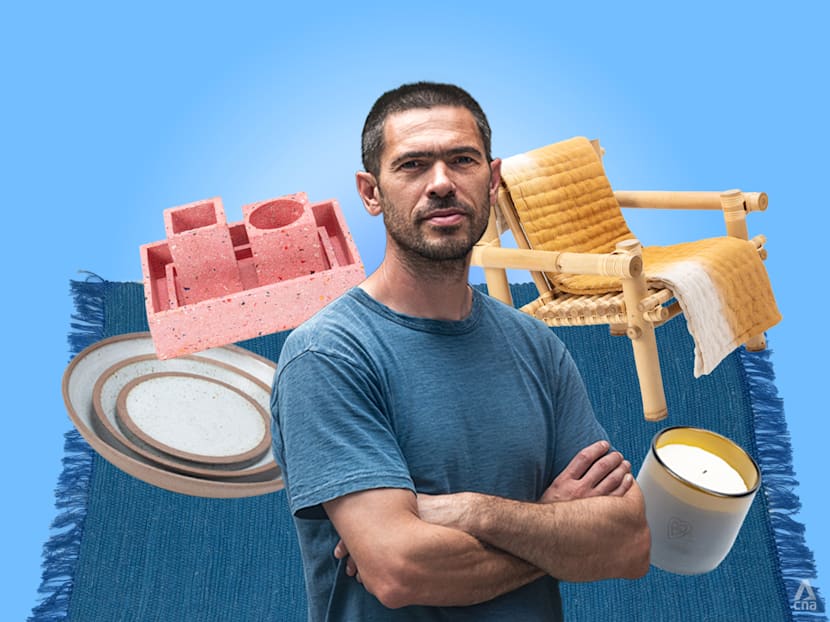
British designer Max Lamb joins forces with Potato Head Bali to turn discarded materials into striking, eco-conscious furniture and home pieces. (Photos: Potato Head & Putu Eka Permata; Art: CNA/Jasper Loh)

This audio is generated by an AI tool.
As a child, Max Lamb was always creative with his hands. “We experimented with dyeing our own sheets – even my family’s socks – and I bought a sewing machine to practice sewing. That hands-on dive into something unfamiliar felt especially meaningful; it was both humbling and creatively energising,” he shared in an email interview.
The 45-year-old Englishman continued to work in this way when he became a product and furniture designer. Lamb’s work pushes the boundaries of material and form, experimenting with techniques that range from traditional methods to digital design, and utilising unorthodox materials such as volcanic rock, pewter, nanocrystalline copper, and even his grandfather’s fallen tree.
After earning a degree in art and design in Amersham & Wycombe College in 2000, Lamb attended Northumbria University to study three-dimensional design. A master’s degree in Design Products from London’s prestigious Royal College of Art followed, along with an early career under his professor, the renowned industrial designer Tom Dixon, known for his process-driven designs.
In 2007, Lamb founded his eponymous studio. To date, he has worked with brands such as Nike and Acne Studios, but his projects are driven by genuine experimentation and conceptual rigour rather than style. Insights into his process reveal a combination of scientific grounding and alchemic unpredictability; his designs eschew conventional expressions of domestic items, tiptoeing into the realm of ‘design art’.
“It has been a guiding principle from a young age that I can’t be a good designer without being a good maker,” Lamb remarked on his hands-on approach to design. From the start, he has always been conscious about using materials sustainably, even before sustainability entered mainstream discourse. His Scrap Poly Furniture originated from polystyrene scraps in his studio; he sprayed them with a high-density polyurethane rubber coating to create a strong, waterproof shield, making the pieces suitable for both indoor and outdoor use.
His waste-not philosophy makes him the perfect collaborator for Potato Head in Bali, Indonesia. On Aug 8, 2025, the hotel group and Lamb launched Collection 001, the first series in the Wasted collection, which transforms discarded materials into functional objects. The items are sold online through Potato Head’s website and in selected shops.
Guided by Potato Head’s ethos of ‘Good Times, Do Good’, the project continues the hotel group’s sustainability initiatives, addressing both existing and future challenges. Desa Potato Head has already achieved 99.5 per cent landfill diversion, becoming the first Indonesian hotel group to go carbon neutral.
This collaboration with Lamb is serious in its efforts and impact, and will span five years. As Wasted’s creative director, he began the project with a 10-day tour of Bali’s artisanal workshops and studios to brainstorm ideas. Initially, Potato Head hoped all items could be made in Indonesia, but Lamb took on the personal challenge of ensuring that everything was produced within a 50-mile radius – the only exception being the Study Chair, made with Smile Plastics from post-industrial plastic waste sourced from Britain’s cosmetics and food industries.
Lamb was impressed by how quickly the collection came together. He commented: “There’s often talk of ‘island time’, but I was amazed by how quickly things could be realised. The energy, the attitude, the sheer willingness of the Balinese artisans to explore and collaborate – it was amazing.”
It was the fastest the designer ever saw a product move from ideation to realisation – something he did not expect when he first arrived on the island to discover its craft potential. “What we achieved together in such a short span of time suggested a whole new rhythm to design – the idea that you can develop, prototype and manufacture 14 entirely different products within 12 months, all ready for use. I genuinely don't think that would be been possible anywhere else,” Lamb commented.

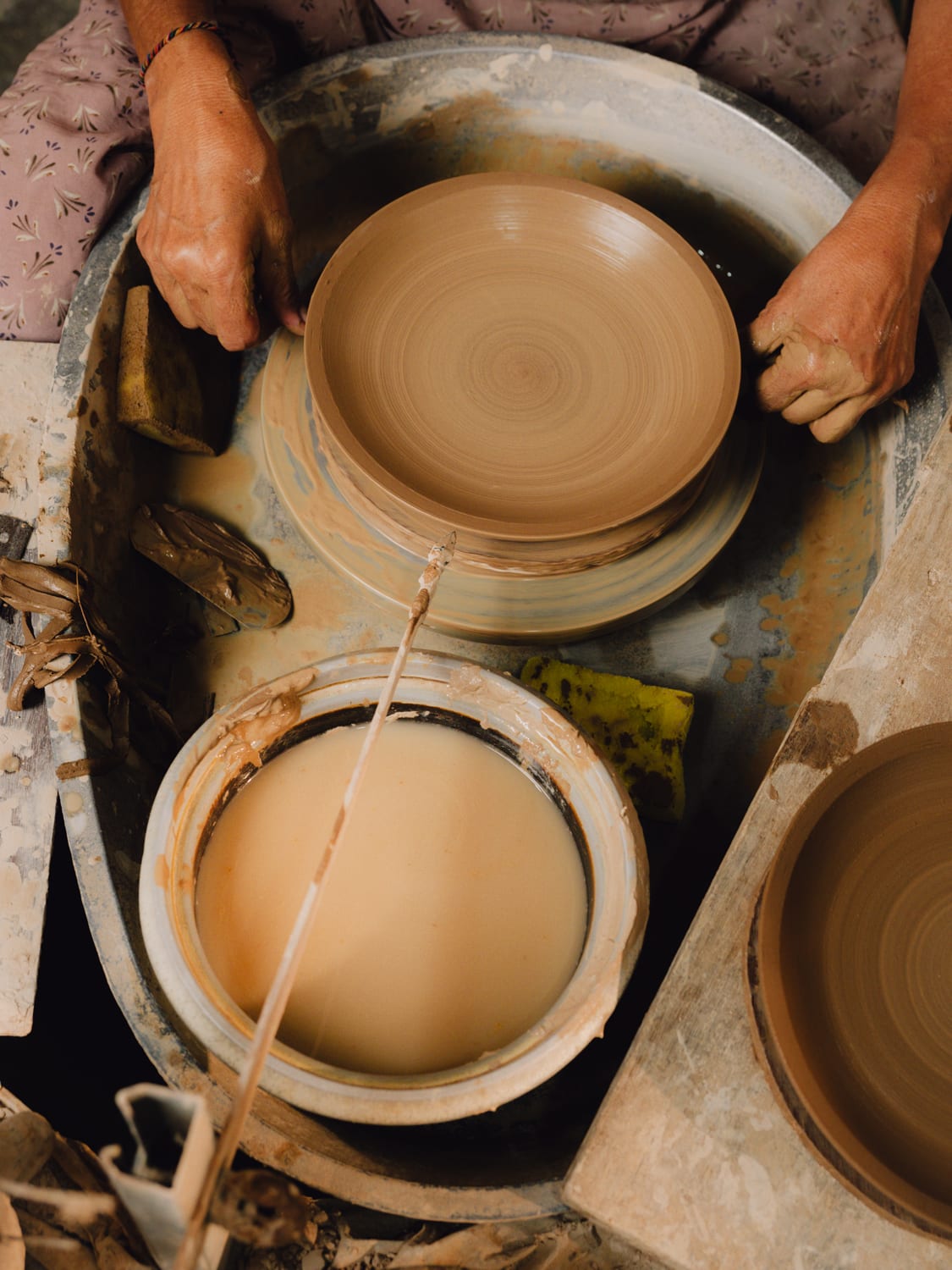
The making of the ceramics stood out to him especially. “We started by asking how we could recycle the glass waste from Desa Potato head, and that led us to develop our own glaze. By combining crushed glass bottles from the base mix used by our ceramic makers, we created a satin-like finish that felt completely new,” Lamb explained.
Although he had worked with ceramics many times before, this project was unique. “It was our first time trying something like this – a true experiment that opened up a new language for the material,” said Lamb.
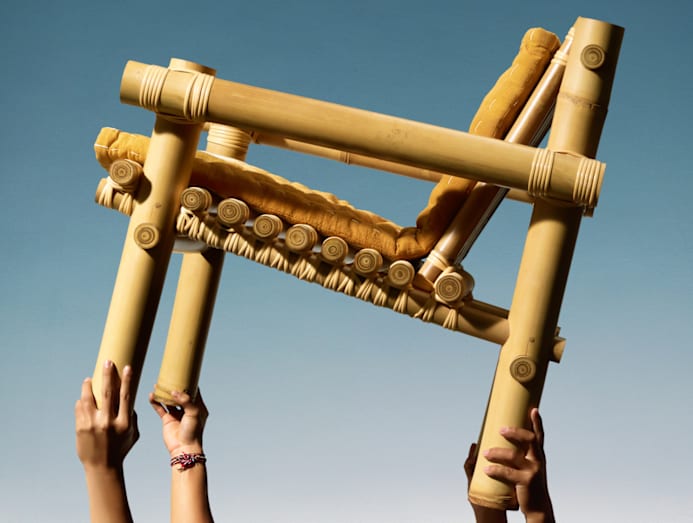
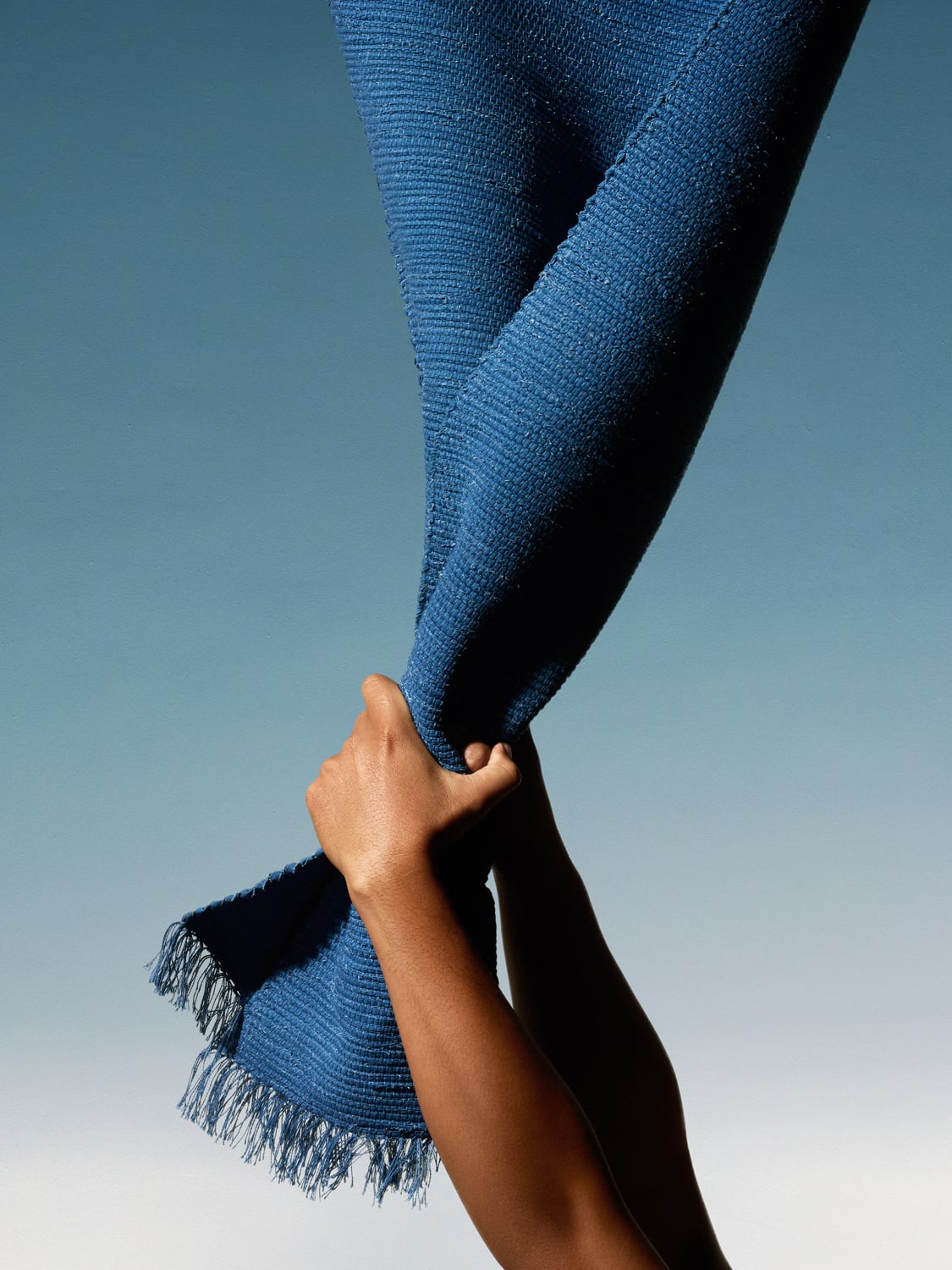
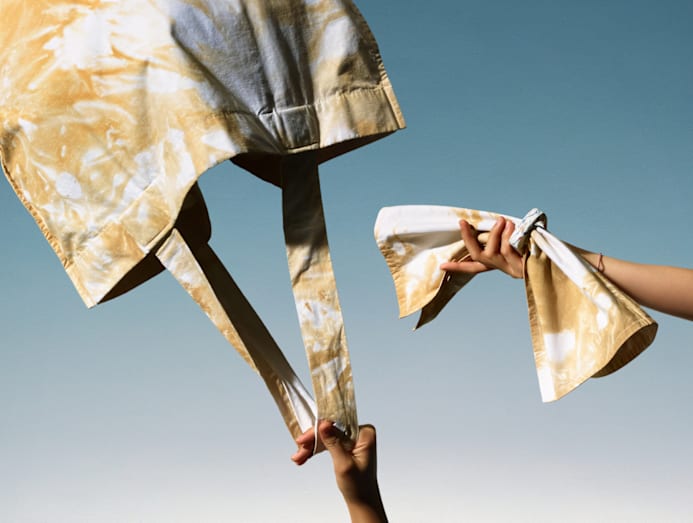
The final collection is divided into eight “families.” The Plastic Family is composed of recycled HDPE oil and juice jugs. The Compost Dye Family is made from worn and damaged linens from the Potato Head Studios & Suites; the Rag Rug is crafted from used linen sheets; and the Broken Glass Family consists of recycled glass from both industrial waste and bottles used in the Potato Head restaurant.
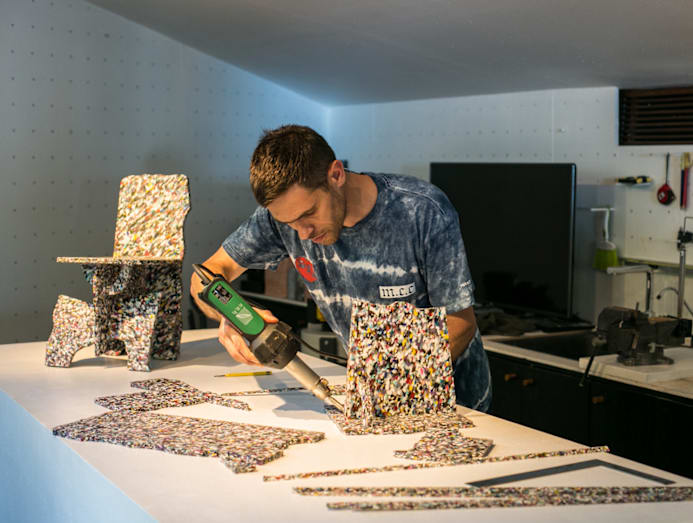
The Cooking Oil Family transforms used cooking oil from Potato Head’s kitchens into beeswax candles infused with scents developed by Rumah Astiri; the Broken Ceramic Family uses local clay with custom glazes made from recycled crushed glass; the Styroshell Family combines recycled Styrofoam and shredded oyster shells from Potato Head’s restaurant, while recycled residue powder from a local waste incinerator is used to make the glazing; and the Bali Bamboo Family features locally sourced, organically treated bamboo.
The project involves close collaboration with Bali’s creative community, making it a truly local endeavour. For instance, the Rag Rug, dyed blue with indigo plants, was developed with natural dyeing specialist Tatum. The Bali Bamboo chairs were made in partnership with Chiko Living, while the Broken Ceramics collection was created together with Tanah Pottery.
The Styroshell Family – which includes trays, vases, and a toothbrush holder – was developed with Waste Lab. The recycled residue powder used for the glazing comes from incinerated waste such as masks, diapers, and other non-recyclables from a local incinerator. Even the dyeing methods draw from local and natural sources; for example, the canary-yellow fabric colour is derived from recycled marigold flowers used in local shrine offerings.
“Designers have a huge responsibility – myself included – to justify with conviction every product or idea we put out into the world,” said Lamb, reflecting on the importance of this approach to design. “Once an idea becomes a reality, it turns into something permanent. We are taking raw materials, extracting them from the earth, depleting the world’s resources and turning them into products we believe humankind needs, which is, of course, debatable.
He elaborated, “Given the speed of human consumption and production, design is more critical than ever. Every designer must take personal responsibility to truly question what is necessary. And if something is necessary, we must find new ways of working and using materials that demonstrate extreme respect for those resources, employing them in the most sustainable way possible.”
The hope is that the Wasted approach will go from Bali to become a global project, drawing on local waste resources from different countries. “We will be using materials that are fully sustainable, grown with minimal environmental impact, low energy, and minimal water consumption. At the same time, those materials should be durable – designed to last as long as possible without wearing out – and either fully recyclable or biodegradable,” said Lamb.
For him, design goes beyond aesthetics. It is about mindset, responsibility, and respect and stewardship for the earth and local communities. Intrinsically, Wasted goes back to the basis of good design. “It’s also about designing products that hold value, products that can stimulate human interaction and connection,” Lamb commented.
He reflected, “The idea is that by designing something well and using quality materials, we can encourage people to build a relationship with the product and respect it. When people respect the product, the material, and the design, they’ll take care of it and make it last longer, rather than thinking, ‘I’m tired of this; I need to replace it with something new.’ It’s the opposite of fashion – removing style from the equation and instead designing with pragmatism, respect and necessity in mind.”