How a run-down Japanese house became a dream weekend home by the sea
Just a short trip from Tokyo, a derelict house is reborn as a luminous sanctuary where its owners reconnect with nature and rediscover a slower pace.
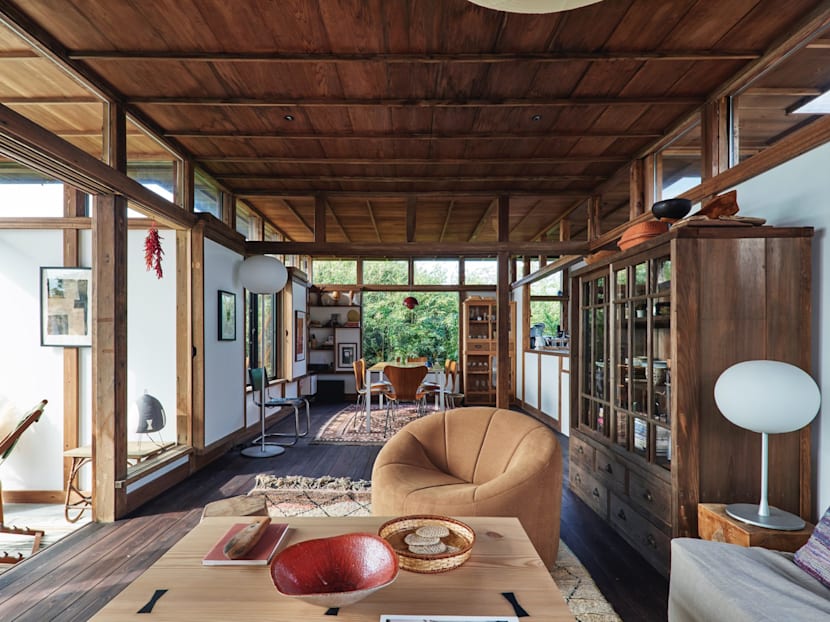
A seaside house in Japan is transformed into a calm, modern sanctuary with restored details, generous glazing and a deep connection to the outdoors. (Photo: Yasuhiro Takagi)

This audio is generated by an AI tool.
In Kanagawa Prefecture’s Miura Peninsula, there is a sleepy fishing village named Misaki. It is two hours by train and bus from central Tokyo but feels miles away in atmosphere and scenery, with the sea spanning far and wide like a blue blanket. It is here that Giselle Go and Philippe Terrien have made their home away from home.
“We were immediately drawn to the sweeping views of the Pacific Ocean and Mount Fuji. There’s a feeling of openness here. It offers a rare mix of seclusion and vastness, which is what we need as a contrast to our busy, hectic lives in Tokyo,” shared Terrien via email.
The couple are the founders of Damdam, a skincare brand that melds traditional philosophies and modern skin science with natural Japanese ingredients such as shiso, uji matcha, rice, and willow bark extract. Currently, the brand has stores only in Japan, the United States, and Denmark, but its products can be purchased online.
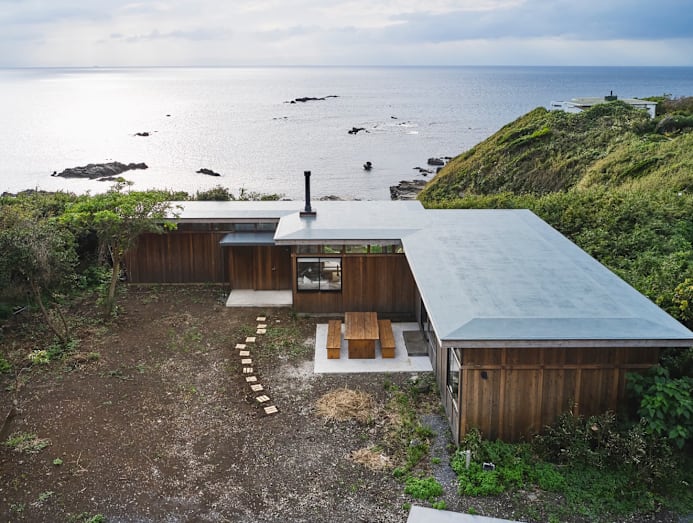
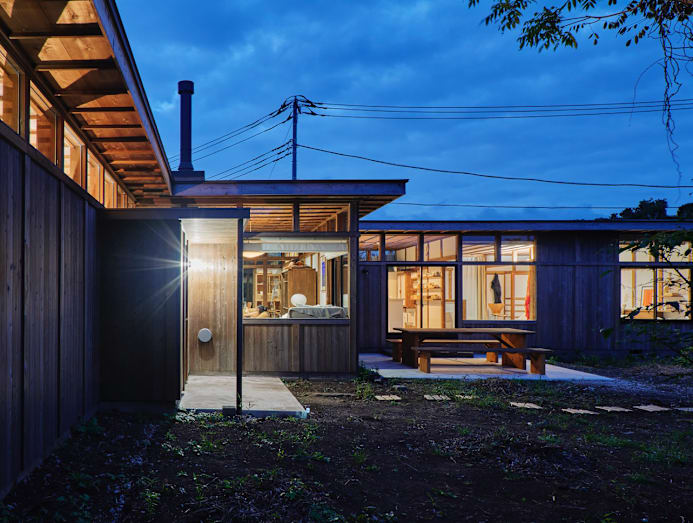
“In Tokyo, our home is more compact and urban. It is well designed and efficient, very much shaped by the pace of the city, so we love the contrast of coming here to slow down and be close to nature,” said Terrien, who was born in France, and Go in the Philippines.
Terrien had been staying in Japan since he graduated from university there, where he established a Tokyo-based creative agency called TFC. Go was formerly the editor-in-chief at Harper’s Bazaar Singapore when the pair met in Singapore. After sparks flew, she moved to Japan, and they started Damdam in 2019.
In their hunt for a holiday home close to Tokyo, the couple discovered a dilapidated house in Misaki, built by American post-war photojournalist Horace Bristol. It had a dreamy seaside location and a lush natural environment. The house had good bones but was too damaged to preserve in its entirety, so the couple asked Japanese architect Motosuke Mandai of Motosuke Mandai Architects to give it a sensitive renovation.
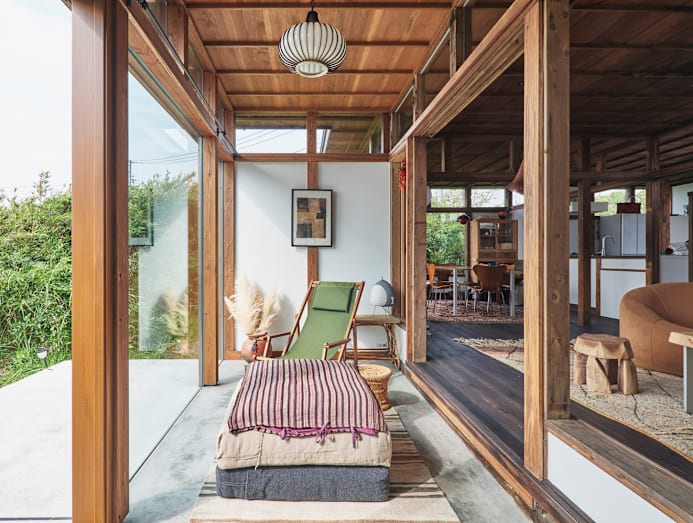
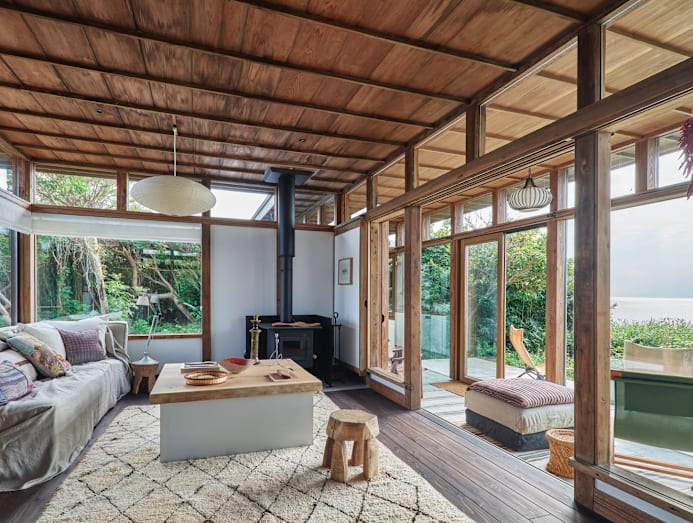
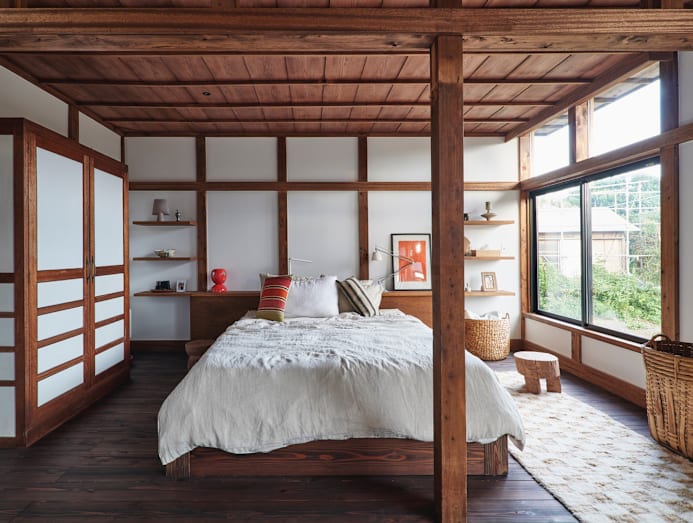
“Our brief to Mandai-san was simple: restore the original home and honour its beautiful mid-century modern bones and Japanese details like the shoji (sliding paper screen) and the ranma (decorative wooden transom panel), as well as its natural geometry. We wanted an open plan with generous windows to let a lot of light pour in,” said Terrien.
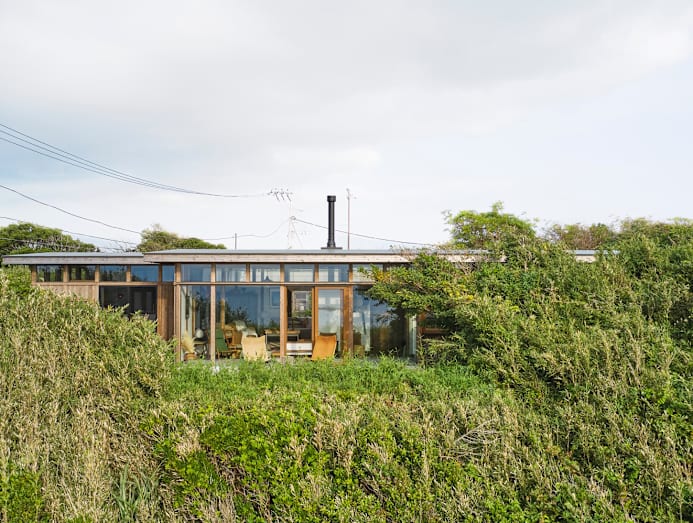
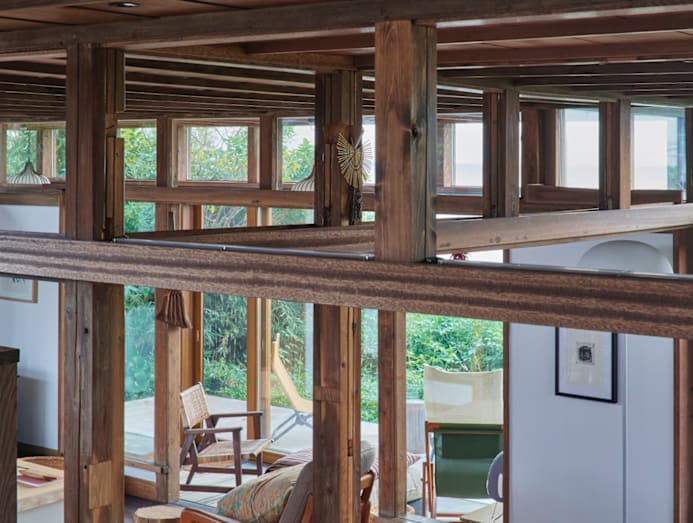
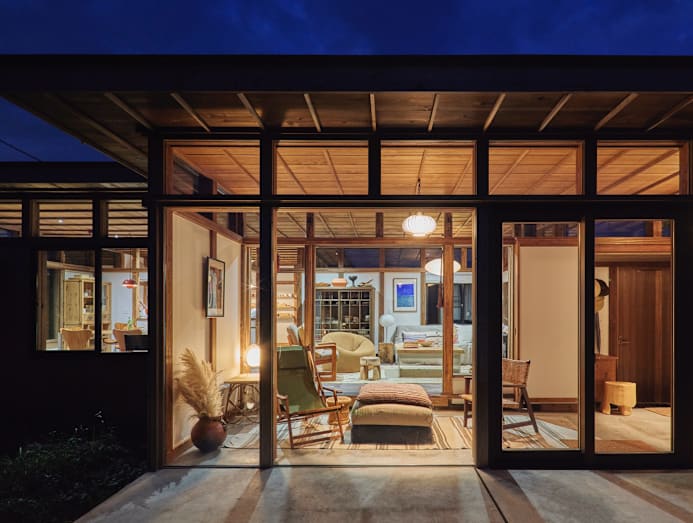
Mandai replaced many of the ranma (decorative wooden transom panels) with glazing so that the house now evokes a glass box, flushed with natural light and scenic vistas during the day, and glowing like a lantern at night. The intent was to “update the space into a bright and pleasant environment,” shared Mandai. The couple also requested a bigger kitchen that opened onto an external deck for outdoor meals, as well as a separate ofuro (Japanese soaking tub) “to take long baths in.”
They discovered the architect’s work through a friend in the design world. “We were attracted by his sensitivity to light and negative space, which aligned perfectly with how we envisioned living here,” said Terrien. The 45-year-old architect was born in Kanagawa Prefecture and studied architecture at the University of Tokyo. He worked at Junya Ishigami Architects before establishing his own firm in 2012. A recent project of the firm was the Ring Pavilion at Expo 2025 Osaka – a steel-membrane, bubble-like pop-up stage for the Japan Association.
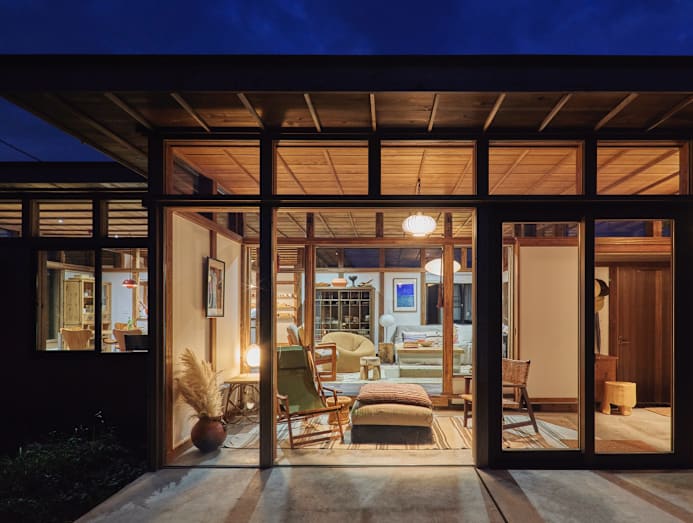
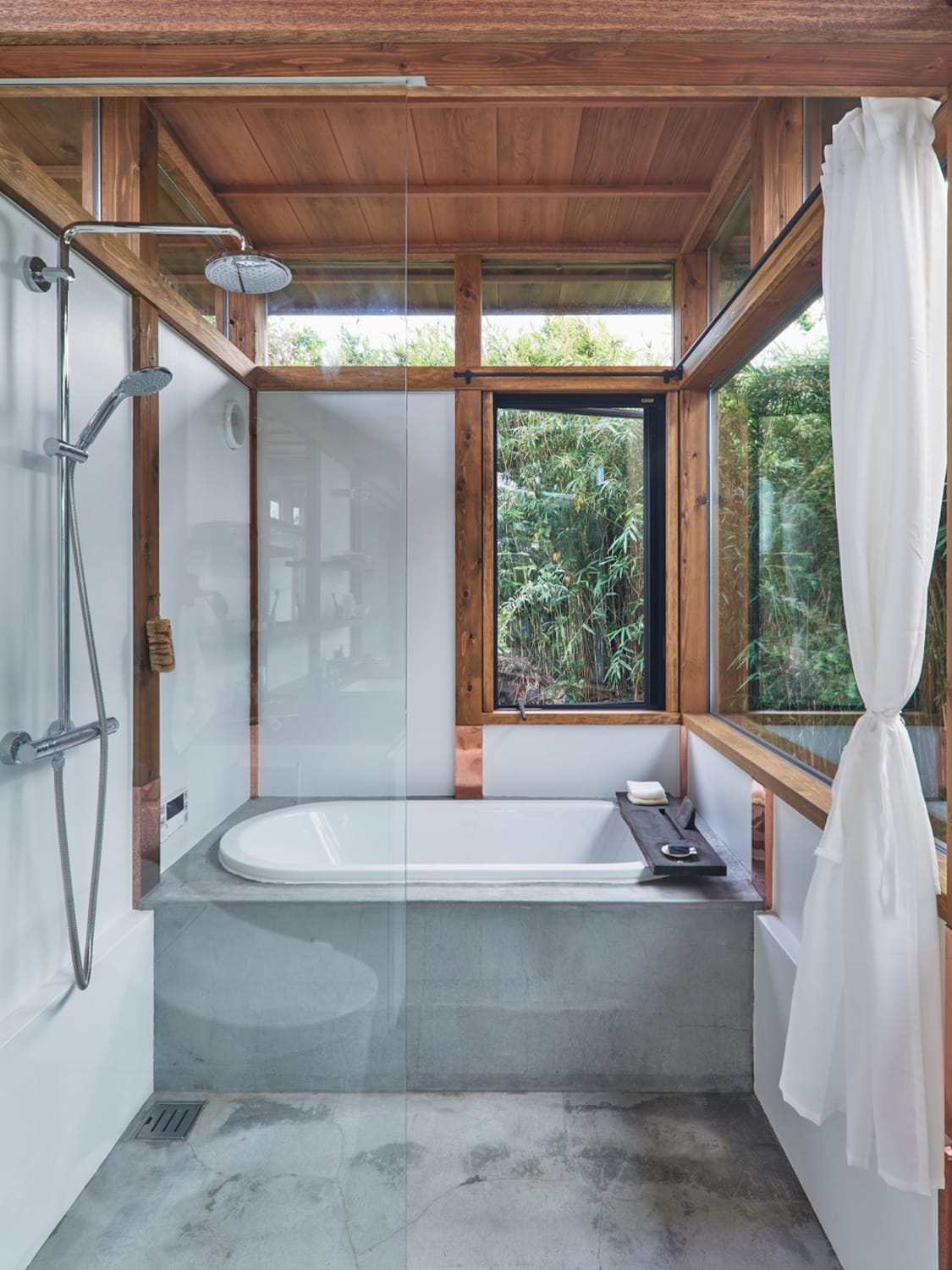
On renovating the 75-year-old house, Mandai shared, “We wanted to integrate the qualities of traditional Japanese houses with those of contemporary homes.” He extended part of the engawa (veranda-like corridor) to create a new sunroom facing the sea, as well as a new bathroom on one side of the house. These spaces weave domestic rhythms with the ocean and the surrounding natural environment more intimately.
Mandai’s design approach expanded on the traditional ideas of “continuity with the surroundings” and “horizontally spreading space.” The house has the quality of being lived in, despite the new additions. “We carefully selected materials and structural finishes to harmonise with the existing building, ensuring a seamless transition between the old and new parts,” said Mandai.
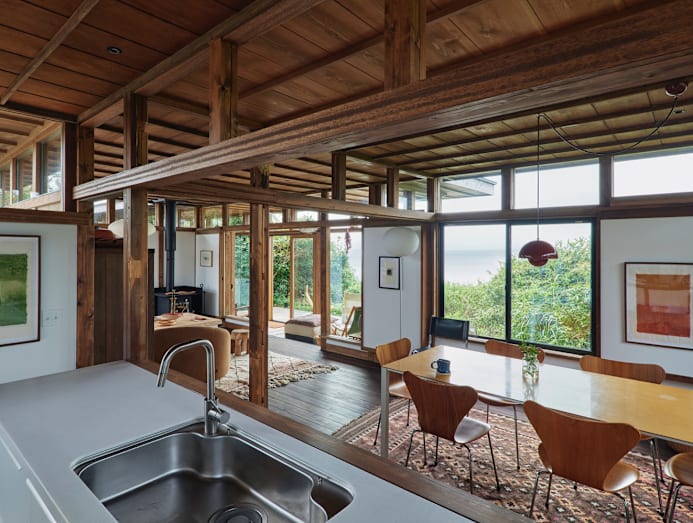
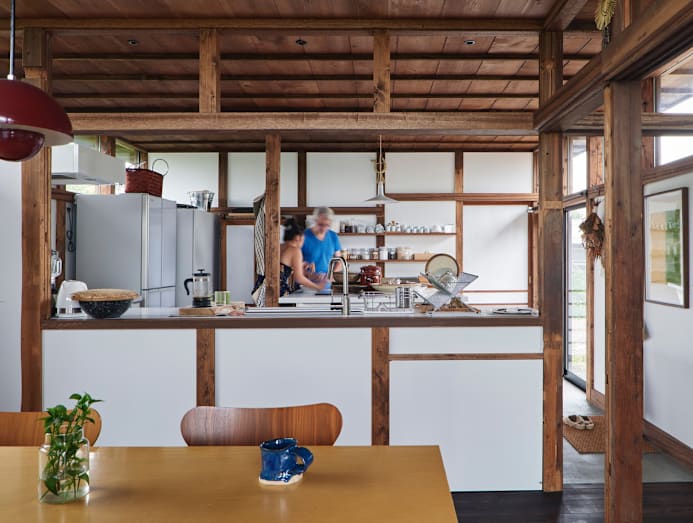
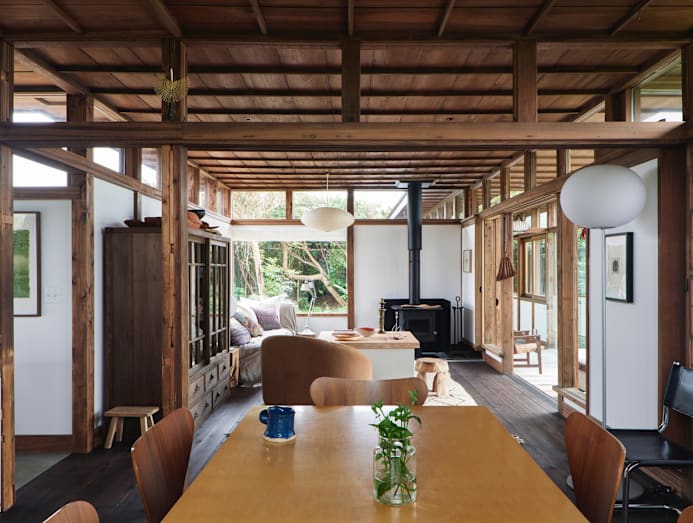
The house had many timber elements that were restored whenever possible, including a timber ceiling that was preserved. Mandai repeated the ceiling design in the newly built area for a sense of continuity. Shoji (sliding paper) screens that could be salvaged were also kept, but new cedar flooring was introduced.
Mandai replaced the old roof with a new fiberglass-reinforced polymer one, which is strong, durable, and resistant to rust, rot, and mildew. “Since the original house had a flat roof, we selected a material that would allow us to maintain that design,” he said, referring to the architectural narrative they wanted to preserve. The house’s exterior cedar siding was treated with a preservative “that allows them to age naturally over time, encouraging a weathered appearance,” Mandai explained.
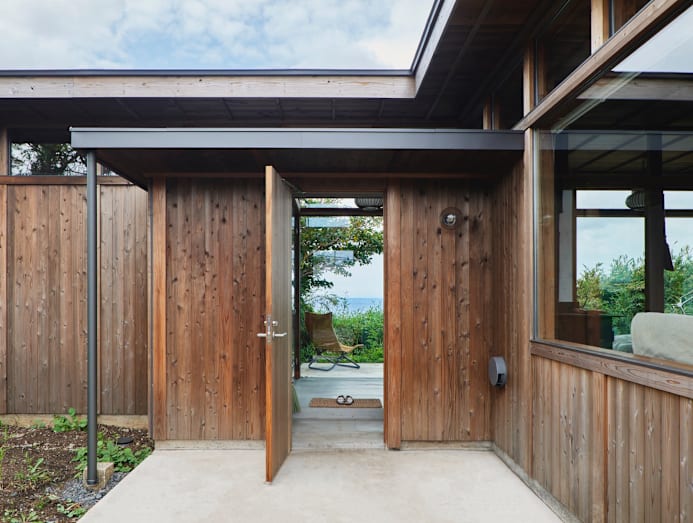
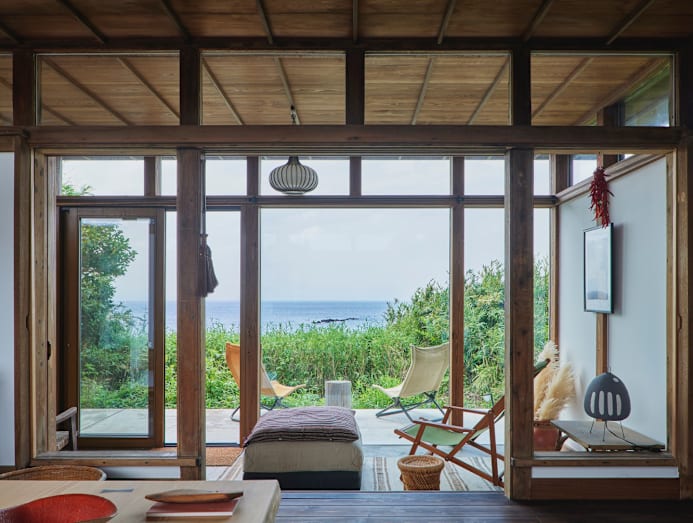
Working on old structures is complicated, so it was important for him to find the right people for the job. “When renovating old structures, highly skilled carpenters are essential. For this project, we collaborated closely with such experienced craftsmen to bring the design to life,” Mandai shared.
This is not the only old building he is renovating. Apart from several seaside residences in Hokkaido that, like this house, are nestled in nature, he is also renovating a ryokan (traditional Japanese inn). “What we seek to explore through our work is architecture that connects deeply with nature, history, and culture,” he expounded, describing his ethos.
For Terrien and Go, their weekend home embodies all of these tenets. They have filled it with many meaningful objects, turning it into a personal space. The walls are coloured with artwork, including a washi (traditional Japanese paper) piece from Mino in the sunroom, where an Akari 1AG lamp by Isamu Noguchi animates a corner. In the living area, a Pumpkin armchair by Pierre Paulin for Ligne Roset has been upholstered in a tone similar to the surrounding timber.
The dining chairs surrounding the Airframe table by British architect David Chipperfield are classic Series 7 seats designed by Arne Jacobsen for the Danish brand Fritz Hansen. They were selected in a natural wood finish to match the home. A Chipperfield-designed coffee table also sits in the living area. The couple personalised it with a new tabletop by the woodworking company Timber Crew after the original top was damaged.
For the couple, this house is not just a shelter but also embodies deeper sentiments. “I grew up in Brittany in western France. The sea is a familiar landscape for me, so I was immediately drawn to the rocky coast here; it reminded me of home,” shared Terrien. He also potters about in the garden outside the house frequently. “I also grew up with a garden – something that’s harder to have in Tokyo – so having outdoor space was essential when we looked for a weekend home,” he remarked.
It was the opposite for Go; this house realised a dream. She shared, “I grew up in the Philippines and spent much of my time in urban cities like Manila, Singapore, Hong Kong, and now Tokyo. Because of that, I had a deep desire to be close to nature and to create a slower rhythm of living.”
While it is a respite, the house – so serene and steeped in nature – also provides ample inspiration for their brand. “This has become one of the best places for us to think, write, test ideas and work on Damdam. Being here helps us reconnect with what the brand stands for: Japanese craft, purity of ingredients and the beauty of slowing down,” said Terrien. “We have several launches and collaborations ahead, and being in nature grounds our creative process. The textures, scents, landscapes and small rituals here often inspire new concepts and ideas.”
The couple’s rhythms are also in sync with their new environment. A typical day here begins with coffee in the sunroom before Zoom meetings and work. “We live in Tokyo during the week and like to come here every weekend. Depending on the season, the rest of the day is spent in the garden or by the sea, followed by a lot of cooking by Philippe in the evenings,” said Go. “Also – long baths and a fire in the winter, playing music and hosting dinners with neighbours and friends.”
The house is also a place of bonding and revelry with guests from near and far, as the couple have woven themselves into the rhythm of the neighbourhood. Terrien shared, “Most weekends, we host small dinners, have friends stay over, spend time with neighbours who either live next door or keep their boats at the marina nearby.”
Restoration for the couple comes not just in the form of being away from the city but also from becoming part of a new ‘family’. “We love going to the market and being in town for the festivities during matsuri (festival) season,” shared Terrien. “There’s a wonderful community here – respectful, warm and always looking out for one another.”