A restored home in Thailand with mid-century modern furniture and timeless interiors
A grandmother’s long-held house is reworked with care, opening up balconies for light and views, relocating the original staircase, and adding a rear extension – all while preserving the details that give the home its character.
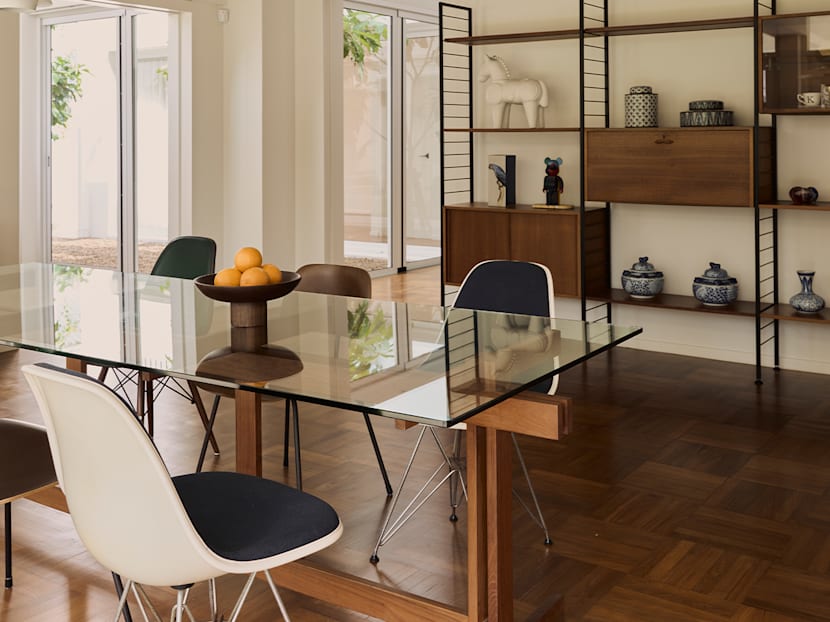
This tropical modernist family home in Bangkok is updated with a new extension while keeping its mid-century modern spirit intact. (Photo: Thanawatchu Maison)

This audio is generated by an AI tool.
The Narathiwas House comes with an interesting backstory. It belonged to the owner’s late grandmother, who lived in the dwelling for 50 years. The home sits on Bangkok’s Narathiwas Road, in a residential neighbourhood of long-time residents, many of whom have lived there for a similar period.
“The owner was born and grew up in this house, which had been passed down from her grandmother and remains in good condition. Her grandmother really loved the house and took care of it. The owner has memories of all the furniture, objects and spaces within it. With that emotional connection, our goal was to preserve the memories tied to the house,” shared Suvapat Chooduang.
The founder of Bangkok-based Supar Studio explained via email that the house had great bones. “We discovered that the owner had fallen deeply in love with the mid-century modern style of the existing house and so we tried to celebrate this vibe and atmosphere,” explained Chooduang.
The owner’s keen aesthetic sense – honed through her work in style and decor publications – helped the process. Her husband is also equally attuned, and both of them love collecting mid-century modern furniture. Mid-century modernism, a subset of modernism, emphasised open plans, indoor-outdoor living, natural materials and colourful accents.
The Case Study Houses programme, initiated and sponsored by Arts & Architecture magazine, remains a key influence on the movement. It produced exemplary homes by architectural stalwarts of the day, including Eero Saarinen, Pierre Koenig, and Charles and Ray Eames.
Furniture designed during this time similarly emphasised practicality, often in materials such as wood, metal, plastic and fibreglass. Chooduang is an aficionado of the Case Study Houses, and cites American architect Richard Neutra as an inspiration.
“The owner wanted to preserve her memories tied to the house while respecting the architectural and construction value crafted by the builders of the past. She wanted to carefully develop the new design based upon what already existed,” said Chooduang.
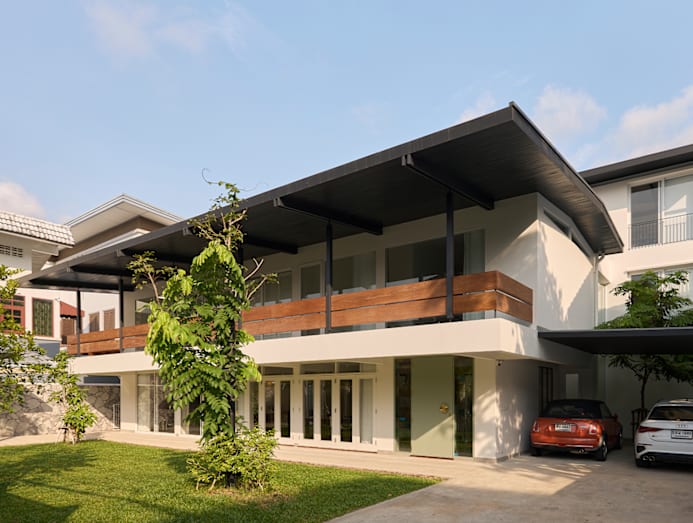
The original house reflected Thailand’s tropical modernism, adapted for the climate with three-metre-deep roof eaves and two-metre-wide balconies along its perimeter. “It’s like a double layer of protection from the rain,” Chooduang said. The underside of the eaves was finished in dark-stained wood to reduce glare and conceal stains.
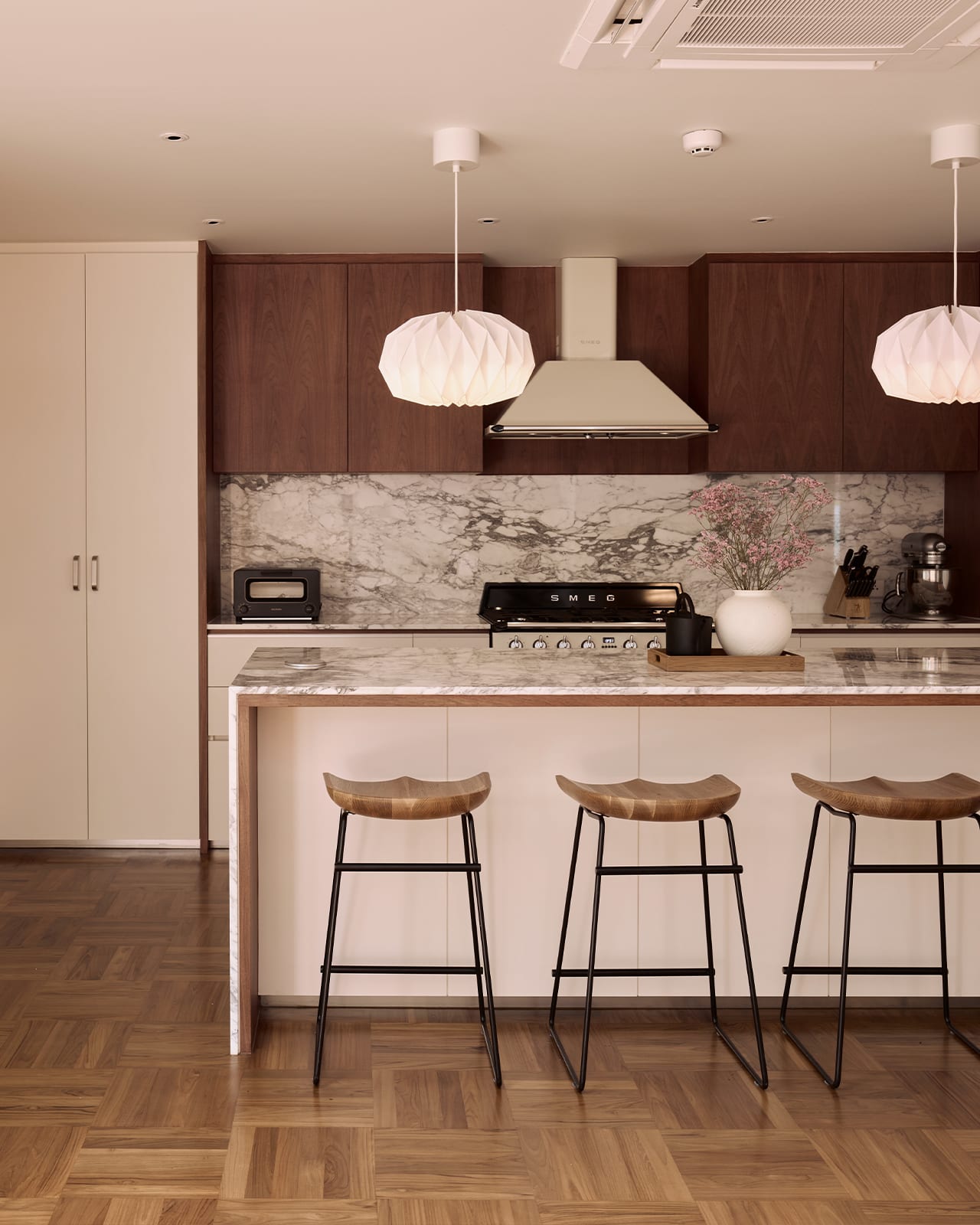
While the owner loved the house, she also wanted to make alterations to accommodate her own family and twin boys. “She wanted to improve the original structure and add an extension at the rear for the kitchen and pantry as she loves cooking. She also wanted a private living room – or family room – a space for live-in helpers and a studio for her husband,” Chooduang said.
A thoughtful nip-and-tuck ensured the house’s original architectural language was not lost, but celebrated and clearly expressed. For instance, an additional structure at the front – built to accommodate parking – was removed.
“Another significant change was the removal of a small bedroom on the second storey that had blocked the front balcony. This opened up the full length of the balcony, connecting all the rooms to the garden below. More sunlight also enters the rooms now,” said Chooduang.
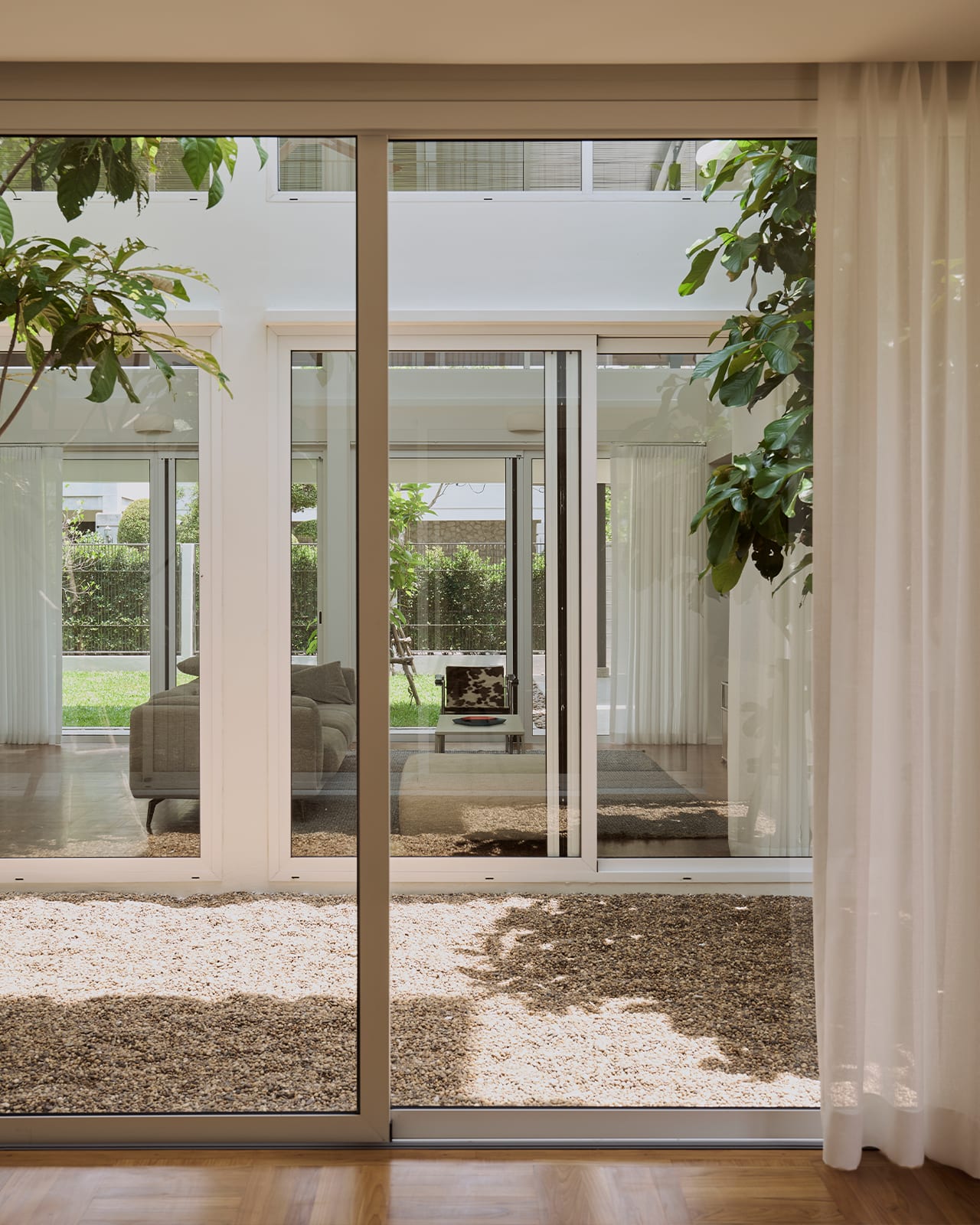
The old house had other shortcomings. It had low ceilings and little daylight, due to small wooden windows, thick-framed doors and a compartmentalised layout. The flow between spaces was further impeded by a central staircase, which took up a large footprint across the first and second storeys.
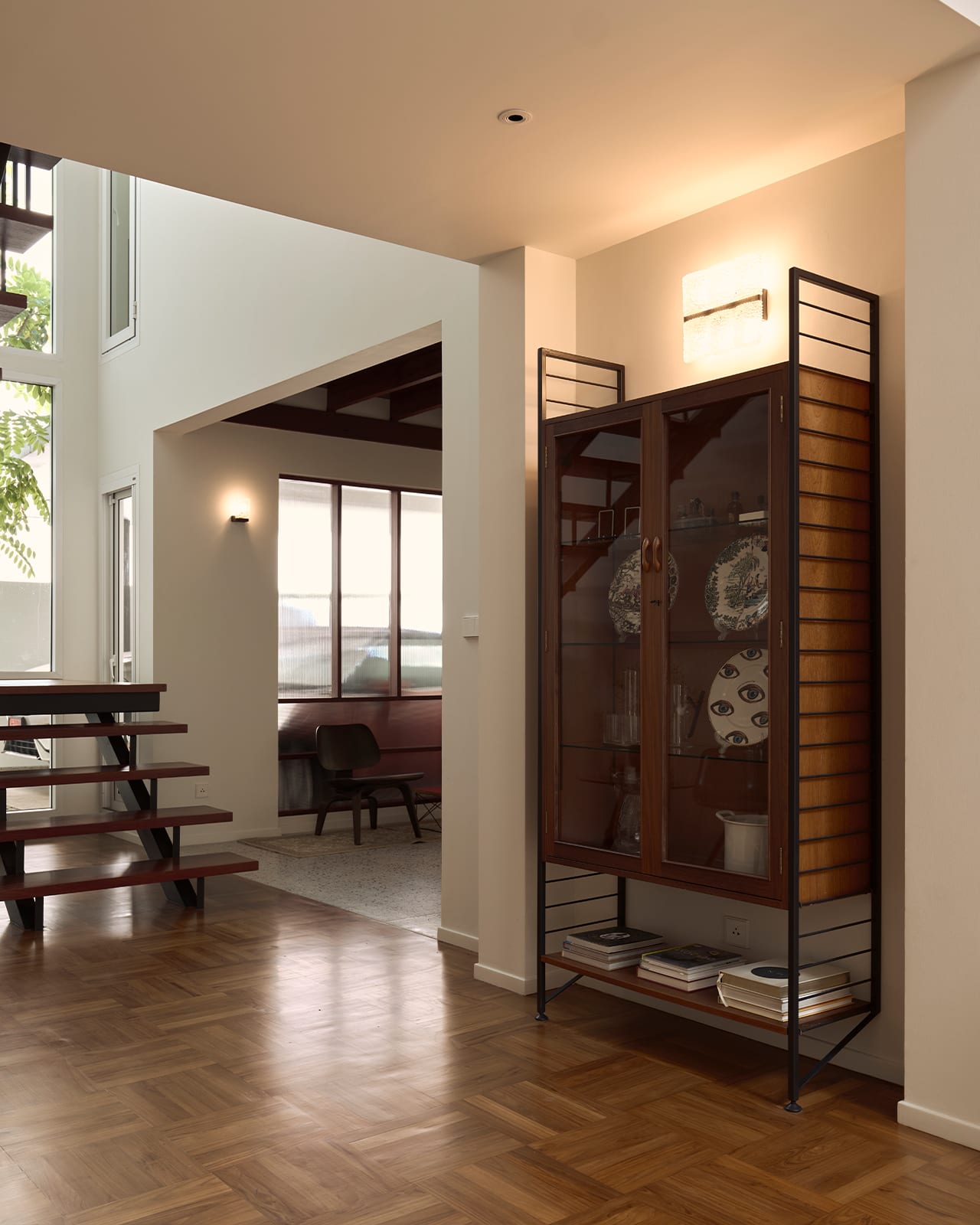
“We approached the renovation by paying close attention to each original detail – small elements like the plaster trims for water protection, wooden railings, floorboards and staircases, pendant lights as well as original furniture pieces such as cabinets. These components were carefully measured, repaired and reconsidered in terms of function and placement. Some were also recreated in their original style for use in the new extension,” shared Chooduang.
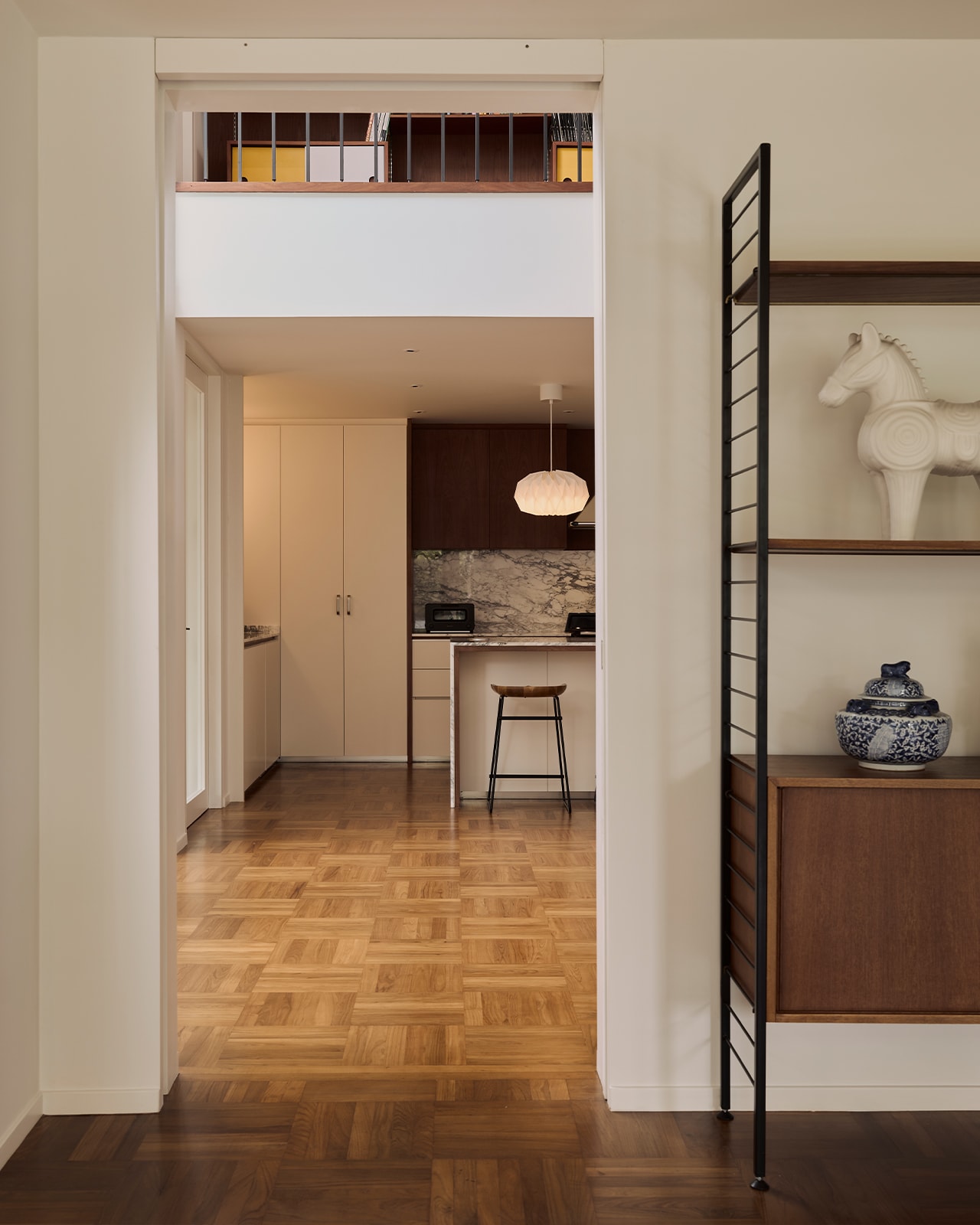
Integrating the old house with the extension was challenging. The architect decided to create a “connecting zone” between these two parts. “We relocated the original staircase into this space, which helped free up usable areas in the old house, both in plan and section,” he said.
The whole staircase was dismantled and moved, down to the original redwood – a Thai hardwood – handrail. This was an important gesture as the staircase was one of the key elements of the old house that the owner had fond memories of.
“This central connecting space allows the lower and upper floors of both buildings to flow together smoothly, while hidden sliding doors between the rooms provide flexibility in how the spaces are used, and how much privacy they offer at different times,” explained Chooduang.
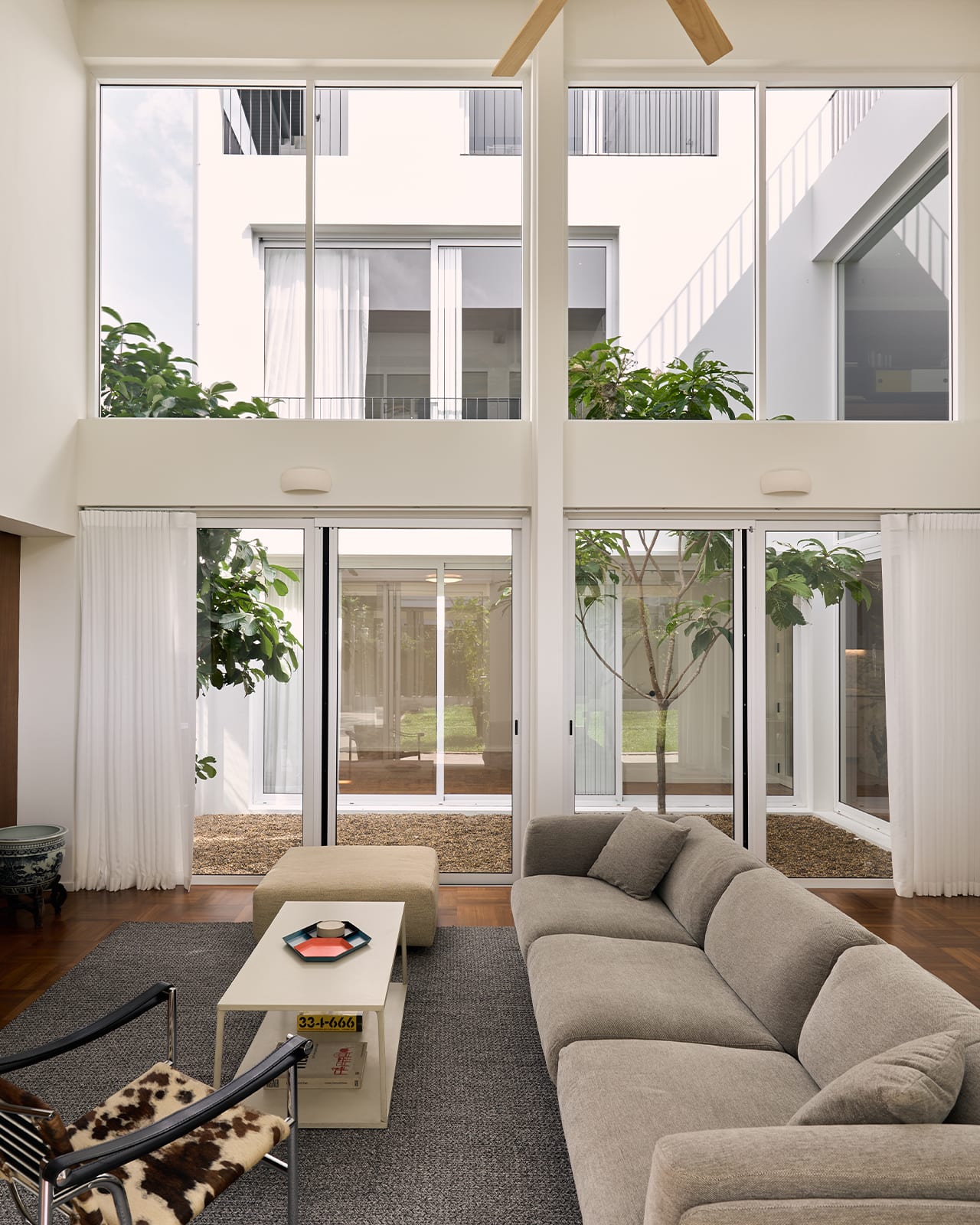
The first storey of the original house now boasts a capacious double-volume living room, connected to the dining room by a sliding door. From there, another sliding door leads to the pantry and kitchen, in the rear extension.
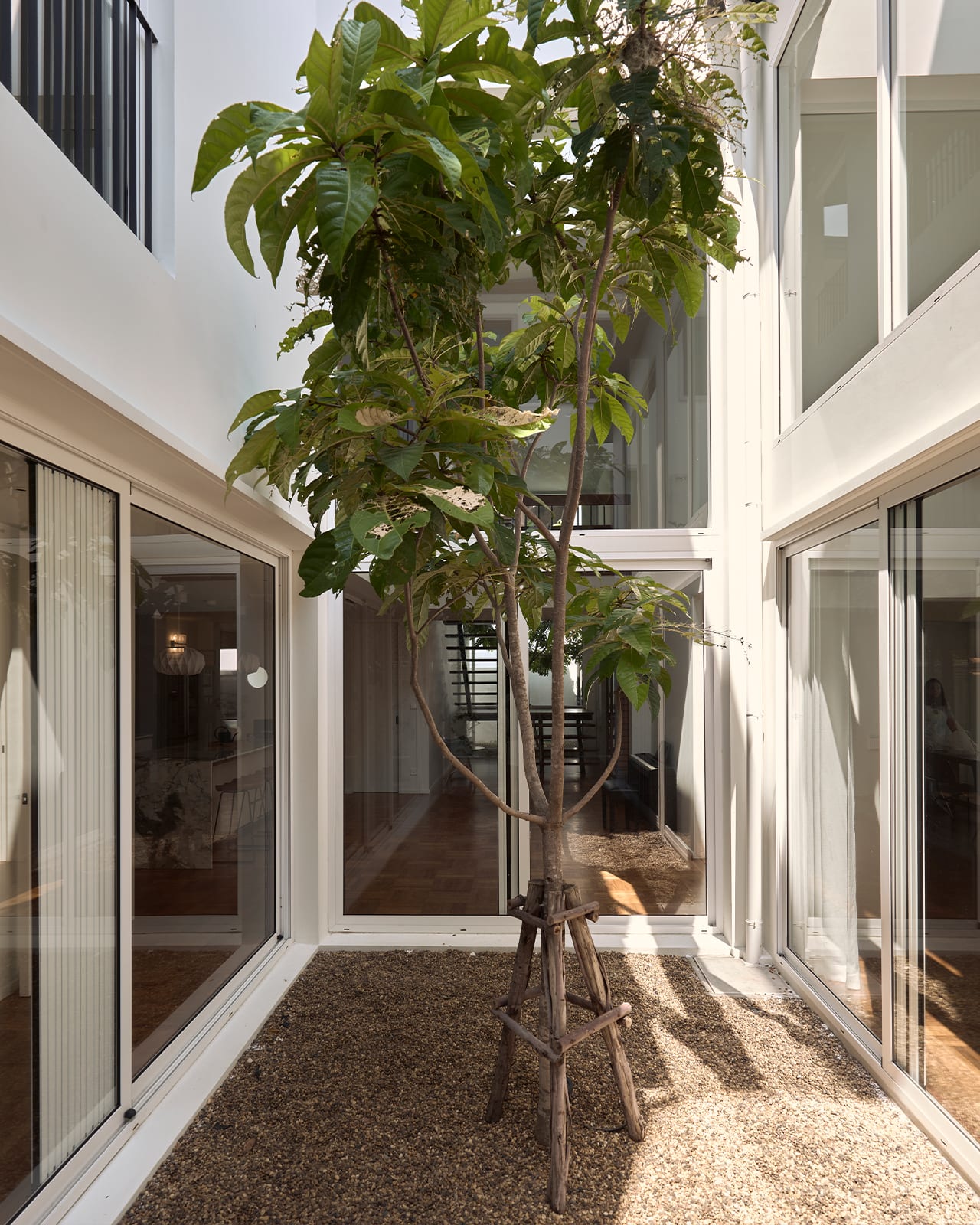
These interconnected spaces are ideal for gatherings. Together, they can accommodate up to 20 people. “This is now the heart of the home,” said Chooduang. Between the old house and the extension, he inserted a small garden that draws daylight deep into the interior. The living room in the old house and the family room in the extension share the same view of this sliver of greenery.
The old house’s second storey now holds the master bedroom suite, while the sons’ bedrooms are in the extension. A second staircase leads from the extension’s second storey to the husband’s studio on the third. This level also includes a prayer room, a laundry room, a small balcony for drying clothes and a larger one for enjoying the outdoors.
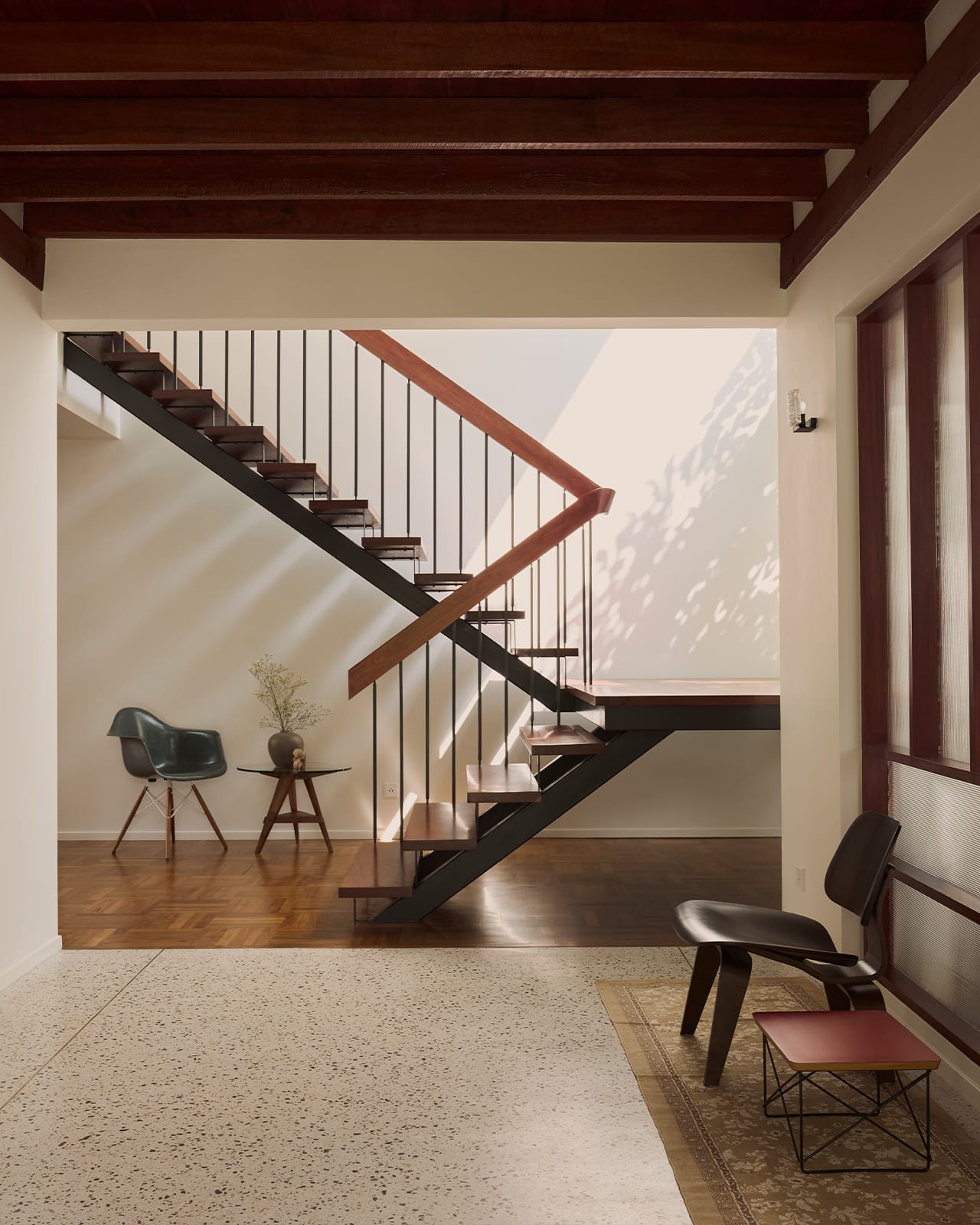
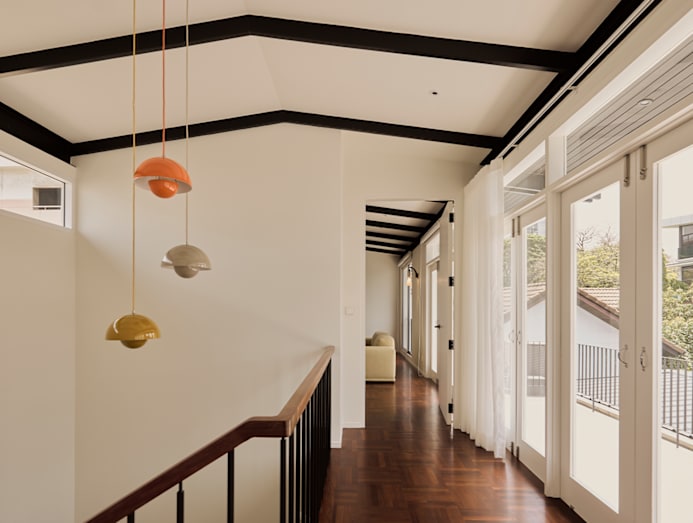
Even after the renovation, the house does not feel ‘new’ in a polished sense. The mid-century modern characteristics that guide the redesign have produced spaces and forms that feel timeless. Material retained from the original house also contributes to the atmosphere.
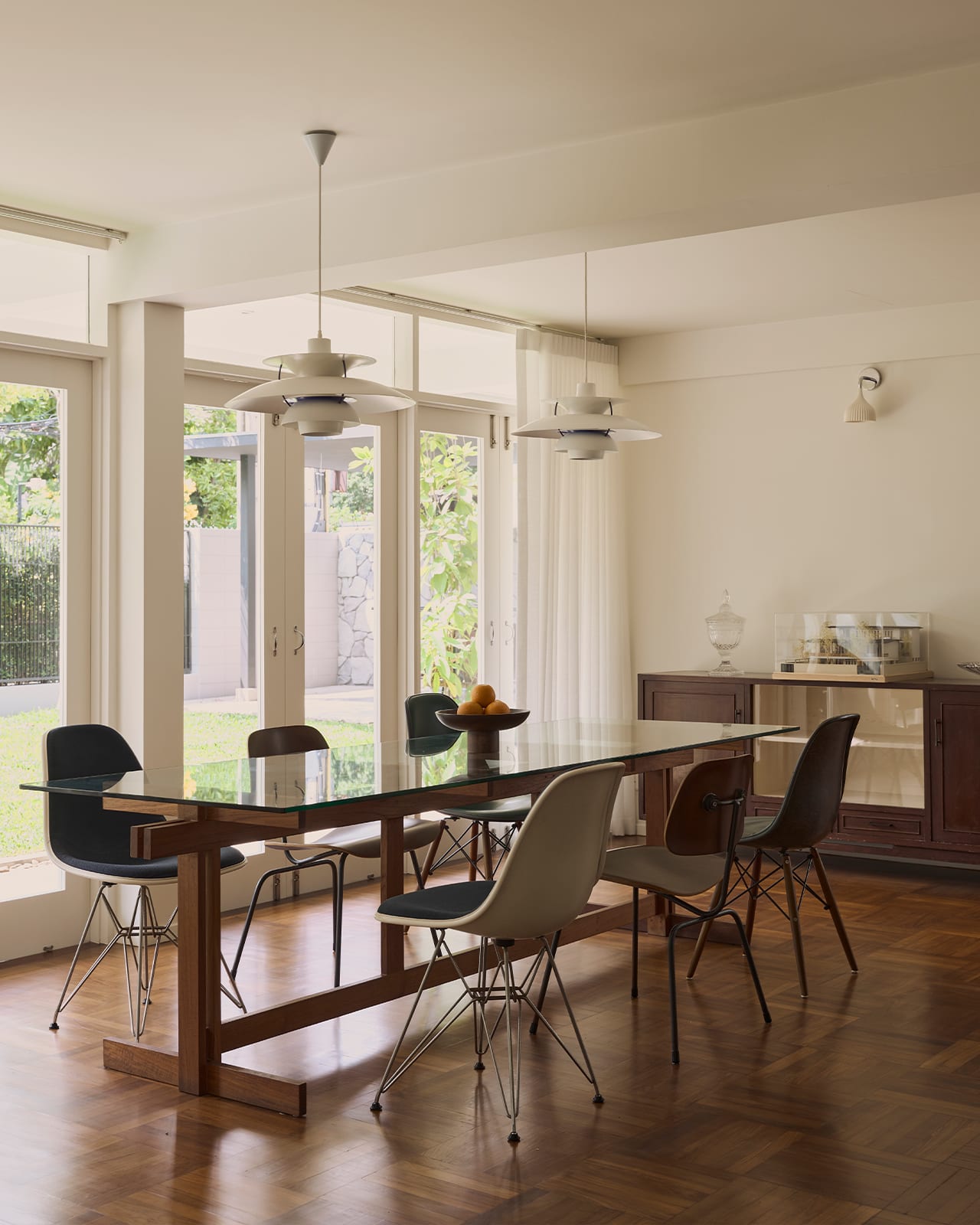
“All the floors in the old house were teak wood parquet, laid in a square basket weave pattern. We washed and re-varnished the surfaces. For the extension, we mimicked the same wood parquet,” Chooduang highlighted.
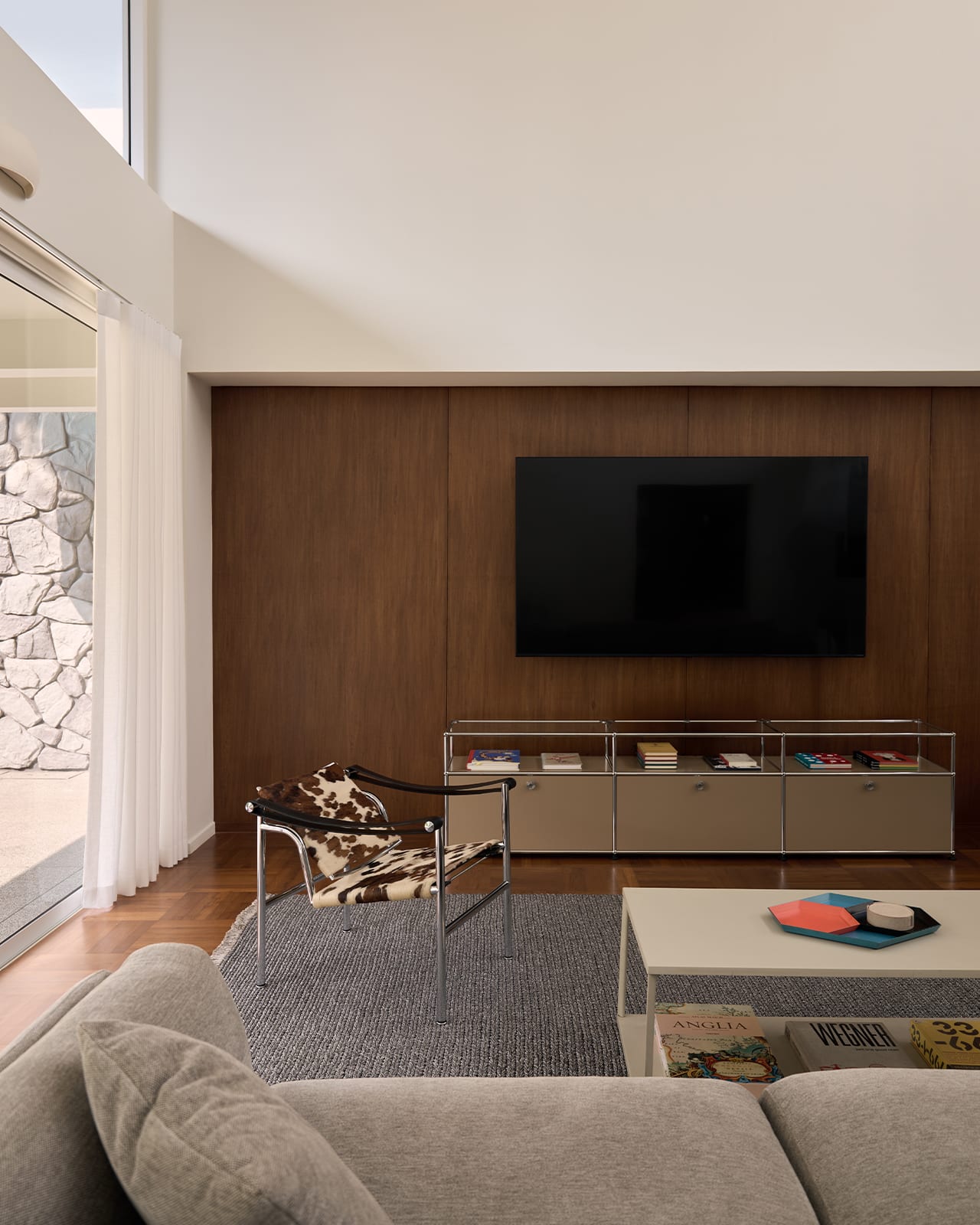
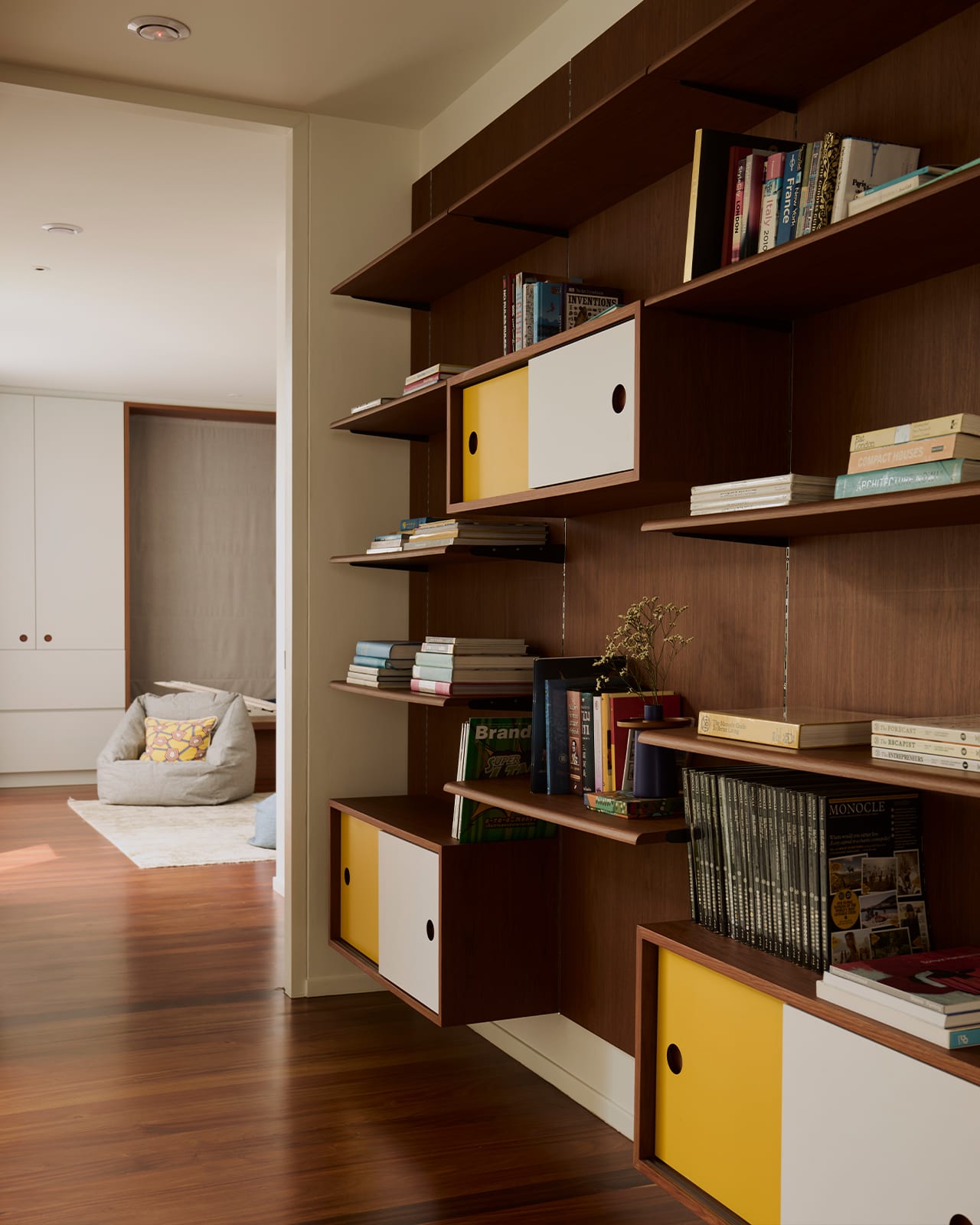
By creating good-quality architecture, the owner would not feel the need to “over-decorate”. Instead, she could focus on filling the home with furniture and objects she loves. These include vintage and second-hand pieces such as Eames chairs and Louis Poulsen lamps in the dining room.
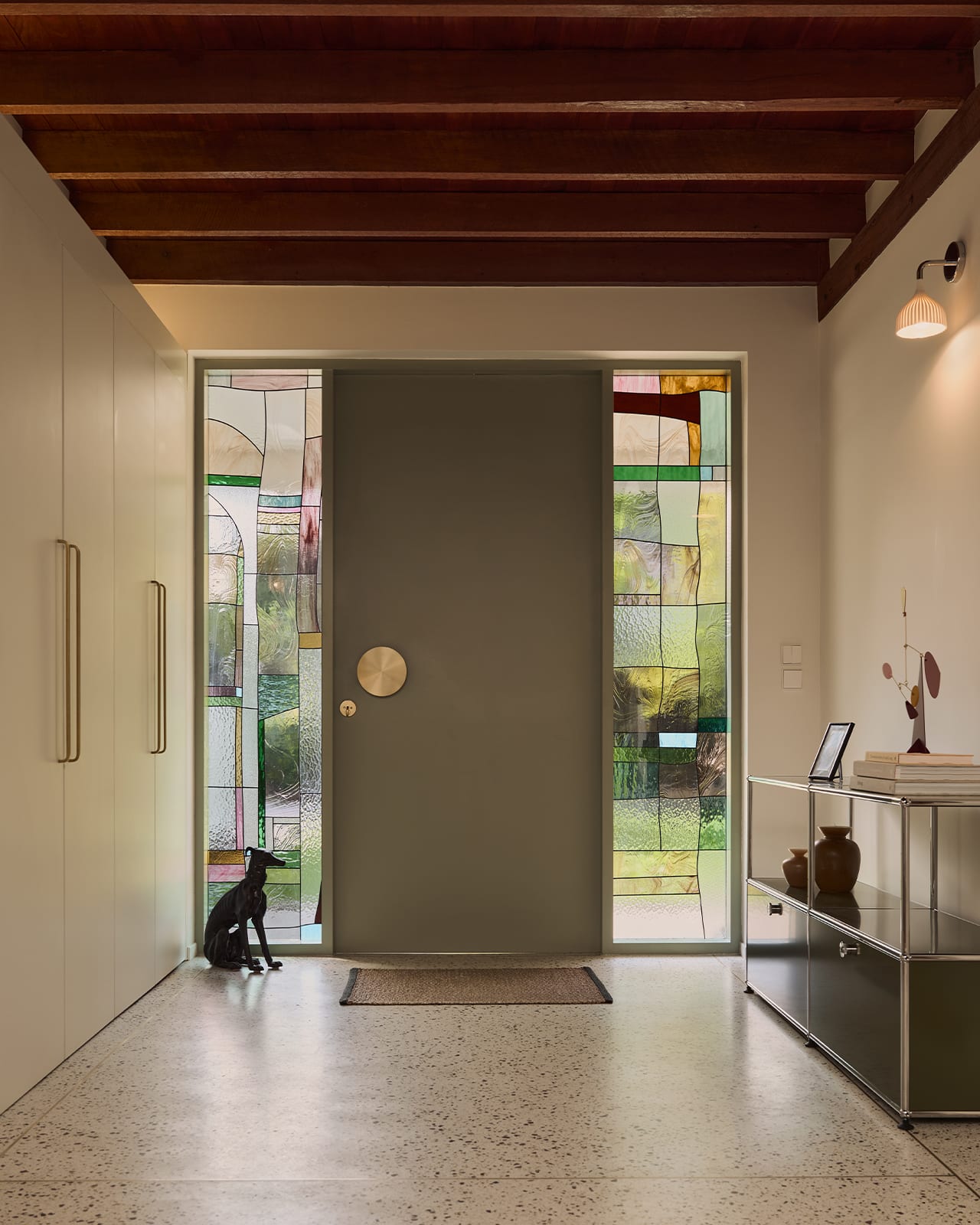
Chooduang also added a personal touch, setting a tone of conviviality from the moment one enters. He designed stained-glass panels flanking the pale-green front door, which the owner accented with a brass doorknob she had purchased.
A Thai craftsman who makes stained-glass panels for churches created the panels. They sit easily alongside the owner’s furniture and furnishings, whose bright, upbeat colours animate the home’s white canvas. “The owner liked a combination of white, wooden clean spaces with the surprise of colour and texture, and we like this idea,” Chooduang remarked.
In improving this house, interventions were purposeful, honest and not extraneous. The cohesive spaces and forms belie the amount of thought that went into both large and minute gestures. “The details are not the details. They make the design,” Charles Eames once said. For this dwelling, this quote certainly rings true.