At Paris Fashion Week, all eyes are on Dior
Jonathan Anderson makes his womenswear debut for the jewel in the LVMH crown. Can his vision take off?
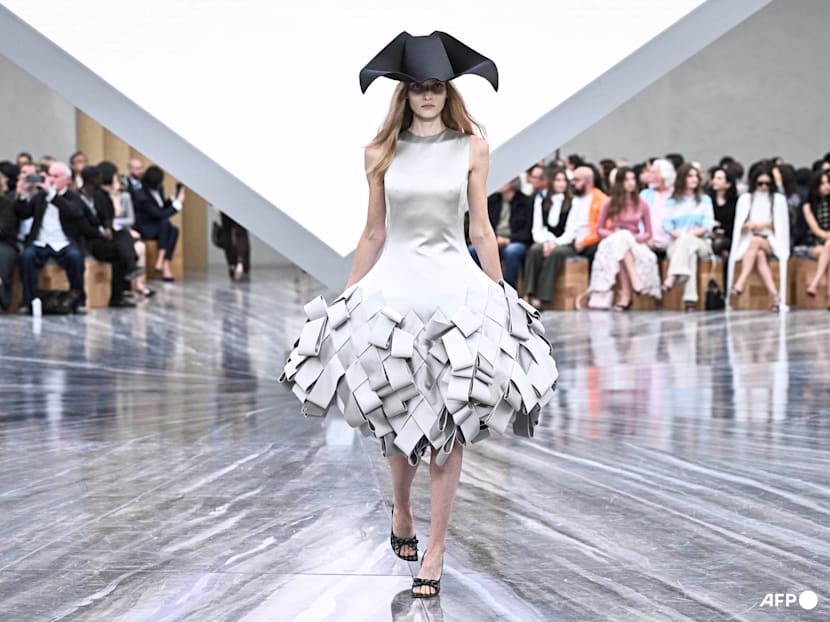
Dior spring/summer 2026 collection. (Photo: Julien De Rosa/AFP)
It was a Wednesday (Oct 1) afternoon during Paris Fashion Week, and thousands of fans were screaming from the barriers around a vast white tent — roughly the size of an aircraft hangar — that had been temporarily erected in the Jardin des Tuileries.
Outside a fashion show is often a circus, but this scene was particularly exceptional. It was the Christian Dior show, a cornerstone brand of the LVMH portfolio that generates an estimated €9.5 billion (US$11.14 billion; S$14.36 billion) in annual revenues for its parent company. Not only that, but it was also the womenswear collection debut of new creative director Jonathan Anderson, the first designer to be solely tasked with overseeing womenswear, menswear and couture at the brand since Christian Dior himself.
Anderson, 41, got that power thanks to an ability to create viral trends from clever runway flights of fancy and clothes that embody a sense of the unexpected, mischief and fun, both at his namesake label and for LVMH-owned Loewe, where he spent more than a decade. But Dior is a challenge on a different scale and comes at a tricky time for the luxury industry, which is no longer at the heart of pop culture in the way it once was; almost all brands now face sliding sales and consumer malaise. Anderson’s debut is one of a slew taking place this season, as executives hunt for creative direction that will get people buying again.

Anderson’s Dior menswear collection in June revealed a first glimpse of his new vision, reimagining womenswear staples such as the bar jacket in Donegal tweed and cargo shorts with couture flourish that used 15 metres of fabric. But womenswear (a far bigger business) is where the eyes of the world have now turned. Recently, Anderson has been papped furiously chain smoking cigarettes and staring intently into the Seine. Is it all getting to him?
“For any designer working today there is a lot of pressure,” he said at a preview. Lest we were in any doubt, on a giant upside down black pyramid hung from the ceiling of the tent, a film by Adam Curtis was projected to open the show. “Do you dare enter the house of Dior?’ it asked the audience in bold letters, before a Hitchcock-inspired head-spinning edit of old runway footage, images of seamstresses and legendary Dior celebrity moments cut with scenes from horror films was blasted at the crowd.

Anderson said his collection looked at the idea of a tension that lay both at the heart of Dior itself and wider society: between dressing up and reality. He had thought about the fact that Dior emerged in 1947 from the ruins of war; that it offered moments of drama, fantasy and camp as well as a new idea of how women could dress that could be tough and resilient in its sartorial structure. The entire world isn’t officially at war (yet). But to many, 2025 does feel out of control.
“I feel an imagination pressure,” Anderson said before the show. “Of not being able to control politics and the wider state of the world, so I’m putting that need for control into something else: fashion.”
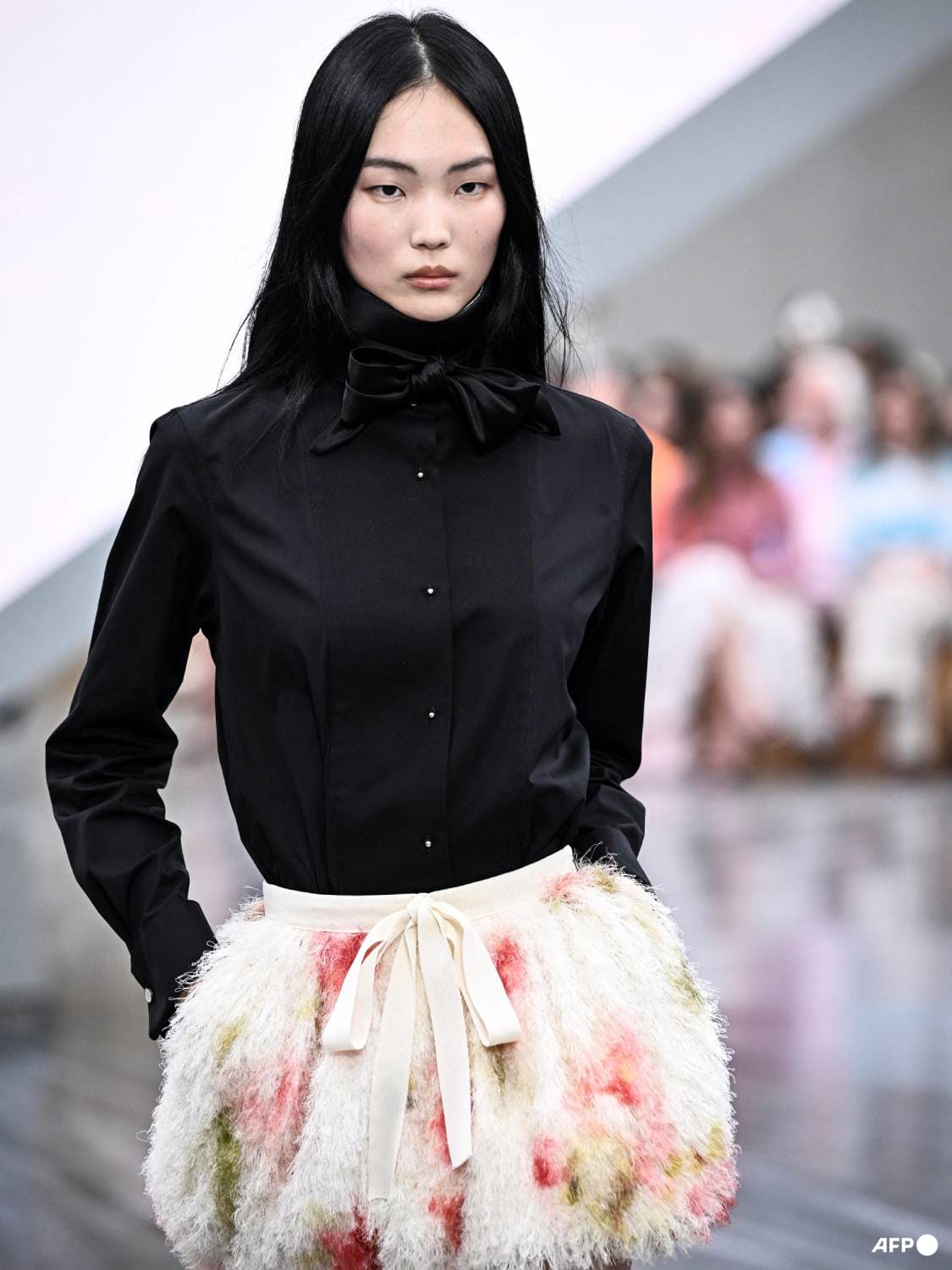

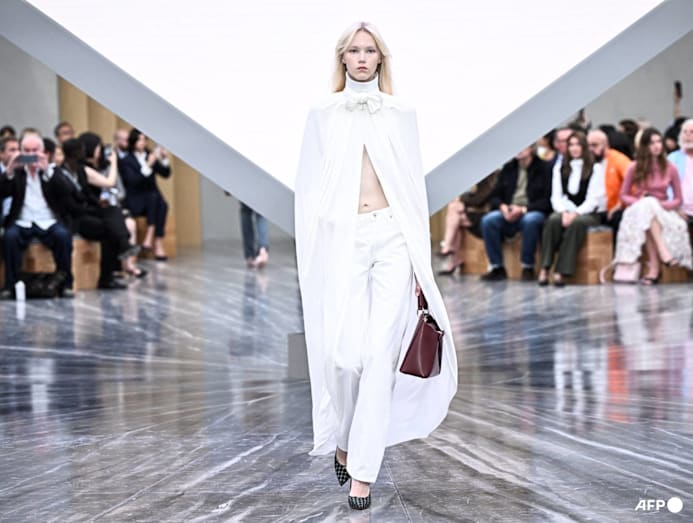
His runway was full of nods not just to Dior motifs, but also his men’s show, the better to express the single overarching hand that is now redrawing the entire house. Classic bar jackets had exaggerated sculptural hems, slashed backs or had been shrunken to a state where the waistline sat below the bust over pleated miniskirts (or ones that were barely there at all). Evening capes cascaded over jeans or micro denim minis, some which had delicate lily-of-the-valley prints. And bows rippled everywhere, from high neckline blouses and the hems of bell-skirted party dresses, like a pure white one that opened the show, to barely there lace evening looks with pointed pannier-like skirts and structured fans that billowed in layers behind them. Showstoppers included a shimmering embroidered blue forget-me-not sequin gown and bubble dresses in a light satin ruched into heavy layers. Low-heeled shoes had playful bunny ears or else extra large rosettes.
Aided by buccaneer hats from Stephen Jones designed to propel ideas of revolution and flight (and with a John Galliano-like flourish), these were bizarre — sometimes beautiful — clothes that were trying to go somewhere new. Conceptually, they will not be for everyone, particularly some of the more conservative Dior couture clients who sat in the audience, alongside the Arnault dynasty, French first lady Brigitte Macron and celebrities such as Johnny Depp and Charlize Theron. But that seemed to sit just fine with Anderson, who has always been one with an appetite for risk.
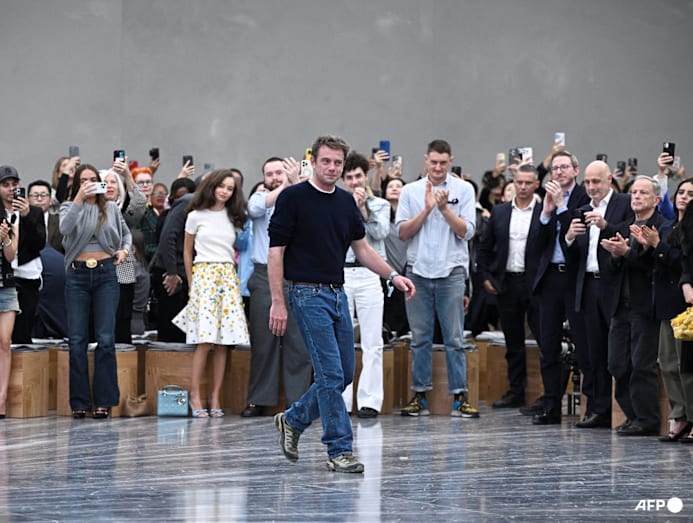
“I don’t want a clone zone. I want different women in this world,” he said. “The new Dior woman can be vulnerable, strong, or just embrace drama. This couture house holds many different people. It is not ever just about one person.”
Let’s see if his ideas take off.
Elizabeth Paton © 2025 The Financial Times
This article originally appeared in The Financial Times