‘Choosing a scent should be instinctive’: Christine Nagel, perfumer creator at Hermes
For Christine Nagel, creating a destination fragrance for Hermes during COVID-19 when travel was halted, reaffirmed what she has always known: Scents have a strong visceral power that are not only transportive, but they also impact your well-being, positively.
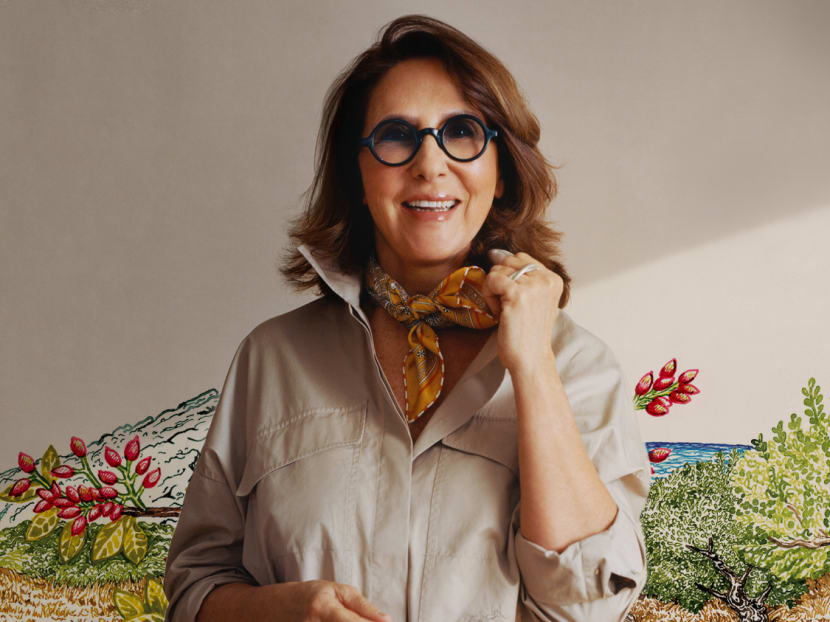


How do you create a destination scent when you cannot travel? This was a challenge faced by Christine Nagel, perfumer creator at Hermes, when she was tasked with creating a new scent for the Parfums-Jardins collection, three years ago. While a global pandemic was raging, and the world had grinded to a halt.
Of course, it’s not that one cannot make a fragrance in an atelier, but in case one forgets, the Parfums-Jardins is a capsule collection of destination scents, what the brand calls “journeys through watery landscapes”.
Birthed in 2003, a new garden fragrance is introduced every two to three years. Each scent is inspired by the soul of a place, the perfumer’s inspiration and the annual theme chosen by the French luxury house, to reflect an aspect of the Hermes culture. The scents are meant to evoke desires of freshness, dreams and of escape – the spirit of travel, in essence.
Not being able to travel might throw a spanner in the (creative) works. “I usually visit gardens to smell gardens, but this time the garden came to me,” Nagel pointed out. She had some idea of where her next garden would be. “I knew my future garden was in Greece,” she said with certainty. It would be inspired by her first visit to Greece, to the island of Kythira in the Peloponnese peninsular.
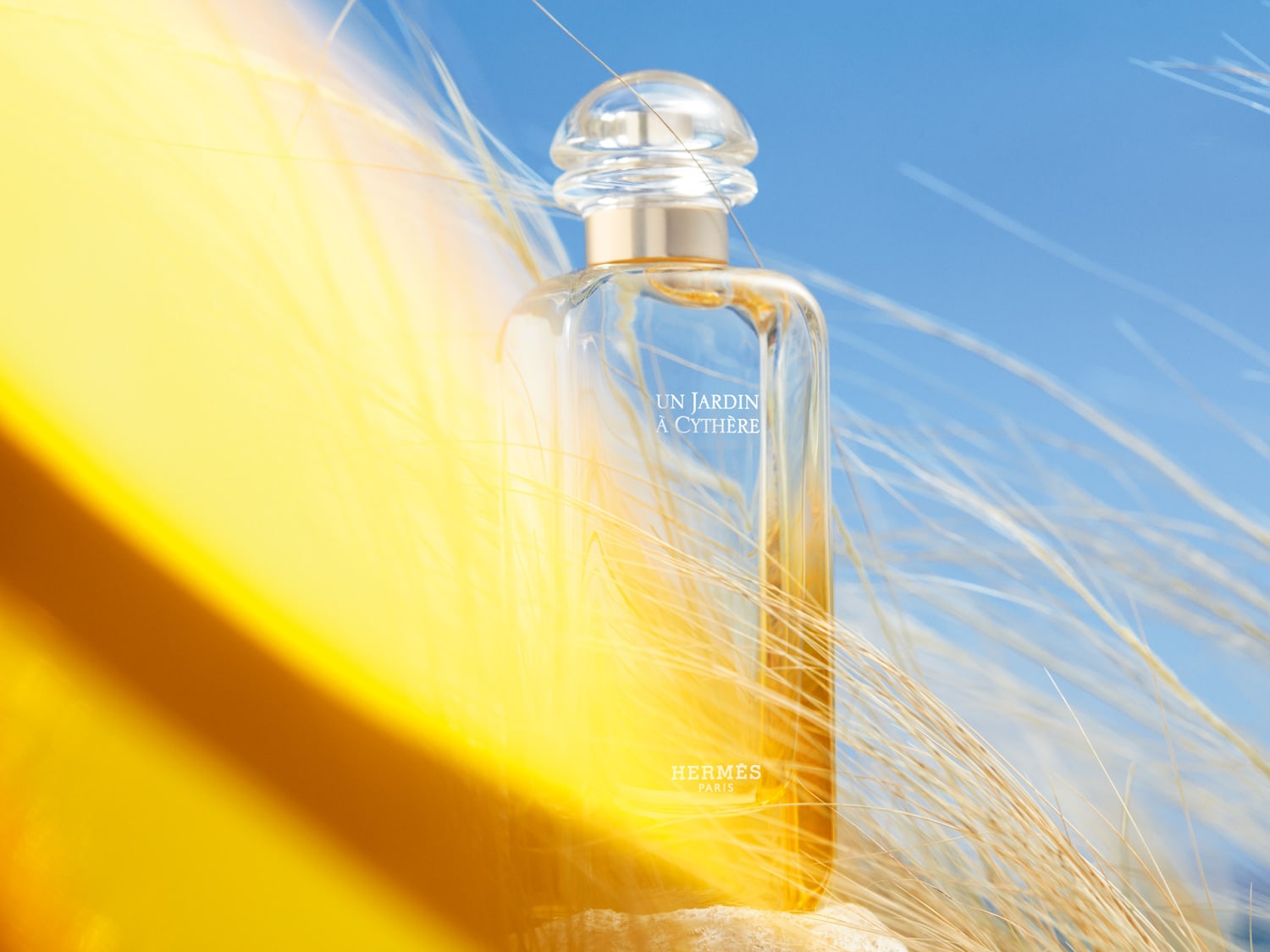

Although the visit was 25 years ago, she still has a strong recall of “olive trees, planted like the backbone of the blond hair formed by the grasses. The sun in Greece is very strong… and there’s the sound of crickets and a freshness. In one moment, the wind arrives, and brings to the nose a deliciousness. It brings me back to the past.”
What’s noteworthy of this detailed recollection, is that the past she references goes further back in time from her visit to Kythira, all the way back to her childhood. She shared with us a fond familial memory, specifically one of a baby crib with a mattress made of straw that both she and her brother had slept on. It’s this odour of dried grass – toasted, nutty, and slightly milky – that is distinct and comforting to her.
That vivid recall gave her the confidence to make her destination scent despite travel being halted: “I could wait to create my garden, or create it with my imagination, to trust my nose and memory.”
It’s not unlike a painter, she said, who can paint a landscape as he sees it in front of him, presently, or he has the option of “studying his landscape intently, then returning to his atelier and painting it from heart, what he remembers in his mind.”

THE RECIPE OF A SCENT
Nagel’s memories may have formed the beginnings of an olfactory blueprint, but lest you think it’s only about smells, it’s as much about textures and colours when she composes a perfume.
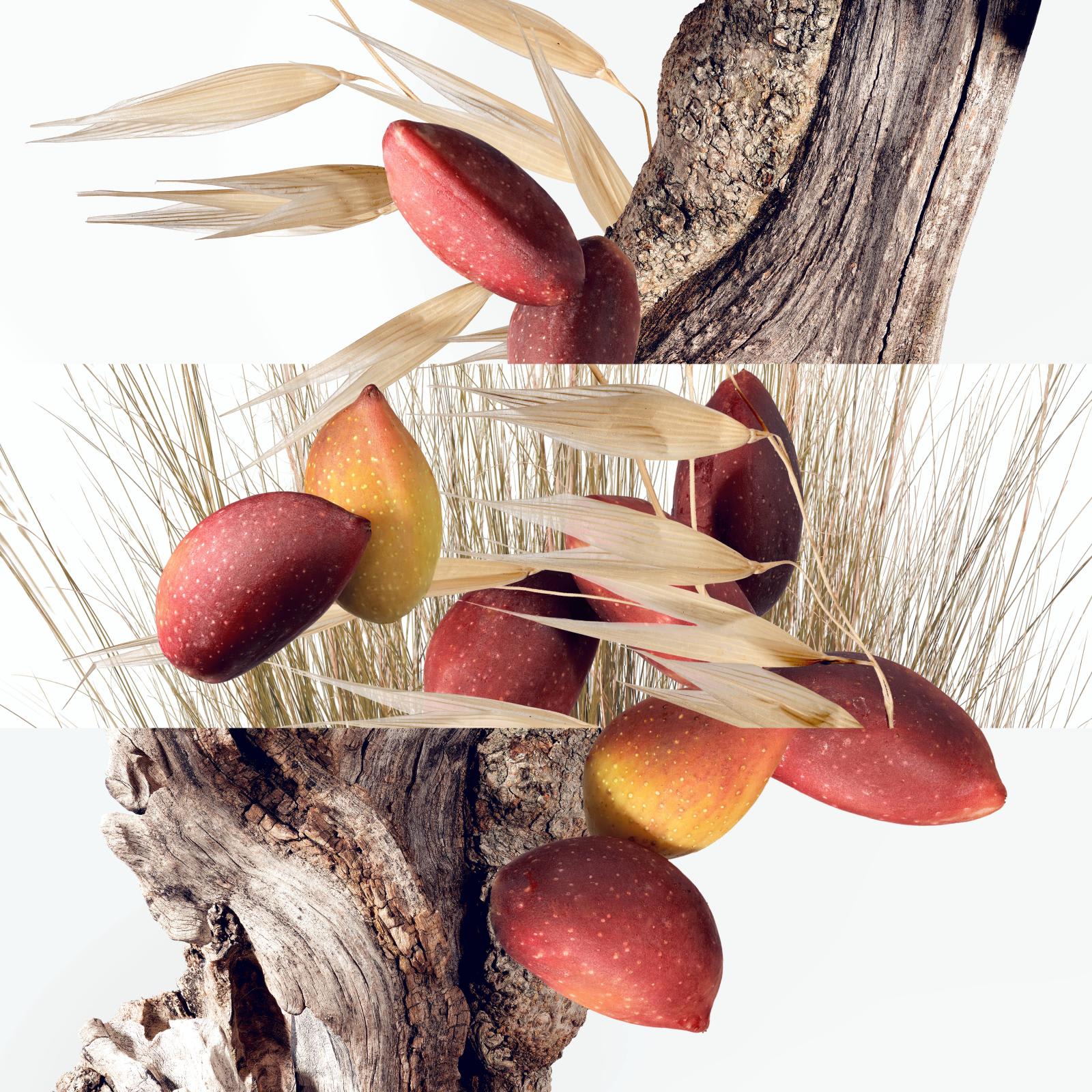
For example, as Nagel told us, the olive bark which she envisioned as the backbone of her latest garden scent, has no essence. It’s not a fragrant wood like pine or cedar. Without an olfactory reference, the inspiration that served for Nagel’s created olive accord, came from a chalice made of olive wood.
Similarly, to capture the imagery of blond grass blends blowing in the wind, are lilting and bright citrus top notes.
But there was still a missing element that Nagel needed to pull her composition together. That she found in a gift of fresh pistachios.
“It was the texture. Fresh pistachios are pink and have a sensual texture that’s moist. If you rehydrate dry pistachios and soak them overnight, they come to live again, and this is what lends a sweet element to the perfume,” she shared excitedly.
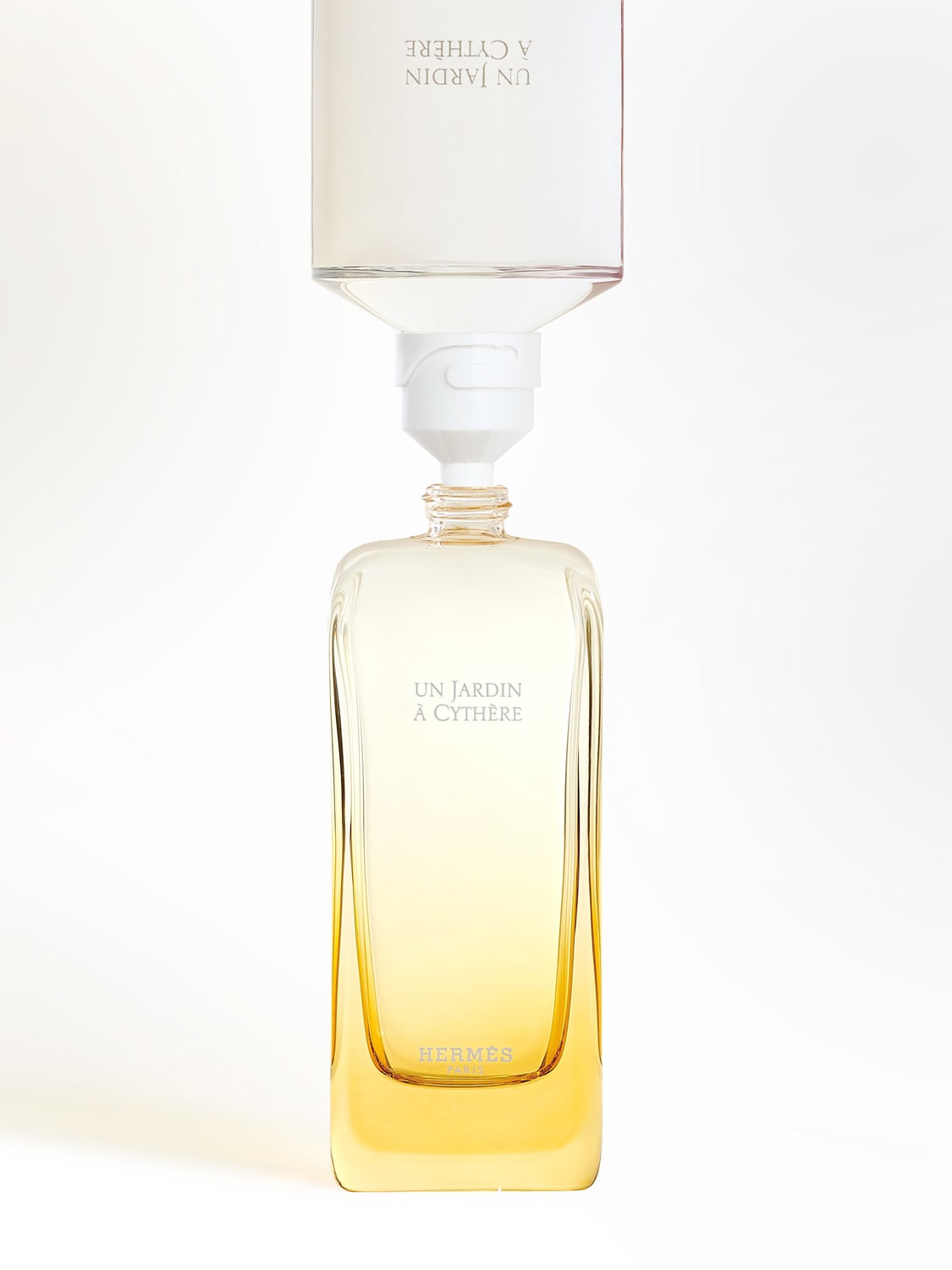
Thus, came about Christine Nagel’s latest scent, Un Jardin a Cythere – the seventh opus in the Hermes Parfums-Jardins collection. The 2023 olfactory ode to her unforgettable memories of Kythira, it is a garden scent that is absent of flowers. Neither green nor floral, it is instead a sun-drenched juice that invokes golden summer days. With an opening exuberant burst that is citrusy, sheer, and fresh, it is tampered with a nutty, gourmand sweetness reminiscent of toasted grains; before it mellows down to a soft, velvety finish. Alluringly genderless and skin-intimate (read delicate, not overpowering), this is a scent you want to press your nose in when you smell it.
Tip: While fragrances are worn best on skin, an interesting alternative, especially with our recent scorching weather is to spritz it on a fan to enjoy this sweet and airy fragrance as you cool down.

BRING IT HOME
Making a scent though, was only half the challenge. She still needed the okay of her garden creation from Pierre-Alexis Dumas, the artistic director of Hermes. It’s hard to imagine that this revered perfumer would be less than confident about her sharp olfactory instincts but Nagel chuckled as she recalled her nervousness in presenting the fragrance, “because they (the Dumas family) have close ties to Greece.” (In case you’re wondering, Pierre-Alexis’s mother was born in Greece.)


Her fears were unfounded. The eau du toilette was an instant hit with Dumas. When he got a whiff of it, he immediately proclaimed: “Christine, I am at home.”
That wasn’t enough for her, however. “I had to be sure that my garden is true,” she said passionately. The first week that travel restrictions were lifted, she quickly made her way back to Greece.
“The picture came to life when I smelled it,” she recalled, smilingly. Affirmation also came from the Greeks and island residents who she also shared her scent with.
“They said I captured it,” she said, proudly.
WHAT THE NOSE KNOWS
That is the power of scents: There is nothing ambivalent about them. Not only do they provoke such strong and instant reactions from each of us, but they can also instantly bring us back in time, or to places or memories that we hold dear.
This intertwined relationship of scents, memories, and emotions even has a name. Neuroscientists call it the Proustian moment. Named after Marcel Proust, the phenomenon of involuntary memory was captured in his famous novel, In Search Of Lost Time (Fr. A Recherche Du Temps Perdu). Proust had written of how a bite of madeleines could vividly bring back childhood memories of his aunt feeding him the same cake before Sunday mass. Flavour as we know, is a combination of taste and smell, and it’s smells that take a direct route to our limbic system which plays a major role in controlling our mood, memory, behaviour, and emotion.
Nagel herself said that creating a garden scent in lockdown was “a different olfactive process altogether” especially since it was an unusually solitary process, but she also credited it for keeping her occupied and that a profound effect on her well-being.
“I didn’t suffer during the pandemic. Especially at a time when people were so worried about losing their sense of smell, of being in isolation… knowing that my work can offer some comfort of familiarity, it made me appreciate even more the power of scents.”
Evidently, she wasn’t the only one who felt that. Global fragrance sales did especially well for many brands during COVID-19 because perfumes were not just accessible luxury items. They were daily mood lifters that could offer us quick flights of fancy to exotic destinations even when we were stuck inside. Fragrances and scent peripherals like candles and diffusers became our essential self-care items for well-being, and olfactory markers that demarcated work and living spaces. That’s the visceral power of scents, a simple luxury that is more than just a composition of fragrant notes, it is truly transportive and beneficial for our psyche.

IT NEEDS TO BE INSTINCTIVE
That is also why when it comes to selecting a fragrance, Nagel feels that we should stop overthinking the process. “Choosing a scent should be instinctive,” she said. While scent bars are great marketing tools for brands and an exploratory playground for a consumer, we all have in us, the greatest tool to sniff out our olfactory signature easily: Our nose.
The best canvas to test that fragrance is of course our skin because our natural pH ultimately determines how a scent will bloom and wear. Less is more when it comes to selecting a fragrance. Narrow it down to two choices, wear it on your skin, and let it develop as you walk around.
Interestingly, Nagel herself doesn’t usually wear fragrance. Intentionally. “I don’t use parfum because my skin needs to be naked when I am working on scents,” she said. She doesn’t just work with perfume blotters, but in the week, you’re likely to catch her with coloured stickers all over herself – each is a scent sample she’s exploring. And when you do catch her wearing a perfume on the weekend: “It’s most likely something I’m already working on.”