How Singapore designer Karyn Lim reinvents waste into art
From vases made of upcycled plastic bags to wire-mesh accessories for local label In Good Company, this Singaporean designer is reimagining what creativity can be.
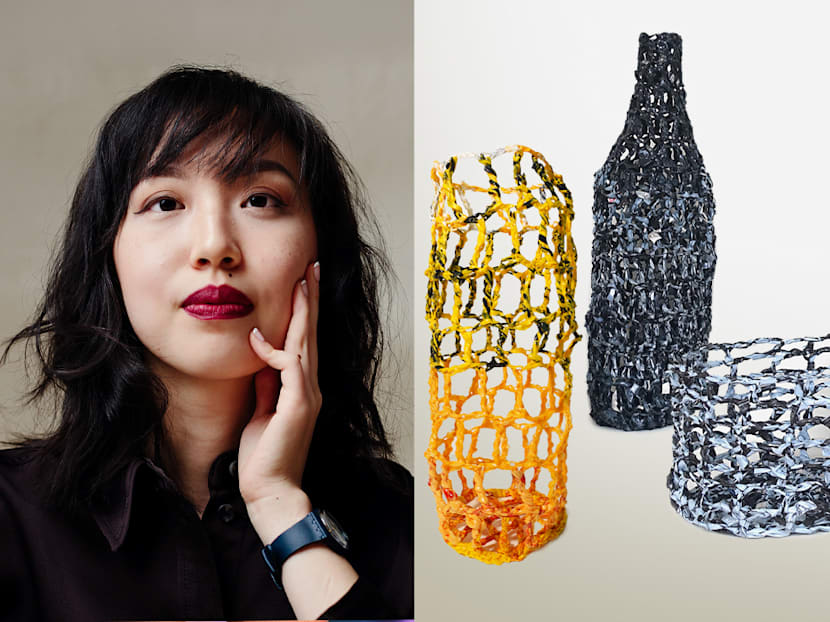
Singaporean designer Karyn Lim transforms discarded materials like plastic bags and metal mesh into elegant, functional art pieces. (Photos: Studio Karyn Lim)

This audio is generated by an AI tool.
As a child, Karyn Lim was creative with her hands, playing with dough, origami, paper, cardboard, plastic, cross-stitch, knitting, sewing, and more. “I made book boxes upcycled from cardboard, a wallet from gift wrap and plastic, and sewed small gifts for friends,” said the Singaporean designer and founder of her eponymous practice, Studio Karyn Lim.
Little did the young Lim know that she would one day put these skills to good use, such as in her So Plast!c “grocery bags edition” vessels. These basket-like creations feature skins made from woven fibres. Given their semi-rigid materiality and subtle gloss, they could even be mistaken for ceramics from afar.
These artful receptacles were made from used plastic bags. Lim wanted to alter the perception of disposables by transforming them into valuable objects. She collected and cleaned used plastic bags, turning them into plastic yarn (or “plarn”) that she crocheted into the vessels.
The project began when some stores in Singapore started charging for plastic bags to discourage excessive use in the name of green living. “It made me wonder why education about the urgency of reducing waste couldn’t change user behaviour, but adding a perceivable value to the product could,” said Lim.
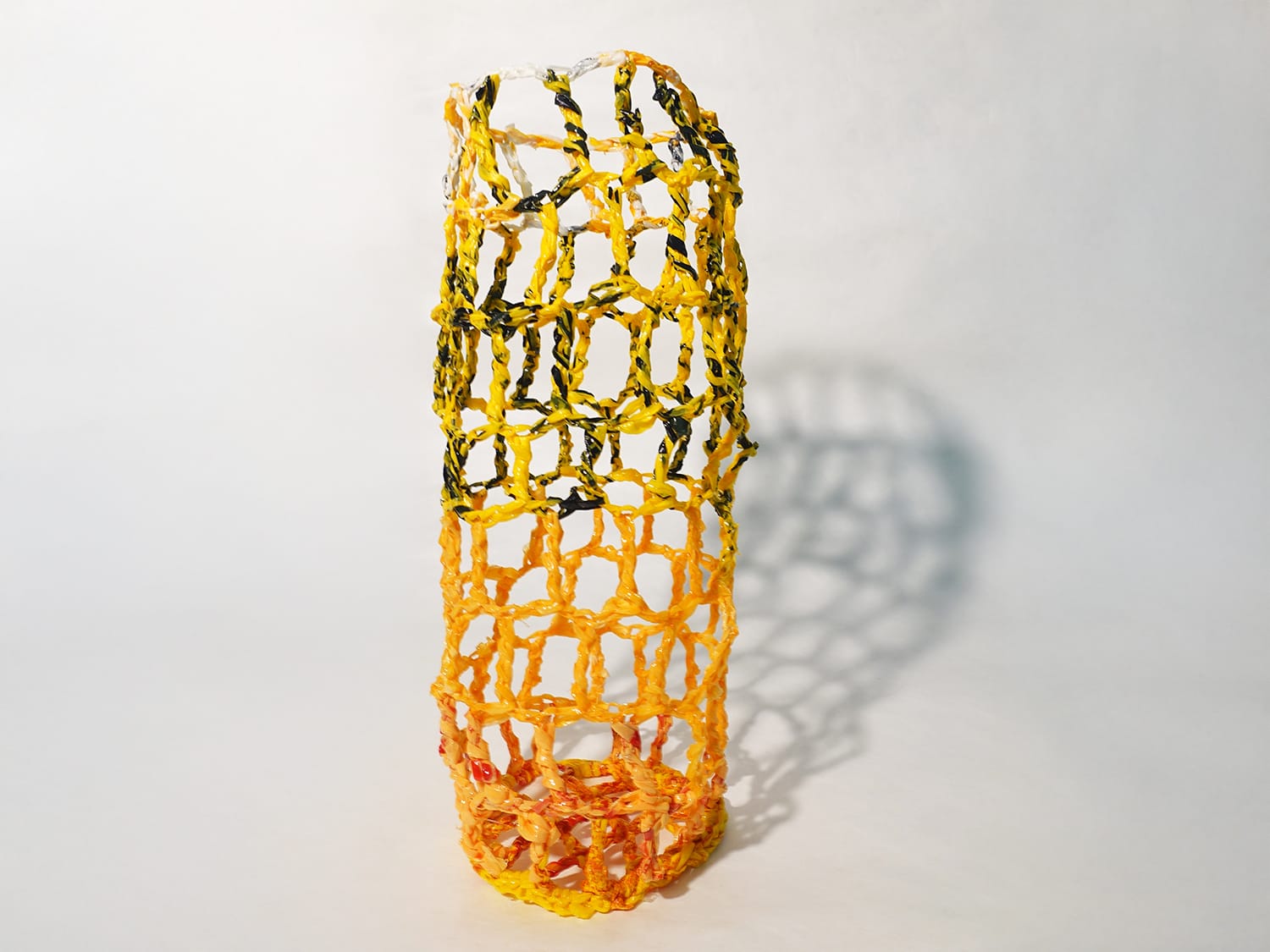
Ironically, after the first iteration of the project, used plastic bags became difficult to obtain as people grew accustomed to bringing their own reusable bags to avoid paying extra for new ones. Observing that e-commerce had led to the more common use of polymailers (single-use thick paper envelopes or cardboard boxes) as an alternative to plastic bags, Lim conceived the Polymailers Edition of the series to highlight the growing trend of excessive plastic packaging in online shopping.
Over the years, Lim has tackled such projects while balancing freelance work for local SMEs (Small and Medium Enterprises). She has managed communications for the design group Industry+ and is currently teaching design at a local university. “This balance works for my studio for now, as it allows me the stability and freedom to explore new ideas and participate in international trade fairs such as SaloneSatellite, Milan Design Week, and Designart Tokyo,” said Lim, adding that her ambition is to launch more projects from her studio.
As for her creative journey, Lim recalled watching her late grandmother sew clothes. “She also made cute hair accessories for me that won praise at school. I guess there was a spirit of making the never really left me so until today, I still create with my hands,” said Lim, who had followed the “typical academic route” until enrolling in the Industrial Design course at the National University of Singapore (NUS).
“I was perhaps tired of learning from books by then, and found the hands-on nature of design very refreshing,” remarked Lim. A semester abroad in Paris at ENSCI – Les Ateliers broadened her horizons. “I visited many museums and architectural works by great masters. I loved exploring thrift stores and flea markets filled with vintage gems. Being immersed in a different culture was extremely inspiring,” she said.
After working for a few years in Singapore, she decided to further her design education and headed to Switzerland to complete a master’s degree at the University of Art and Design Lausanne. In 2015, Lim founded her studio. “My first exhibition was during my first year of design school at NUS. I exhibited my project at The Alchemists – a show produced by Industry+ at the Triennale di Milano during Milan Design Week,” she shared.
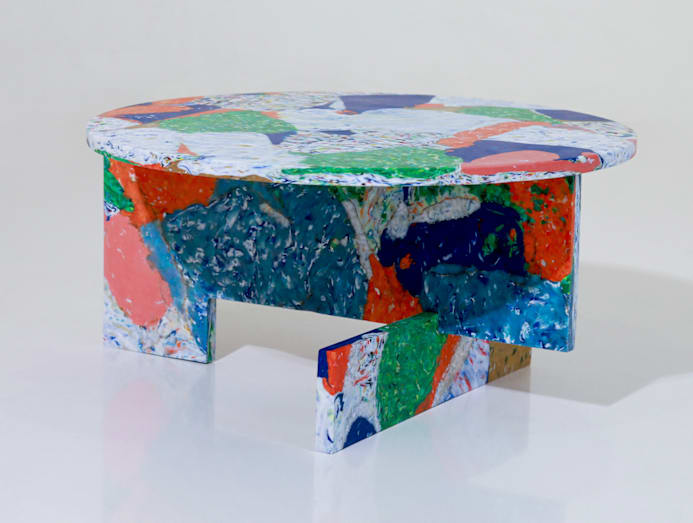
Ten years on, Lim mad significant progress in her pursuit of design. Her So Plast!c series includes small tables and lamps made from food packaging waste such as bottle caps. Currently, the So Plast!c small tables are showcased at Designers & Crafters 02 – an exhibition curated by Industry+ at lighting showroom Sol Luminaire. A one-of-a-kind edition of the table is also available for purchase at the Asian Civilisations Museum (ACM)’s Supermama store, and the So Plast!c lamps were exhibited at Emerge during Design Fair Asia 2025 in September.
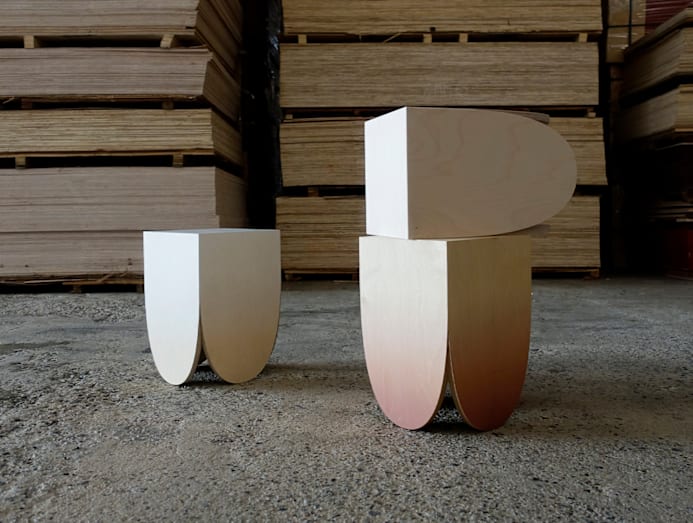
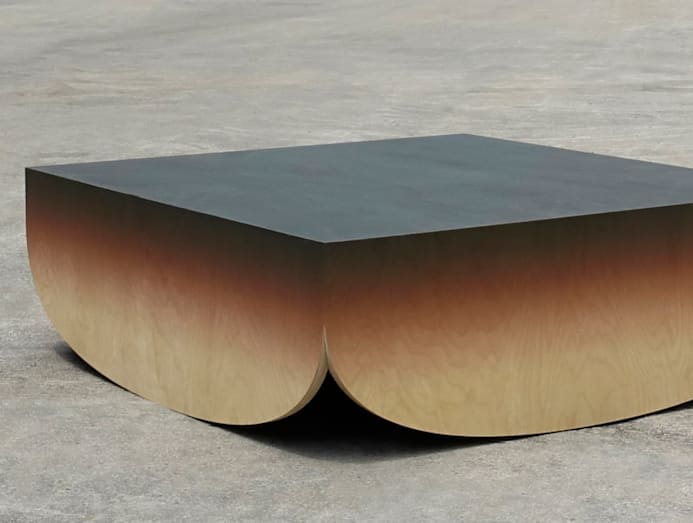
There is also Cloud – a series of plywood seats that appear to float and were showcased at the World Expo in Osaka, where they were used within the Shiok! Cafe in the Singapore Pavilion. Meanwhile, the Lightness series explores the sheerness of metal and metal-like materials, expressed as vessels, accessories as well as bags. Some are handwoven from stainless steel wire, while others are made from chainmail.
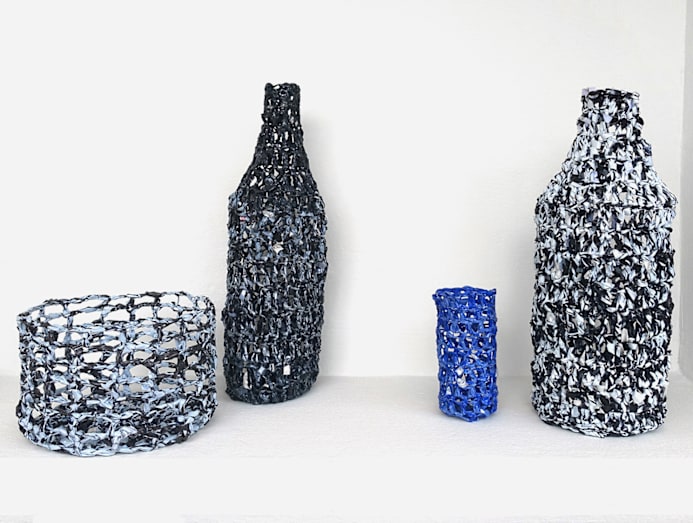
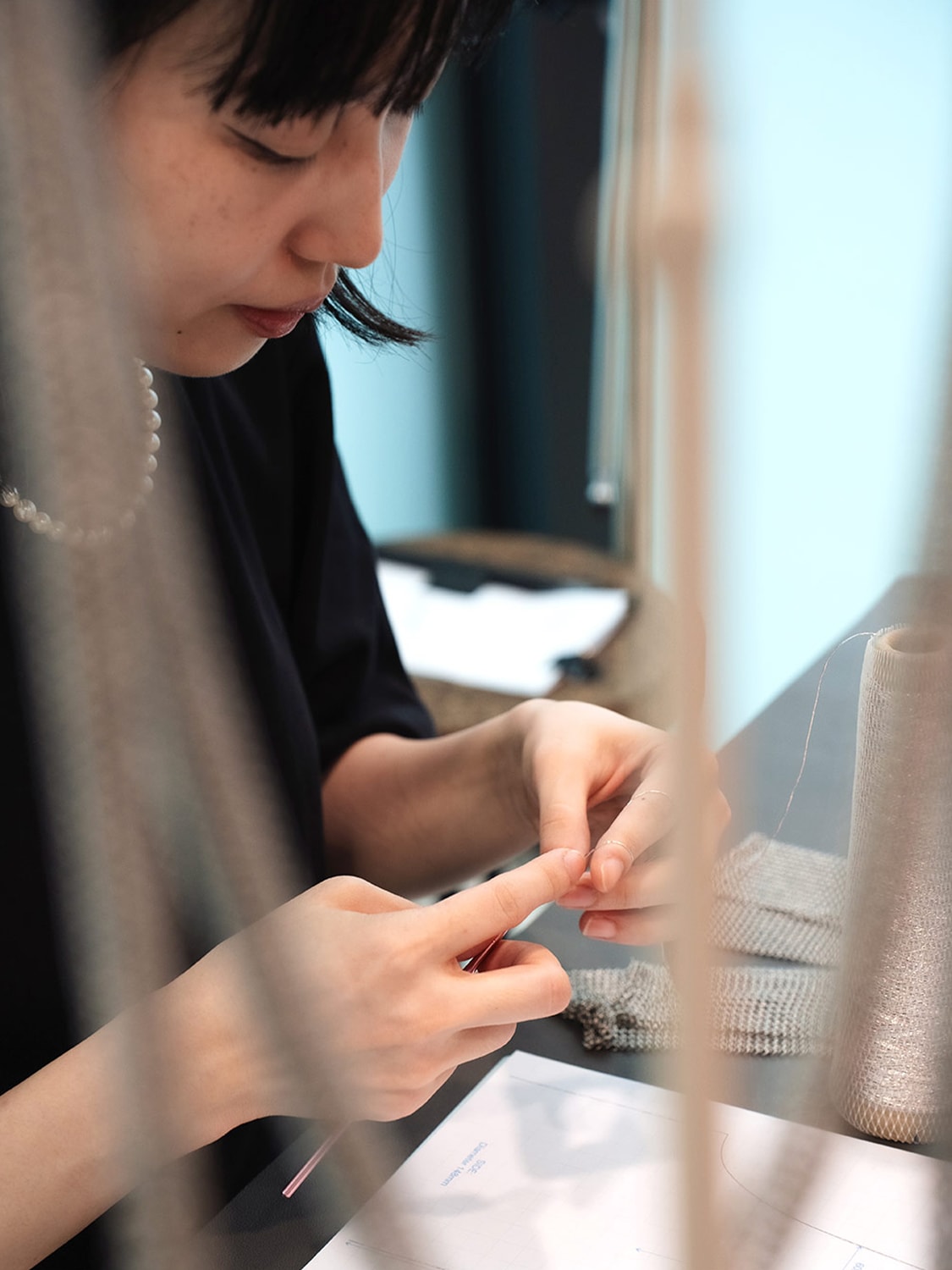
Lim shared that this project began with “a fascination with the lightness and sheerness of metal mesh.” She found a way to craft metal mesh with thin wire using a crochet hook. “I experimented with various forms and presented a series of sculptural mesh vessels at the first edition of Emerge at Find Design Fair Asia in 2022,” she said.
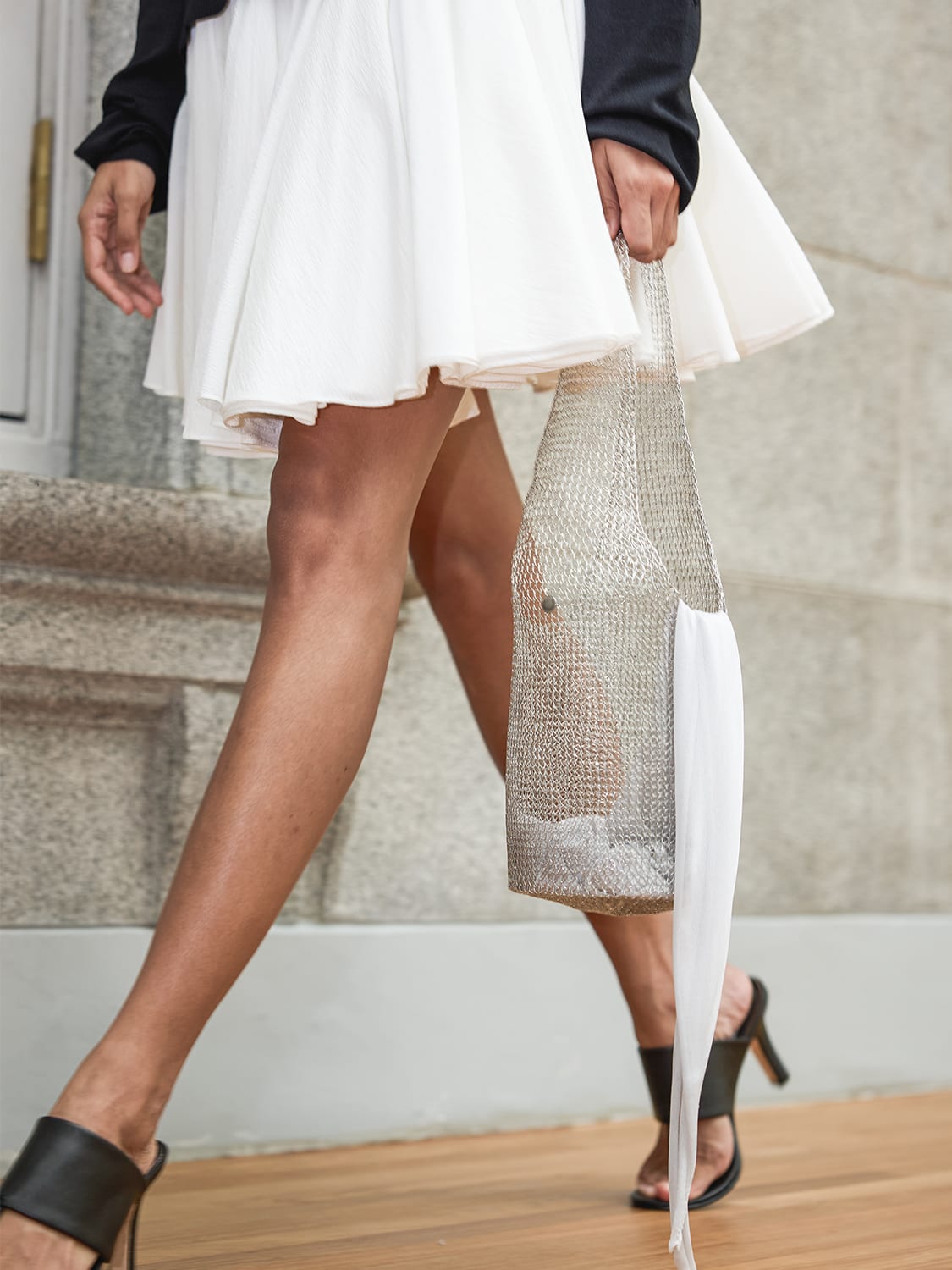
Some pieces from the series are sold at the Red Dot Design Museum and at the Ion Orchard store of local fashion brand In Good Company. At the latter’s recent show at the National Gallery in September 2025, models walked down the runway carrying the mesh accessories.
These achievements belie the challenges Lim faced in the early days of her creative journey. “I didn’t really understand much about business – how to develop and launch products, and all the little things necessary to run a studio. But I’ve learnt more along the way through experience and from people who have shared meaningful insights with me at various stages of my life,” she reflected.
Always curious about new ideas and technologies, Lim has also experimented with design concepts using generative AI during its early stages. Her conceptualisation of a fictional luxury resort, which she named Snowood, appeared on the front cover of a local magazine.
“There are so many ways to use design. If I had to make a list, it would be endless,” said Lim, who believes that design is a tool rather than just an end product. “Design can bring value to so many things, beyond just creating beautiful objects. Once upon a time, I had a job designing playgrounds for our public spaces. The ability to shape public spaces and how we use them was meaningful,” she shared, reflecting on a post-Covid stint after completing her master’s degree.
While aesthetics is an intrinsic part of design – “it can reflect our style, communicate a brand, create a mood, and so on” – Lim also feels the thought behind a design is equally valuable. “Design can make our everyday experiences feel good. The best kinds of everyday design are perhaps the ones we don’t notice because they work so well.”
One of her gripes is that design is often perceived as “very easy to do,” or that “the price tag on design is not justified,” and that objects made from recycled materials are undervalued. “It actually costs more to produce an object using recycled materials than with new raw materials because of the collection and cleaning processes. Smaller brands and studios also don’t have the economies of scale that large companies enjoy,” Lim explained.
She appreciates those who support small independent businesses like hers; these individuals understand the effort and thought that go into bringing a product from concept to reality. “They usually take the time to understand the brand and the people behind it, and perhaps like the fact that they own unique, small-batch pieces,” said Lim. “Buying from a small independent business means putting your money behind someone’s precious dream.”
When it comes to dreams, the designer has plenty, and at a youthful 33, this is only the beginning of her career. “I have many sketches of undeveloped projects. Lots of ideas stay as ideas – as they should be – and only the suitable ones make it to the market in their own time. I’m always keen to explore the use of interesting materials to create beautiful things.”