Explainer: What we know so far about the Wuhan virus outbreak
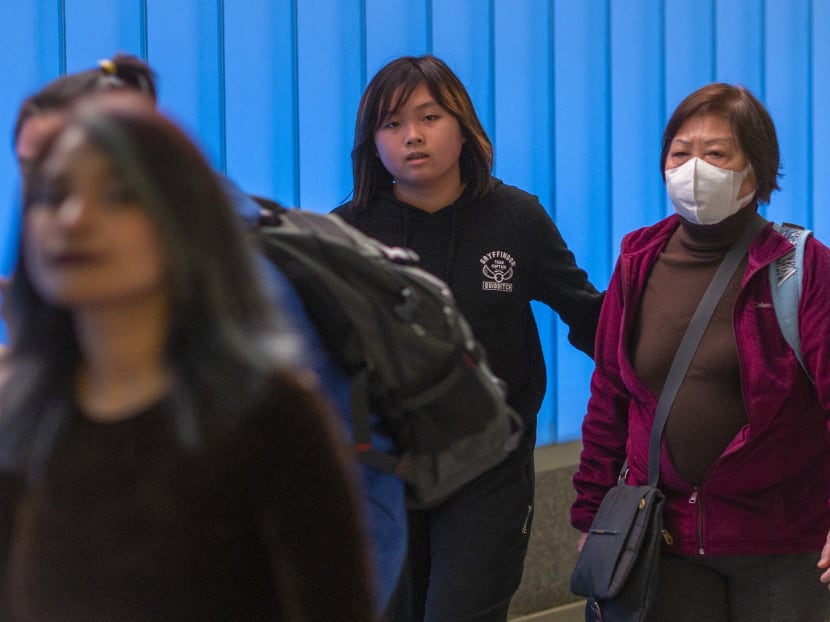
Passengers arriving at the Los Angeles International Airport in the United States on Jan 18, 2020, the first day of health screenings for coronavirus of travellers from Wuhan, China.
SINGAPORE — Scientists are racing to determine the exact cause and origin of the coronavirus outbreak in China’s central city of Wuhan in Hubei province, as the Chinese authorities on Monday (Jan 20) reported a spike of 139 new confirmed cases and a third death over the weekend.
So far, a total of more than 200 people have been officially diagnosed with the virus, including four cases outside of China in Japan, South Korea and Thailand.
China confirmed on Monday evening that the virus can be spread from person to person.
The country has increased surveillance and prevention measures, amid fears that the virus could be further spread during the Chinese New Year holidays, when millions of the country’s people are expected to travel domestically and overseas.
Elsewhere, airports in the United States and Asian countries such as Japan, Singapore, South Korea and Thailand have bolstered their screening efforts.
There has been no confirmed case of the virus in Singapore so far, even though seven people who have contracted pneumonia and travelled to Wuhan were warded and isolated as a precautionary measure.
Experts have classified the virus as 2019-nCoV, a new strain of the coronavirus, which is from the same family as the viruses responsible for the Middle East respiratory syndrome (Mers) and the severe acute respiratory syndrome (Sars) outbreak which killed almost 800 people worldwide from 2002 to 2003, including 33 in Singapore.
TODAY takes a closer look at what we know so far about the Wuhan virus.
WHAT ARE THE SYMPTOMS AND HOW SERIOUS IS AN INFECTION?
The new virus belongs to a broad family of coronaviruses that are usually found in animals. In rare cases, they can mutate and infect humans, typically causing a wide range of symptoms from a mild cold to death.
The severity of the Wuhan virus is likely somewhere in the middle. Of the 198 people infected in Wuhan, 25 have been cured and three have died.
Patients were diagnosed with pneumonia-like symptoms, including fevers, difficulty breathing and fluid filling their lungs, the World Health Organization (WHO) said.
An infection can be especially brutal for anyone with a weak or compromised immune system, such as in older patients or someone with the human immunodeficiency virus (HIV) and the acquired immune deficiency syndrome (Aids).
Two of the most deadly coronaviruses in recent years are Sars and Mers, which are easily transmitted from one person to another.
Dr W Ian Lipkin, director of the Center for Infection and Immunity at Columbia University’s Mailman School of Public Health, told The New York Times that it is still too early to know just how dangerous the virus will be.
“Until it becomes capable of human-to-human transmission, there’s not a major threat of a pandemic,” he said, before China confirmed that the virus can spread from person to person.
“We need to prepare for the possibility that this could be a larger outbreak, and it could become a pandemic. But that doesn’t mean that it will.”
HOW IS THE VIRUS SPREADING?
Scientists are still investigating the full scope and spread of the outbreak, which WHO has been probing since Dec 31 last year, when it was first reported.
China’s National Health Commission said in a statement on Sunday that the novel virus is “still preventable and controllable”, but that its source and transmission methods are still unknown.
Other estimates indicate that the epidemic may be worse than reported.
A paper published last Friday by the MRC Centre for Global Infectious Diseases at the Imperial College in London warned that the number of cases in Wuhan is likely much higher than the reported total — at 1,700.
The epicentre of the outbreak is thought to be Wuhan’s Huanan Seafood Wholesale Market, which is a large market that sells fish and many types of animal meats.
In an effort to contain the virus, the authorities have closed the market since Jan 1, and are cleaning up other markets throughout Wuhan, which has a population of 11 million and is a major transport hub in China.
Many infected patients have been linked to the market, but some of them said that they had not been anywhere close to it, suggesting that the virus can be transmitted from human to human to a limited extent.
So far, 15 medical workers treating and looking after infected patients have contracted the virus.
WHAT IS SINGAPORE DOING TO CONTROL TRANSMISSION?
From Jan 22, all travellers arriving at Changi Airport on flights from China will have to undergo temperature screening. This is an expansion of an earlier measure on Jan 3, where only passengers on flights arriving from Wuhan undergo temperature screening.
Join our Telegram channel to get TODAY's top stories on mobile:

The Ministry of Health (MOH) said in a statement on Monday that it is doing this in light of the increase in exported cases of the virus to other cities and countries, as well as the anticipated increase in travel volume ahead of the Chinese New Year holidays starting this weekend.
Individuals with pneumonia and travel history to Wuhan within 14 days before the onset of symptoms will be isolated in a hospital as a precautionary measure to prevent transmission, and investigated.
As of Monday, seven people diagnosed with pneumonia and who had visited Wuhan were warded in isolation as a precautionary measure.
Six of them have tested negative for coronavirus.
MOH cautioned last Friday that Singapore is likely to see more suspect cases that will need to be investigated.
The ministry has already alerted medical practitioners here to be vigilant in keeping watch for patients with pneumonia who have returned from Wuhan recently.
MOH also issued a health advisory to those travelling to Wuhan, encouraging them to monitor their health closely, to avoid contact with live animals or people who show symptoms of being unwell, to practise good personal hygiene and to seek medical attention if they feel sick.