Is your hair flat or limp? Your matching shampoo and conditioner could be to blame
While they may be designed to work in pairs, there are instances when it’s more ideal to mix-and-match your hair care.

Is your hair flat and limp? (Photo: iStock)

This audio is generated by an AI tool.
When buying shampoo and conditioner, many of us tend to grab both from the same brand and series. It feels logical since they are marketed as a set and so we naturally assume they are intended to work together. But while they may be formulated to be so, are they really meeting our specific needs?
Truth is, our scalp and hair may not have the same requirements in terms of care. In fact, for some people they can be drastically different – and your scalp and hair condition may change from time to time, too.
For example, your usually normal scalp can become oily or dry when impacted by hormonal and climate changes. And those who have permed, dyed or bleached hair will need a conditioner that is likely different from that of your scalp.
Let’s be clear about what a shampoo is meant for: To cleanse both scalp and hair. But its main function is targeted at cleaning the scalp. Conditioners, on the other hand, are to be used solely on the hair, which means that it should be chosen to meet your hair’s specific needs.
Each step of a haircare routine should be tailored to your individual needs.
“Each step of a haircare routine should be tailored to your individual needs. If both your shampoo and conditioner requirements align with a single brand’s product series, that can be convenient. But if not, there’s no harm in mixing and matching products across different ranges, or even different brands, to address your scalp and hair concerns more precisely,” said the chief director of Chez Vous Hair Salon, Serene Tan.
WHY BRANDS PRODUCE PRODUCTS IN A SERIES
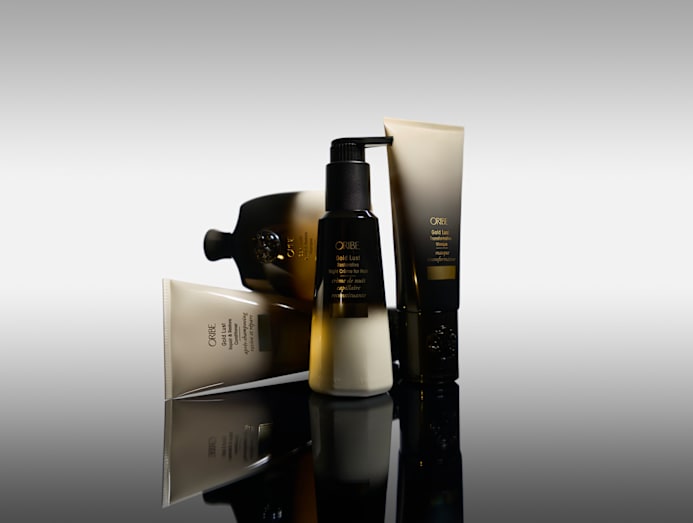
“During formulation, brands often design shampoos, conditioners, and treatments within a series to work synergistically. Each product is created with the same end goal in mind, whether it’s repair, hydration or volumising, and different ingredients are layered in sequence to complement one another,” explained Tan.
“Using the full set can sometimes enhance results, as the products are calibrated to reinforce each other’s effects. That said, it’s not mandatory. Most of us have more than one hair or scalp concern at any given time, so mixing and matching across ranges is often the smarter approach to meet all your needs.
Mixing and matching across ranges is often the smarter approach to meet all your needs.
There are, of course, benefits to using both shampoo and conditioner from the same brand range. Since they are complementary, they work best when used together and may provide optimal performance (that is if your scalp and hair needs are aligned). They also have the same fragrance, a consistency that may be an important quality to some people.
If you’re experiencing scalp or hair issues while using a shampoo and conditioner from the same brand range, it may not be that both are unsuitable for you. Consider switching one of them, after identifying your exact problem and whether the issue concerns your scalp or hair.
HOW TO PICK THE RIGHT SHAMPOO AND CONDITIONER

“Think of it this way – your scalp and hair are often two different ecosystems. Treat them accordingly for the healthiest balance. Always start by choosing a shampoo based on your scalp needs, because that’s where shampoo is primarily applied. Then, select conditioners, masks, and leave-in products based on your hair’s needs, since these products target mid-lengths and ends and should not come into direct contact with the scalp,” said Tan.
Generally, you likely won’t be able to use a shampoo and conditioner from the same brand series if your scalp and hair have contrasting needs. For example, if you have an oily scalp, but dry or frizzy hair ends, you are going to need a shampoo that’s more clarifying and a conditioner that is formulated to have higher moisturising and smoothening properties.
Your scalp and hair are often two different ecosystems.
On the other hand, there are others who have a dry scalp but very fine hair that tends to look flat. In such a case, using a moisturising series of products may work for their scalp but weigh down their hair. In other words, they can use a moisturising shampoo, but should opt for a volumising conditioner with a lighter formula that won’t accentuate the look of flat and limp hair.
If you have had a perm, chemical straightening or colouring job, you’ll need a conditioner that will meet the specific needs of your hair. Conditioners that are designed for such hair are usually formulated to be deeply moisturising, nourishing and reparative to keep hair strong and healthy-looking and the hair dye and style intact for longer.
WHAT TO WATCH OUT FOR WHEN MIXING BRANDS

While it’s perfectly fine to combine the use of shampoos and conditioners from different brands or product ranges, there are certain things to note. “Avoid pairing two very rich, heavy products together – doing so can result in product overload, which will leave hair weighed down, looking greasy or flat,” advised Tan.
She also emphasised that it’s essentially about balancing your scalp needs versus your hair needs. “Always pick shampoo based on scalp condition and conditioner based on hair condition. And remember – conditioners and masks should stay on the mid-lengths and ends of the hair, not the scalp, to avoid buildup, clogged follicles, or greasy roots,” she said.