This cheongsam tailor in Singapore spent 50 years of her life mastering the craft – and now she’s retiring
Golden Scissor Cheongsam tailor Li Qiying prepares to retire after devoting over 50 years of her life to the craft. She reflects on her lifelong dedication to preserving and reimagining the timeless elegance of this cultural garment.
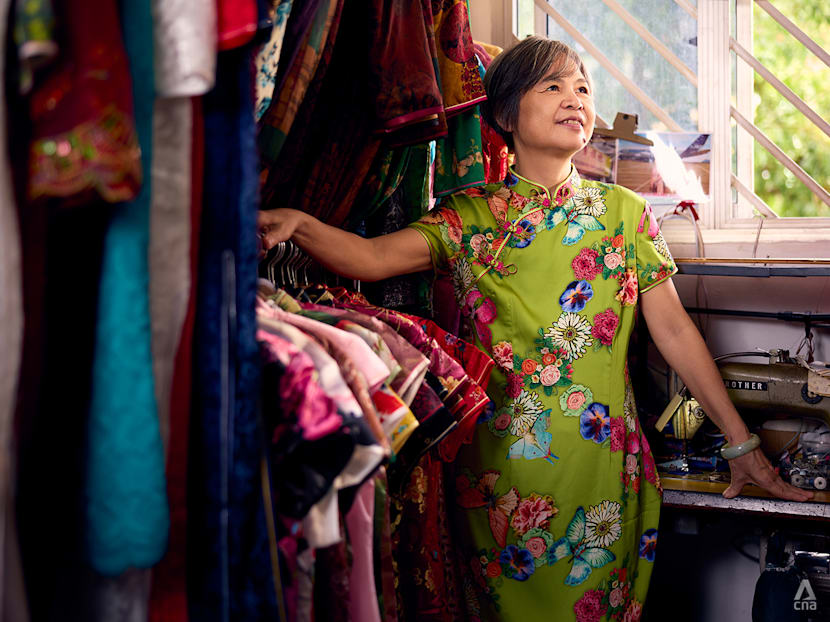
Golden Scissor founder and Cheongsam tailor Li Qiying. (Photo: CNA/Dillon Tan; art: CNA/Chern Ling)

This audio is generated by an AI tool.
For someone who plans to retire by next year, Golden Scissor Cheongsam tailor Li Qiying, who is in her 60s, doesn’t seem to be slowing down her pace at work anytime soon. Business is brisk in her Telok Blangah home (which currently doubles as a showroom for her creations), where a steady flow of customers is coming in to browse her cheongsams that fill racks extending from wall to wall in her living room.
Her mobile phones – she has two for business use – rang non-stop while we spoke to her during the interview. “It’s tiring,” she said with a sigh and smile, as she paused intermittently throughout our chat to answer queries from the customers in her home and on the phone, while scribbling down appointment details on a traditional Chinese wall calendar.
It’s a scene that showcased her multitasking abilities, and also aptly reflected how her business is a unique confluence of the old and new, past and present. Her cheongsams are noticeably a blend of traditional and modern design elements, while her business, interestingly, has quite a comprehensive social media presence – not something one would expect of a small traditional business, and someone from a generation that’s considered less tech-savvy.
The cheongsam is in Li’s destiny. Not only has it been her work for over 50 years, it also has been a part of her life since childhood – a channel through which she finds purpose and has made meaningful connections with people who share her appreciation for the traditional Chinese garment.
A PASSION THAT TOOK TIME TO DEVELOP
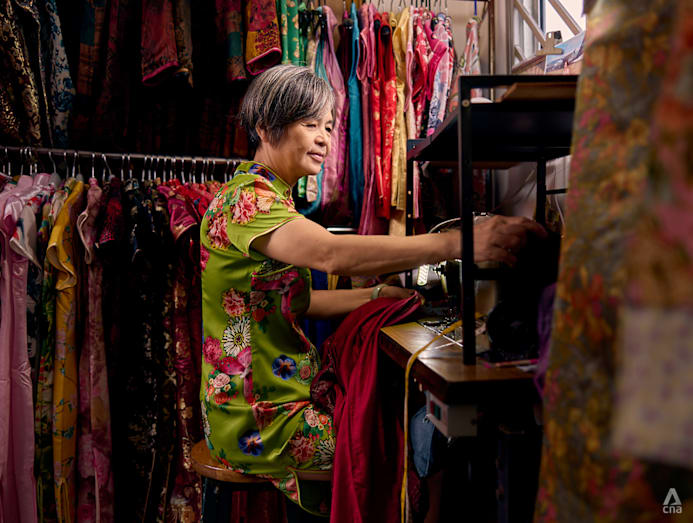
“I didn’t pick up cheongsam-making out of interest,” Li told CNA Lifestyle, speaking in Mandarin. Li was born in Guangxi, China, and was taught the craft by her mother.
“It was simply something I was pushed to learn – being perhaps the best available way to make a living. We didn’t have many choices in those times. My siblings were also taught dressmaking, but I was the only one who ended up making an occupation out of it,” she explained, matter-of-factly.
Despite not having an inclination towards dressmaking in those early years, she was quite talented at it – at nine, she was already making cheongsam knot buttons, and by 13, she could produce a simple version of the traditional garment by herself.
I didn’t pick up cheongsam-making out of interest.
There was a point in her early adulthood where she seriously thought about changing tack and becoming a hairdresser. It didn’t last long, however – she took lessons but gave up after a month.
“I didn’t like it. If anything, taking the lessons directed me back towards my original path,” Li said. She then headed to Beijing to study fashion design and then made a living teaching dressmaking classes back in her hometown for a period of time.
Life took her to several places – Shenzhen, Zhuhai, Hong Kong and then, Singapore in 2003, where she stayed and acquired permanent resident status. She decided to start a cheongsam-making business in 2007 here, and opened her store, Golden Scissor Cheongsam, at People’s Park in Chinatown, where it remained for a good 18 years.
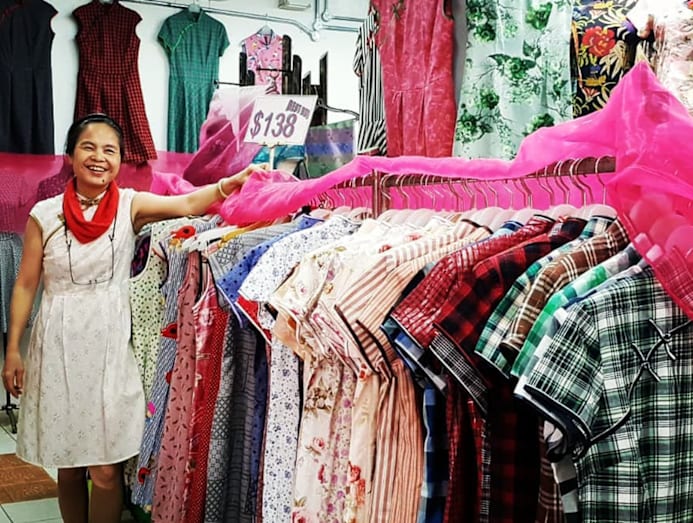
She focused on custom tailored cheongsams back in those days, handling every dressmaking step by hand. It took a short while for business to build up, but soon, she found herself with more customers than she could manage. Cheongsam-making is time-consuming work – it can take her from a day up to a week to complete a piece, depending on its style and how elaborate the design is.
“Like any craft, it is a meticulous process. Every step has to be done by hand and you cannot afford to be careless with any aspect of it – I sometimes spend hours just to get a curvature or the fit right for the customer,” she added.
MODERNISING THE CHEONGSAM AND HER BUSINESS
Over the years, Li has seen her clientele grow, as the business eventually built a presence on social media platforms such as Facebook, Instagram and TikTok, with help from her goddaughter.
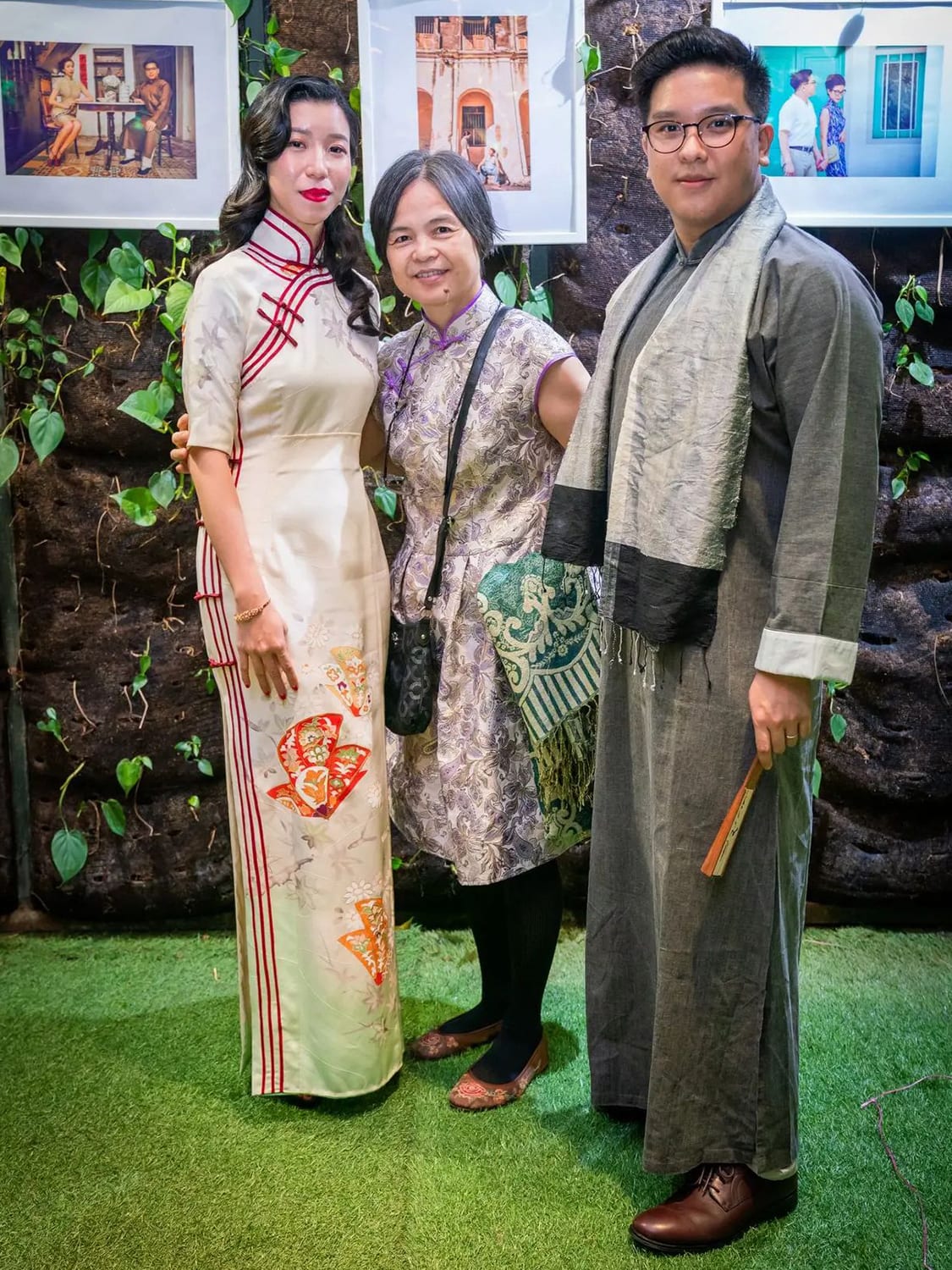
The two had met and gotten close over their passion for cheongsams – the latter was, in fact, Li’s customer. Knowing that there was a demand for the traditional garment that Li had not yet been able to tap back then, she offered to help put Golden Scissor Cheongsam online.
But while going online had boosted slaes and brought her more young customers, Li also pointed out she's always had an all-ages clientele, from children and teenagers to ladies in their 20s to in their middle age, all the way to the elderly in their 70s to 90s. While the majority of them are Chinese, she has also had clients of other ethnicities and nationalities, a sign of how the allure of the traditional garment can transcend age and cultures.
I sometimes spend hours just to get a curvature or the fit right for the customer.
“The cheongsam is truly a versatile garment – everyone can look good in one, provided it’s in the right fit, colour and cut. It’s not true that you have to be slim and tall to carry off the cheongsam – it can be made to flatter women of all figures and sizes,” said Li.
While the traditional version of the cheongsam remains popular, Li has also modernised it in a variety of ways to make it even more wearable, whether in terms of style or function.
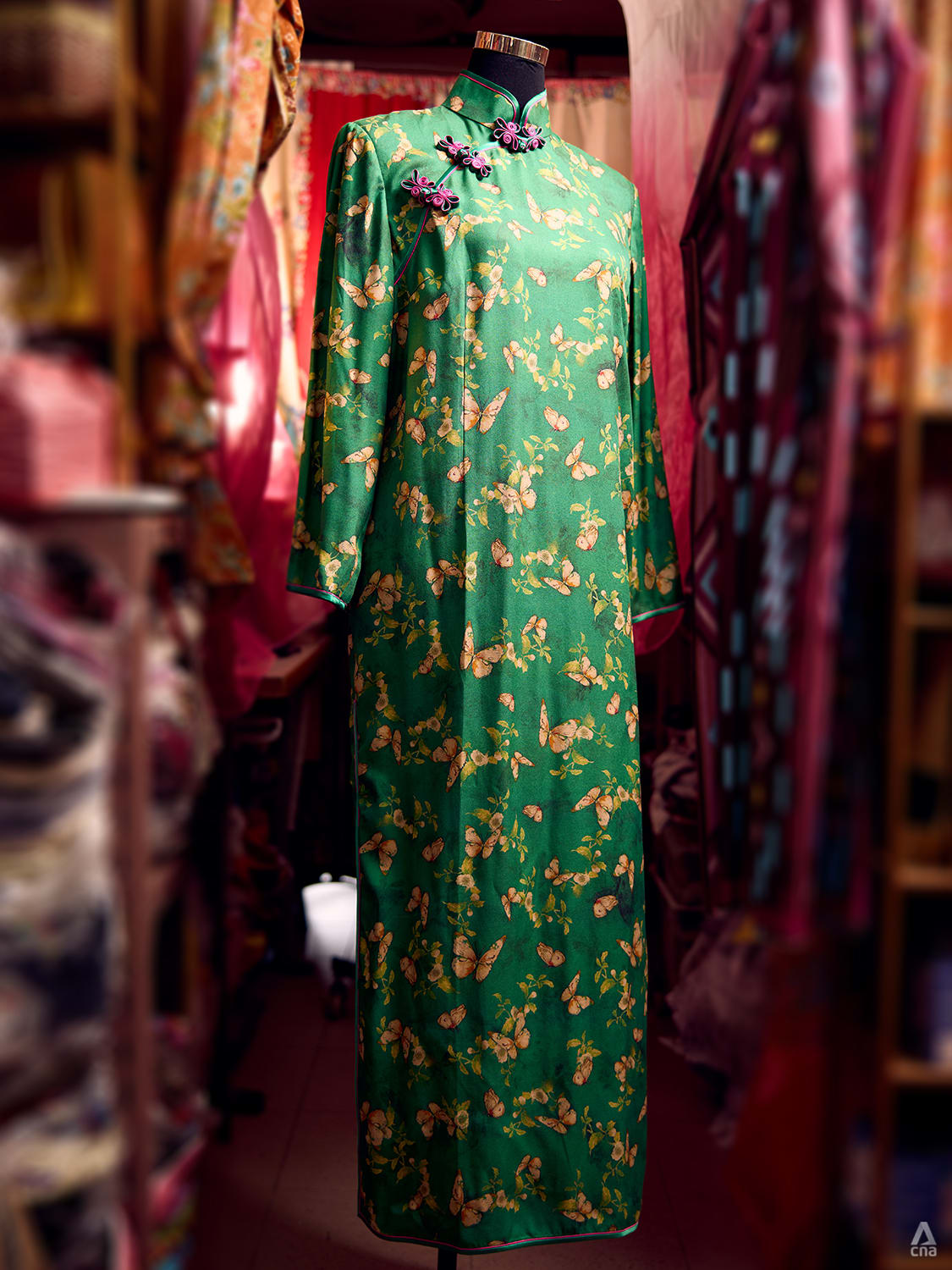
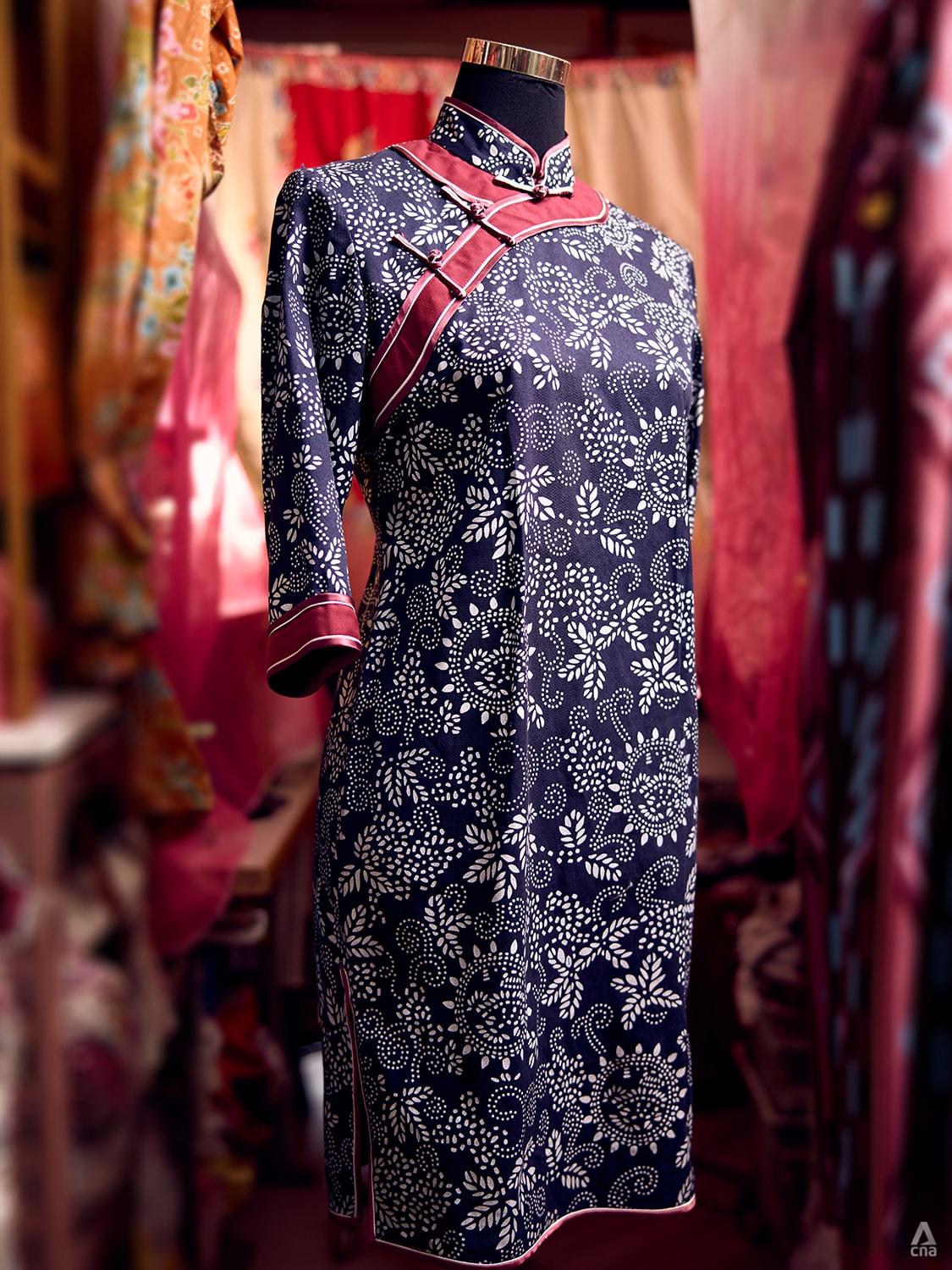
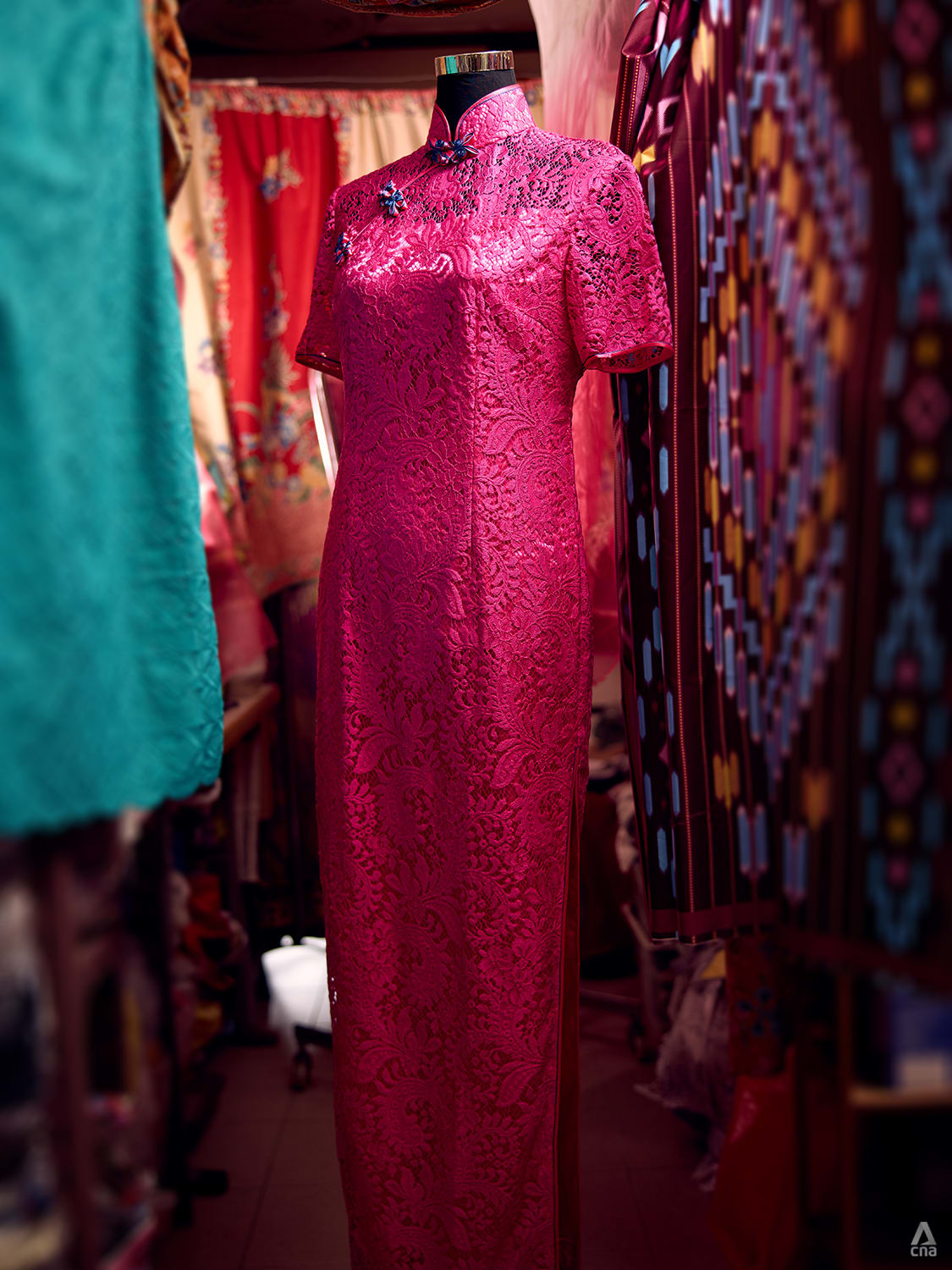
“You’d be surprised at how adaptable the garment is – the results of incorporating unexpected elements can often be interesting. Even though the essential style of the cheongsam doesn’t change, I have experimented with the silhouette, the length of the dress, as well as that of the sleeves, or with fabrics in colours and prints that you wouldn’t typically see on traditional cheongsams,” she elaborated.
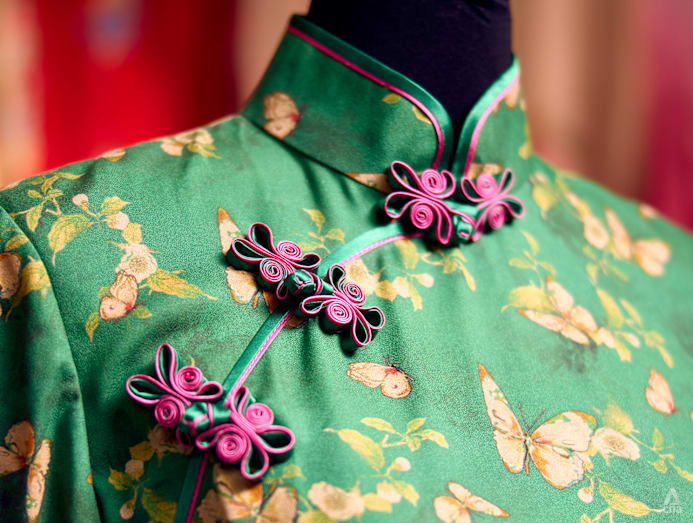
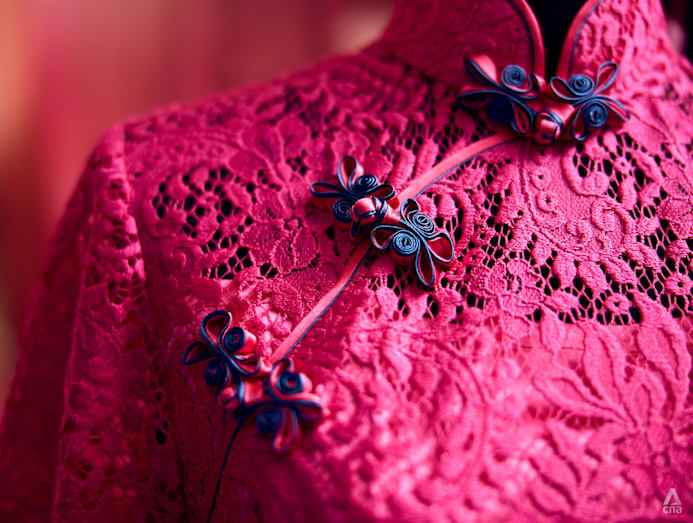
This is why it’s not unusual to find cheongsams in lace, gingham checks, polka-dot or batik prints among her creations, which are contrasted with vibrantly coloured knot buttons and trim. The bottom half of the garment is also a canvas for improvisation – Li has created cheongsams with an A-line, flared or pleated “skirt”, and even turned it into a jumpsuit for a number of customers.
THE END OF AN ERA AND START OF ANOTHER
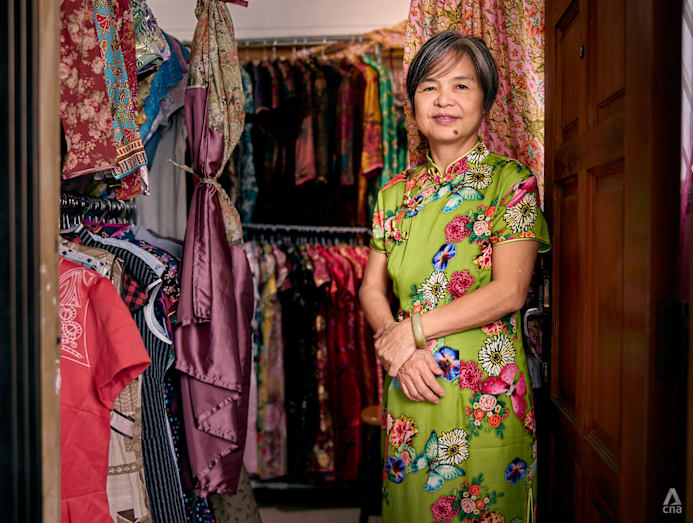
Faced with a rental hike in 2023, Li decided that it was an appropriate point to shut her shop in People’s Park and seriously think about retirement. She had stopped offering bespoke tailoring services by this time, and instead focused on producing ready-to-wear cheongsams for which she provided minor alterations, if required by her customers.
“I was already past the retirement age I had in mind by that time – which is 55 – which is why I ‘moved the business’ to my home, hoping to work part time. I thought it would be more easygoing, but it turned out to be equally exhausting. I think I can only fully rest if I stop working completely,” Li said, as she laughed. She intends to fully retire once she sells all her cheongsams, and is trying to accomplish this by early next year.
I won’t stop sewing entirely, and will continue to do so, but selectively and at my own leisurely pace
She had hoped that her son and daughter-in-law, who are both trained in fashion design, or even her goddaughter, to whom she had also imparted her cheongsam-making skills, would take over and continue her business, but it wasn’t meant to be.
“It’s a demanding job that requires long hours and is physically straining on the eyes and back. You can’t make a lot of money out of it, as compared to some other professions,” she ruminated, explaining how she understands why most young people wouldn’t choose to go into dressmaking professionally, even if they may be interested in it.
While she is looking forward to life after retirement eagerly, there remains a part of her that can’t bear to leave behind her work. “It’s mostly about the customers – I’ll miss the joy I can bring them with my cheongsams. Some of them have grown up or old along with me, and it warms my heart to know that the cheongsams I’ve made have accompanied them on some of the most memorable occasions in life, whether it be their wedding, a celebration or formal function,” said Li.
“I won’t stop sewing entirely, of course, and will continue to do so for myself, family, friends, and perhaps some regular customers of mine – but selectively and at my own leisurely pace. Looking back, it’s astonishing how quickly time has flown by – it seemed like I was busy working all the time. It’s tough work, but I have found meaning and purpose in it. Most of all, I’m glad to have played a part in pushing forward the appreciation of this traditional Chinese garment via my own two hands and my craft,” she said.