Tissot releases a classically styled solar-powered watch with a 14-month battery life
The Tissot PRC 100 is back with a sustainable energy source in a slick urban package. In partnership with Tissot.

The Tissot PRC 100 with solar-powered Lightmaster technology. (Photo: Tissot)

This audio is generated by an AI tool.


In our productivity-obsessed, time-starved era, anything that simplifies life is welcome. In the realm of timekeeping, this can be tricky.
Mechanical watches, while beautiful and steeped in tradition, demand frequent winding, adjustments and maintenance. Quartz models offer precision and years of battery life but eventually require replacements. Smartwatches function more as wearable taskmasters, bombarding users with notifications while rarely impressing with distinctive design.
For a genuine wear-and-forget experience, solar-powered watches emerge as the ideal solution – and Tissot's new PRC 100 Solar delivers this convenience with remarkable style.

The Tissot PRC 100 collection, introduced in the mid-2000s, quickly gained popularity thanks to its distinctive dodecagonal case and construction that embodied its name: Precise, robust and classic. The new PRC 100 Solar maintains this heritage while featuring an updated, streamlined silhouette and introducing the brand's innovative Lightmaster technology.
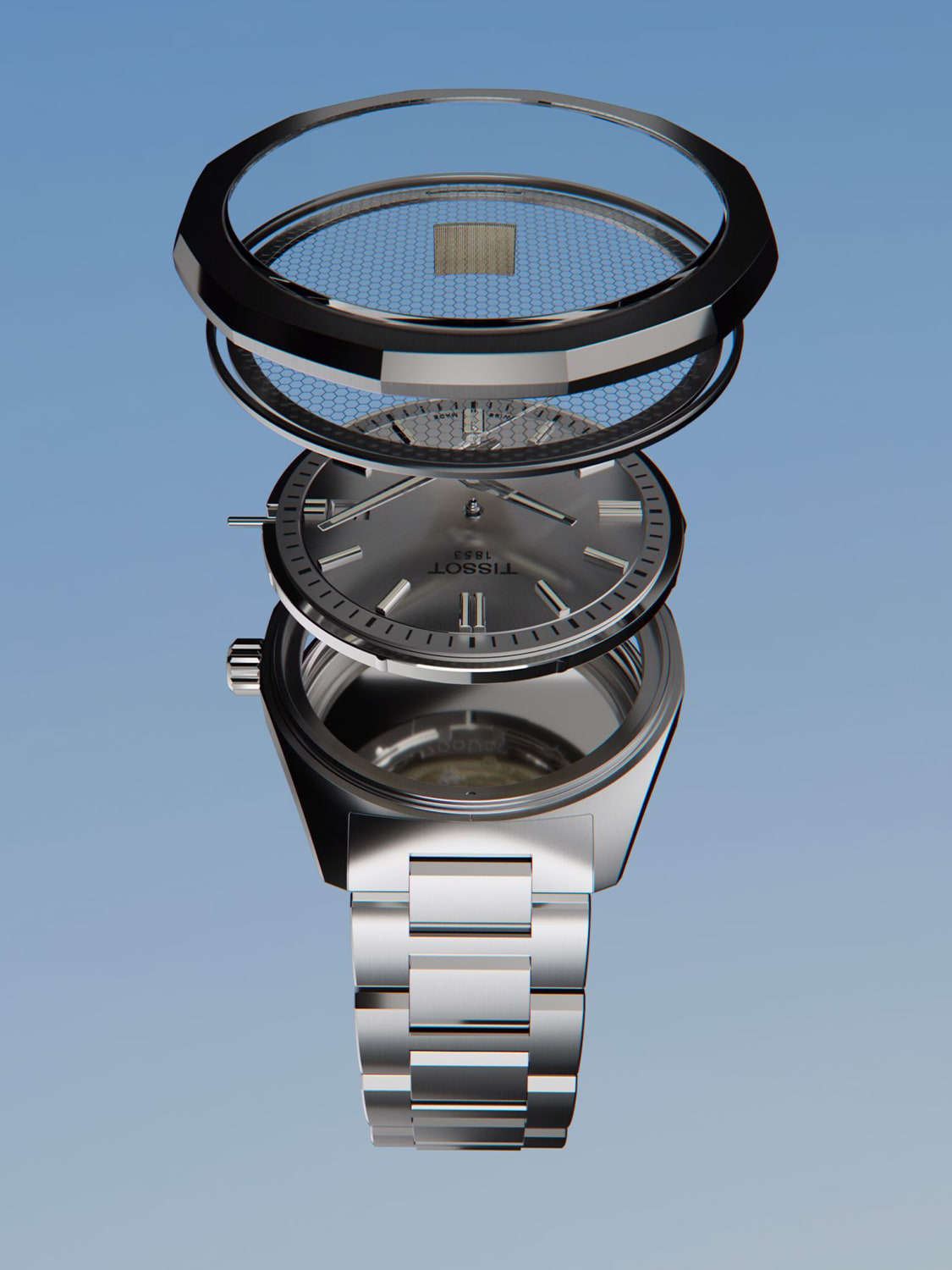
This advancement allows the watch to harness both natural and artificial light, transferring energy through a zebra connector integrated within the case to power the Swiss-made, high-precision F06.615 quartz movement. Surplus energy is stored in a rechargeable accumulator.
What distinguishes Tissot's solar approach is the near-invisibility of its photovoltaic panels – using microscopic honeycomb-structured solar cells beneath the sapphire crystal that absorb light without compromising dial aesthetics. Most conventional solar watches position panels under the dial, necessitating their incorporation into the overall design.

Just 10 minutes of daylight provides 24 hours of power, meaning brief daily wear could theoretically sustain the watch indefinitely. If for some reason you find yourself sequestered in a cave for an inordinately long amount of time, rest assured in the knowledge that the PRC 100 Solar will keep running in the dark for up to 14 months on a full charge.
Should the watch start to run low on energy, the second hand will shift to four-second intervals – a clever way to indicate a low-charge that doesn’t involve cluttering the dial with a traditional power reserve indicator.
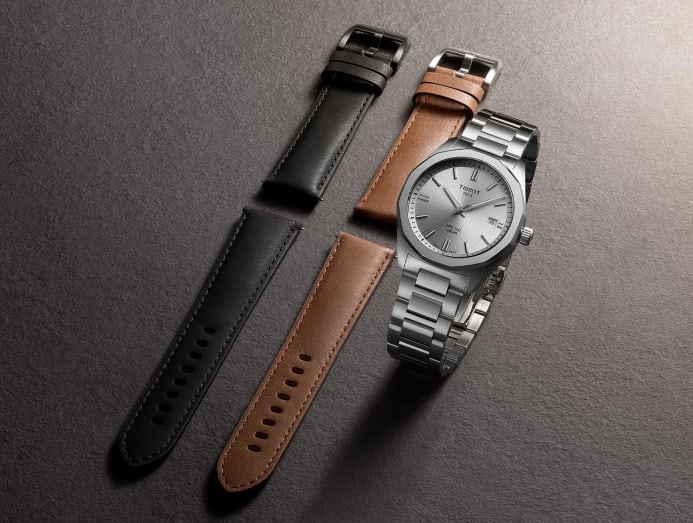
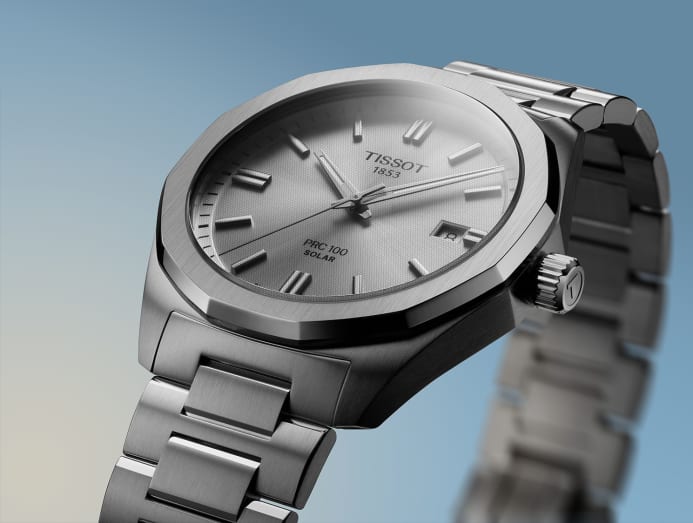
Speaking of dials, the current lineup includes models with sunray silver dials paired with either stainless steel bracelets or leather straps, a dark blue dial version with bracelet, and an all-black variant with matching bracelet or leather strap. All measure 39mm in diameter with stainless steel cases.
Coming later this year are 34mm stainless steel models: Two all-steel versions with silver or light blue sunray dials, one featuring a two-tone PVD rose gold case and bracelet, and one in full yellow gold PVD.
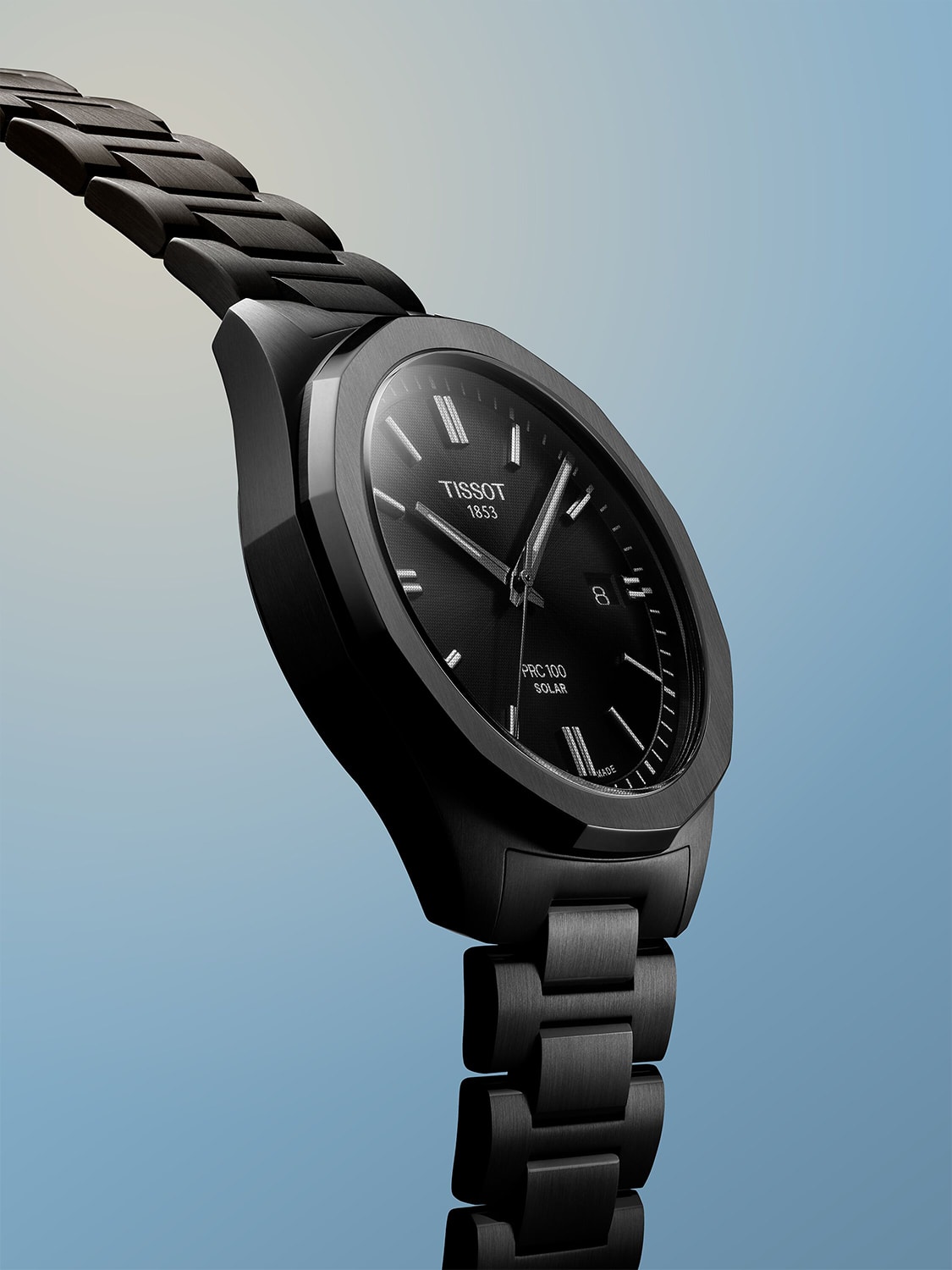
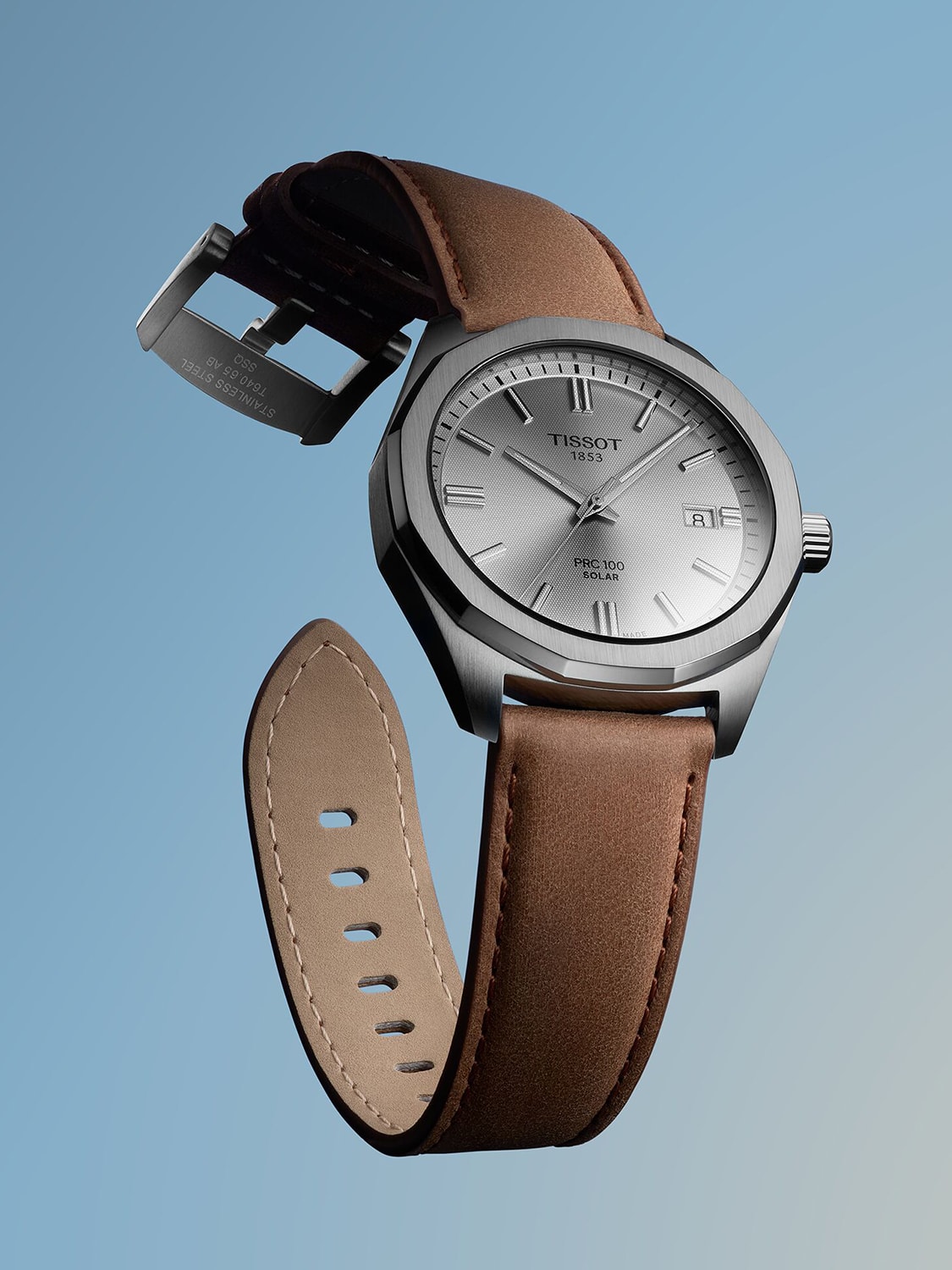
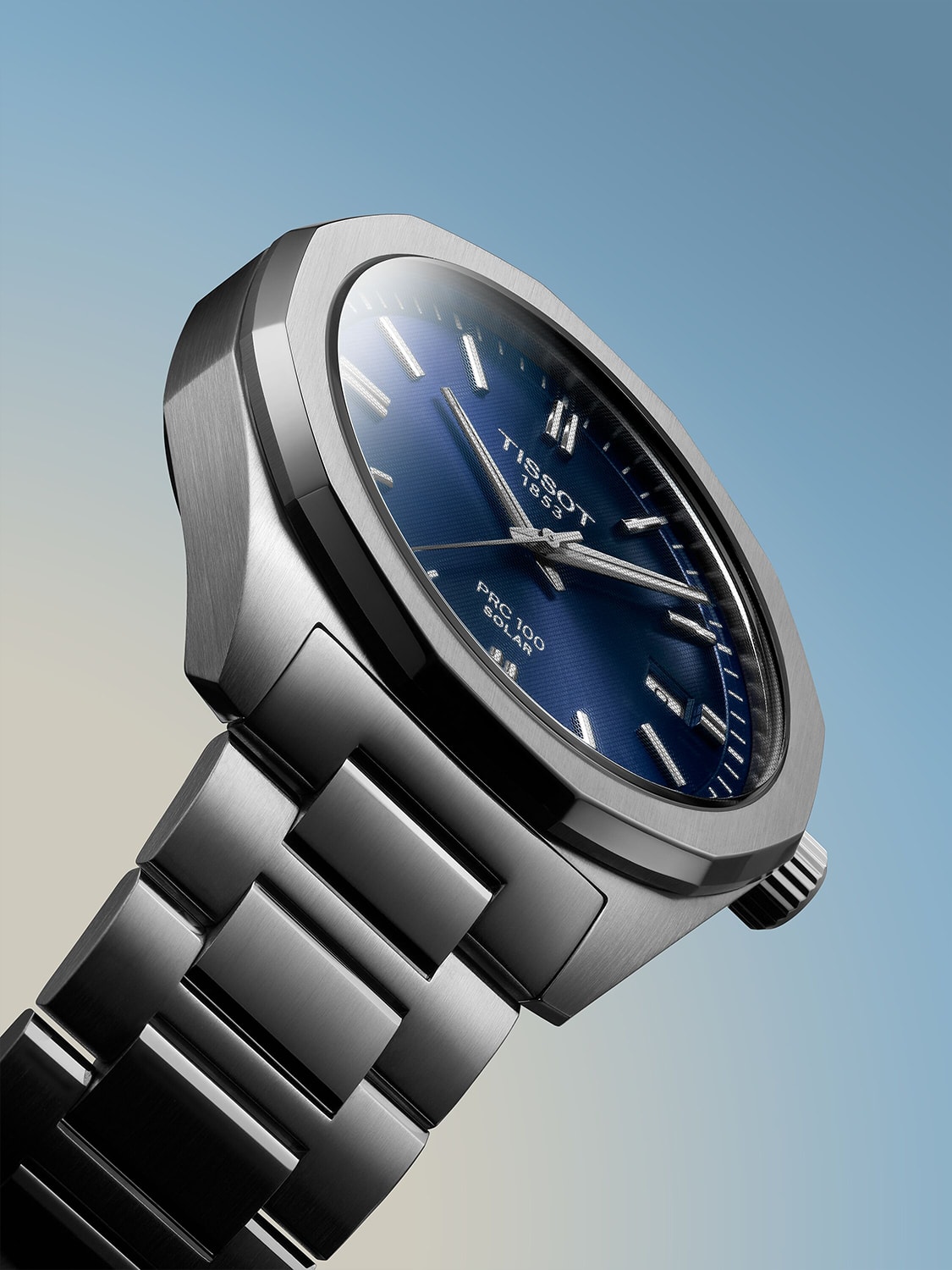
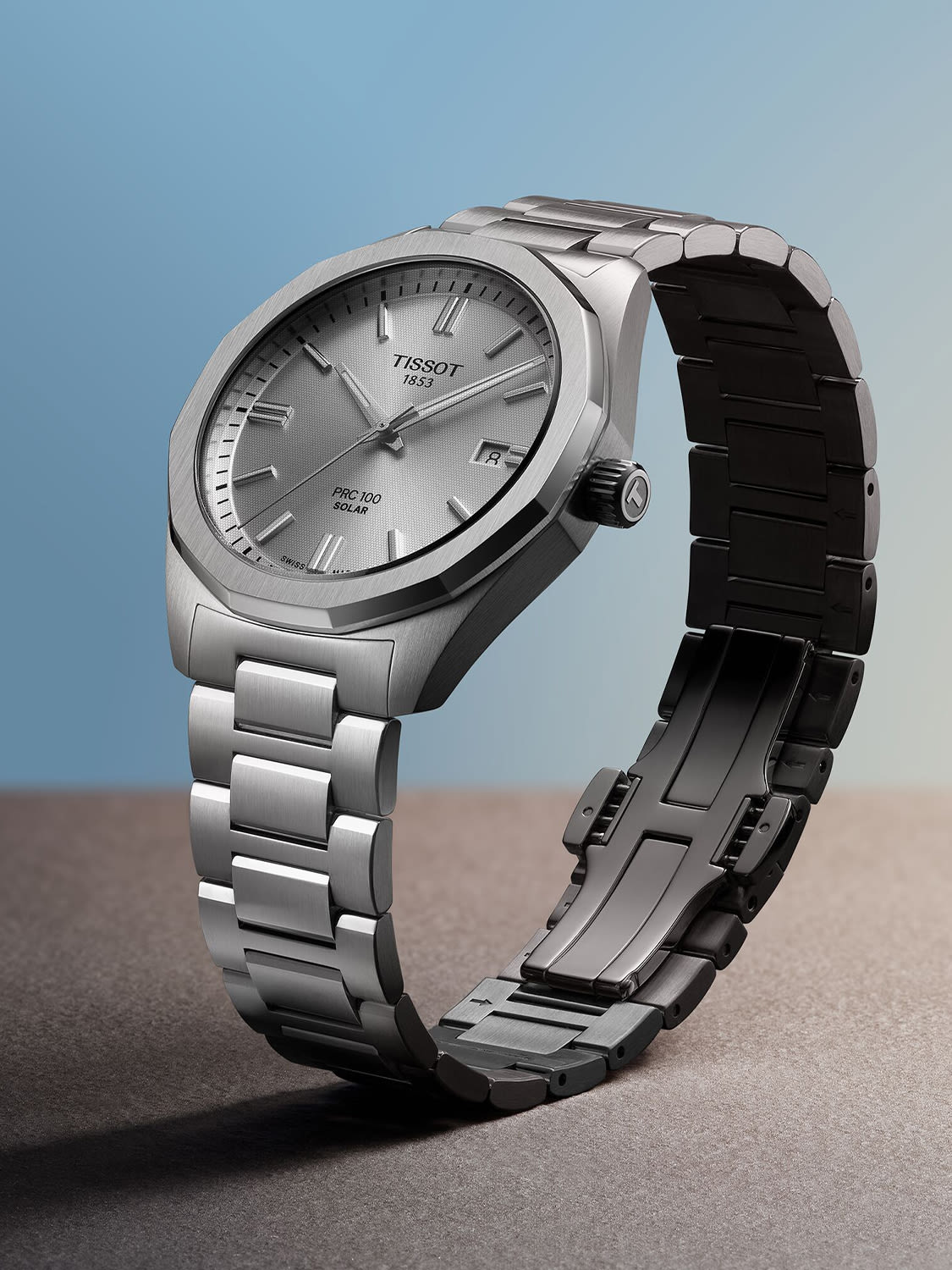
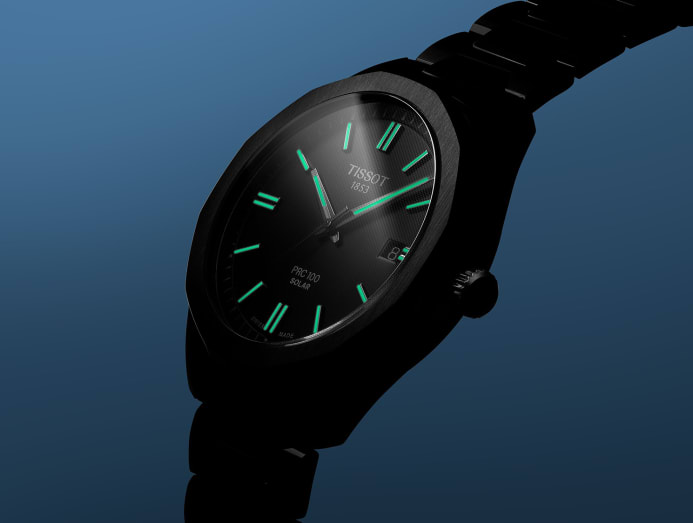
As further testament to their utility, all models feature a date window at 3 o’clock, Super-LumiNova-coated hand and indexes for effortless readability in low-light conditions, a water-resistance of 100m and easily interchangeable straps and bracelets.
The watches require no standard battery replacements, with accumulators expected to last 10 to 15 years depending on usage conditions. Each PRC 100 Solar comes with a three-year warranty – one year longer than standard Tissot timepieces. With a timeless design combined with cutting-edge technology, Tissot proves that sometimes, the best way to keep up with time is to harness its very source.