Vulvar and vaginal cancers in women: Warning signs and why you shouldn’t shy away from regular checkups
Vulvar and vaginal cancers are uncommon but can be deadly when caught late. Here’s what you should know about these gynaecological cancers, and why persistent itching, skin changes or lumps in the genital area should not be ignored.

Vulvar cancer symptoms include prolonged itching, skin changes, lumps or sores, while vaginal cancer often presents with abnormal bleeding – these should be checked out by a doctor. (Photo: iStock/simon2579)

This audio is generated by an AI tool.
At some point in their lives, most women experience itch or skin irritation in their intimate areas, and many may brush it off as something harmless. Maybe it’s a yeast infection, postmenopausal dryness or just sensitivity to new body wash.
But what if that nagging discomfort down there is a warning sign of gynaecological cancer?
That was the case for one woman who had waited too long after experiencing an itchy sore on her vulva. Despite trying steroid cream, her condition did not improve. The woman, in her 80s, was advised to undergo a biopsy but fear of pain kept her from following through.
By the time she returned months later, the lesion had grown. “Biopsy showed vulvar cancer,” recalled Dr Lee Wai Yen, a consultant in obstetrics and gynaecology at Foundation Women’s Centre (Katong).
Embarrassment or simply not knowing which symptoms to take seriously can cause delays in seeking help.
“Maybe it’s our conservative society. There’s a taboo or stigma when discussing these genitalia issues,” said Dr Kevin Tay, senior medical oncologist at OncoCare Cancer Centre. “Sometimes, it can take a while – even up to a year – before women bring up (their concerns) with their doctor.”
But waiting too long can come at a cost. Dr Joshua Tan, a medical oncologist at the Division of Medical Oncology at National Cancer Centre Singapore (NCCS), explained that the stage at which the cancer is diagnosed is the most important factor in affecting survival rates.

For instance, the five-year survival rate for Stage 4 vulvar and vaginal cancer is only around 10 to 20 per cent, compared with 70 to 80 per cent if caught early, at Stage 1. “Early detection and treatment are key to maximising survival rates,” Dr Tan said.
Vulvar and vaginal cancers are distinct diseases but are often discussed together due to their anatomical location and some overlapping risk factors.
Here’s what every woman should know about these often overlooked gynaecological cancers, and when to pay attention to intimate health.
CANCER CAN DEVELOP ON THE VULVA AND IN THE VAGINA
Cancer begins when normal cells mutate and grow uncontrollably. Vulvar and vaginal cancers are those that arise from specific parts of the female genitalia, and account for around 5 to 6 per cent of all gynaecological cancers, said Dr Tay.
Vulvar cancer starts in the external part of the female genitals, which includes the labia, clitoris, the skin and glands surrounding the opening of the vagina. Vaginal cancer develops from mutated cells within the vaginal canal, which connects the outer genitals to the cervix and uterus.

Of the two, vulvar cancer is more commonly diagnosed, said Dr Tan from the NCCS. The Centre saw 49 cases of vulvar and vaginal cancer from 2022 to 2024. While these cancers typically affect older women, with most cases occurring in those in their 60s, they can also affect those in the younger age groups.
“Younger women can still be affected. They should not ignore abnormal signs that could be early signs of these cancers,” Dr Tan cautioned.
AN ITCH DOWN-THERE, SMALL LUMPS OR SKIN CHANGES
One of the common signs of vulvar cancer is a small growth or lump, “like a skin tag”, said Dr Tay. Sometimes, the lesion may ulcerate and bleed. Some women may experience itching that does not go away.
Other skin changes could also occur. For example, skin on the vulva may become thickened or appear different from the surrounding skin. It could be lighter or darker than the normal skin around it, or look red or pink, according to the American Cancer Society.
Dr Lee added that non-specific symptoms of vulvar cancer may be mistaken for an infection, dryness or inflammation. For many patients, this may mean going through lengthy periods of medical treatment with creams before a proper diagnosis is made.

“Vulvar cancer can mimic benign conditions, such as warts, vulva candida (yeast infection), contact dermatitis, lichen sclerosus or other inflammatory conditions,” said Dr Lee from Foundation Women’s Centre (Katong).
“If symptoms don’t improve after anti-fungal cream, hormone cream or steroid cream, consult a gynaecologist. If any suspicious lesion is detected during a gynaecology examination, a biopsy will be recommended,” Dr Lee added.
Vaginal cancer can be trickier to spot, since it occurs within the vaginal canal and isn’t easily seen or felt without a pelvic examination, said Dr Tay. Watch for signs of abnormal vaginal bleeding, especially after menopause, between periods or after intercourse.
According to the American Cancer Society, pain during sex or a lump in the vagina may also signal vaginal cancer. In some advanced cancers, women may experience constipation or pain when passing urine.
HPV THAT CAUSES CERVICAL CANCER CAN AFFECT THE VULVA AND VAGINA
According to Dr Lee, about seven in 10 vaginal and vulvar cancers are linked to high-risk strains of the human papillomavirus (HPV), the same virus responsible for more than 90 per cent of cervical cancers.
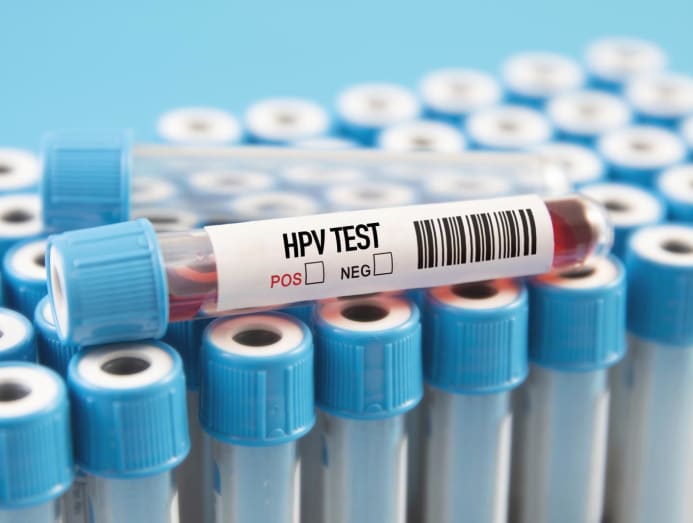
This is because the virus can be present not only in the cervix but also in the vagina and vulva, and can cause pre-cancerous changes.
“Majority of vaginal cancer cases arise from HPV that initially infected the cervix. And as many as 30 per cent of women with vaginal cancer have a history of cervical cancer treated in the previous five years,” she said.
Women with previous pre-cancer of the cervix (known as cervix intraepithelial neoplasia, or CIN) or cervical cancer also have an increased risk of HPV-associated vulvar cancer, Dr Lee added.
An estimated 80 per cent of sexually active individuals will be exposed to HPV at some point, said Dr Lee. While most infections resolve without treatment, a persistent infection can lead to pre-cancer when not cleared by the immune system.
People with multiple sexual partners or a weakened immune system are at a higher risk of persistent HPV infections, said Dr Lee. Smoking is another risk factor for many cancers, including vulvar and vaginal cancers, added Dr Tan.
THE ROLE OF THE HPV VACCINE
HPV vaccination, which is recommended for women aged nine to 45 years, can help reduce the risk of developing HPV-related cancer, including cervical, vulvar and vaginal cancers, doctors said.
Don’t assume that it’s too late to get the HPV vaccine if you’re already in your 30s or 40s, or are sexually active. “Many women who are already sexually active are still HPV-negative,” said Dr Lee from Foundation Women’s Centre (Katong).
Even those tested HPV-positive will still benefit from HPV vaccination. Speak to your gynaecologist on whether it is suitable for you, Dr Lee said.
Two types of HPV vaccination: The bivalent HPV vaccine (under the brand Cervarix) given under the secondary school programme covers two strains of HPV – types 16 and 18, which account for 70 per cent of cervical cancers. It is Medisave-claimable for women between 18 and 26 years.
There is also a nonavalent HPV vaccine (under the brand Gardasil 9), which targets nine strains of HPV – 6, 11, 16, 18, 31, 33, 45, 52, and 58. This covers about 90 per cent of cancer-causing HPV types. This is currently not Medisave-claimable and is self-funded, said Dr Lee.
Do you need both types of HPV vaccine?: There is no recommendation for those who have completed the bivalent HPV vaccine to take the nonavalent vaccine, said Dr Lee. If cost is not an issue, and you wish to have additional cover, you can choose to do so. “Available data shows no serious safety concerns,” she added.
HPV screening is still crucial: Even after vaccination, regular HPV screening is still important as no vaccination available now prevents all HPV, said Dr Lee.
CHRONIC SKIN INFLAMMATION AROUND THE GENITALS MAY INCREASE VULVAR CANCER RISK
Poorly-controlled, long-term severe inflammation due to chronic skin conditions affecting the vulva may damage the vulvar tissue over time, said Dr Tay.
These include having lichen sclerosus and lichen planus, said Dr Lee. The former causes itchy white patches, usually around the genital area. According to the American Cancer Society, about 4 per cent of women who have it go on to develop vulvar cancer.
Lichen planus causes small, discoloured rash on the skin of the arms, legs, scalp, nails, genitals and inside of the mouth.

If you have a long-standing skin condition affecting your vulva, it’s important to have regular check-ups and follow-ups. The key idea, said Dr Tay, is to reduce and calm any ongoing skin inflammation.
“We want to reduce the skin inflammation so that it doesn’t persist… and therefore the risk of cell mutation lessens over time, which lowers the chance of those cells turning cancerous,” he explained.
DON’T SHY AWAY FROM REGULAR GYNAECOLOGICAL CHECKUPS
In addition to getting HPV vaccination, Dr Lee advises women to see their gynaecologist for regular cervical screening or if they have any unusual symptoms.
“Just like cervix pre-cancer, vagina pre-cancer or HPV infection do not show any symptoms. The only way to detect early is to have regular cervical screening according to the national guidelines,” she explained.
In Singapore, a Pap smear is recommended once every three years for women aged 25 to 29, and a HPV test every five years for those aged 30 to 69.
According to the American Cancer Society, the vulva is also typically examined at the same time a woman has a pelvic examination, and regular gynaecologic checkups may help detect any pre-cancerous vulvar conditions.
CNA Women is a section on CNA Lifestyle that seeks to inform, empower and inspire the modern woman. If you have women-related news, issues and ideas to share with us, email CNAWomen [at] mediacorp.com.sg.