Why do many of us dislike eating fruits and vegetables? (Sorry, those cucumber slices don't really count)
The strands of spinach floating in your mee hoon kueh soup, the cucumber slices in rojak and the beansprouts in pad thai are not enough to meet the amount of vegetables you should be eating daily.
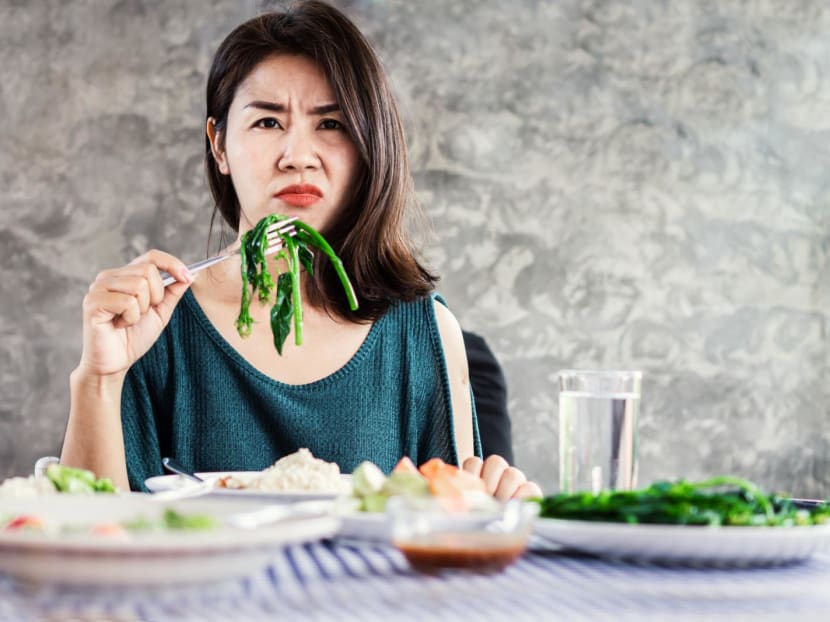
You're not alone if you don't like to eat fruits and/or vegetables. (Photo: iStock)

This audio is generated by an AI tool.


If there is one unifying reason that will galvanise a lot of us Singaporeans, inciting many to jab forks in the air in defiance, it is a collective dislike for vegetables. Despite the childhood briberies, admonitions (“eat your carrot!”) and Mum chasing us with a bowl of rice in one hand and cane in the other, we have grown up to absolutely not want to eat our greens. (You can stop reading here if you are vegetarian, vegan or just about to chime in with “but I love vegetables”.)
We know it is important to include vegetables – and fruits – in our diet and not just because the Health Promotion Board (HPB) says so. Take spinach, for example. The leafy vegetable is a powerhouse of calcium and bone-building Vitamin K – and an alternative for those who can only eye a cheese board sadly.
Broccoli, another common “enemy” on the dining table, is a source of Vitamin C as well as chemicals called indoles and isothiocyanates that may inhibit the development of cancer in the bladder, breasts, liver and stomach.
We could go on and even bring in the evolutionary perspective that human teeth and digestive system aren’t designed for just eating meat as well as the environmental responsibility that we have as stewards of our future.
One thing remains: We aren’t eating enough fruits and vegetables – and it might be we don’t know better. Take this local 2018 study on 385 respondents, for example. It showed that about 21 per cent had no idea that they were supposed to eat two servings of vegetables daily; almost 30 per cent didn’t know they had to do the same with fruits every day. Only 1.04 servings of fruits and 1.78 servings of vegetables were eaten daily on average.

Fast-forward to today and we’re still not eating enough greens. “It is estimated that about 50 per cent to 75 per cent of patients seen for weight issues (such as obesity) and chronic disease management (including hypertension, high cholesterol, diabetes and gout) do not usually meet the recommended fruit and vegetable intakes per day,” said Diane Seto, a senior dietitian with Mount Elizabeth Hospital.
Jaclyn Reutens, a sports and clinical dietitian with Aptima Nutrition & Sports Consultants, also notes a lack of interest in fruits and vegetables in her clients. “I would say 80 per cent do not even meet half the requirements. Half of them have not eaten even a serving of fruit for weeks.”
WHY DO WE DISLIKE OUR GREENS SO MUCH?
The same 2018 survey found that the common reasons for not eating our caixin is simple: We just don’t like the taste of fruits and vegetables. “Some people just dislike the taste of fruits and/or vegetables,” said Reutens. “They did not cultivate the habit and taste preference for them when they were younger.”
Seto agreed: “Singaporeans generally don’t like to eat vegetables, and have a preference for strong and tasty flavours (such as sweet, salty and deep-fried foods). This may explain the recent national population health survey results, which showed that Singaporeans are consuming too much sodium”.

As for the lack of fruit eating, it could be there isn’t a habit of eating them at home, said Reutens. After all, not every Asian family has a fruit-cutting parent who insists on feeding the family freshly sliced, post-dinner apples. Add to that the lack of stomach space after a heavy meal and finding it a chore to cut up a honeydew melon after dinner, said Reutens, and many people would rather watch TV than eat fruit.
There’s also the eating-out norm in Singapore that’s sabotaging our efforts to consume more fruits and vegetables, said Seto. “The typical hawker food is sorely lacking in vegetables. Healthier options that do contain vegetables such as salads and grain bowls may be more expensive and may often not be a sustainable choice if a person eats out often.”
Take a plate of stir-fried kailan, for instance, said Reutens. “It is common to see S$4 for a plate of chicken rice and S$3 for a plate of kailan in oyster sauce. Or at a zi char restaurant, where the meat dishes cost S$12 each and the vegetable dish can be S$11. Such prices can put customers off, who would rather spend that amount on another protein dish.”
WHAT CONSTITUTES ONE SERVING OF FRUIT OR VEGETABLE?
When it comes to nutrition, Singaporeans are rather clueless, according to the latest 2022 national health surveys. “Many are not even aware of the recommended amounts of fruits and vegetables to consume daily,” said Diane Seto, a senior dietitian with Mount Elizabeth Hospital. “There is also often a poor understanding of what foods make up the ‘fruit and vegetables’ food groups as well as the amount that constitutes one serving.”
For the record, here’s what a serving of fruits and vegetables look like, according to Healthhub. Note: Root vegetables such as potatoes and corn do not count towards the two servings of fruits and two servings of vegetables we need per day as they are starchy and are more like rice or bread.
- Cooked leafy vegetables such as stir-fried kang kong: A quarter of a 25cm plate or three-quarters of a mug.
- Raw leafy veggies such as salad greens: One 150g bag.
- Raw non-leafy greens such as broccoli and cucumber: Three-quarters of a mug.
- Whole fruits such as apple, banana, orange or pear: One whole fruit
- Watermelon, pineapple, papaya and honeydew melon: One wedge
- Grapes, longans, rambutans, strawberries or cherries: 10
WHY YOUR EFFORTS TO EAT FRUITS AND VEGETABLES DON’T COUNT
But you don’t pick out the beansprouts in your ramen. You even eat the onion that comes with your satay, and you quite enjoy the cucumber drenched in red sauce with your mee goreng. You also make it a point to drink a cup of fruit juice every day. Aren’t those enough? Here’s the lowdown from the dietitians:
Garnish: Let's not kid ourselves. That topping of spring onion or limp pieces of cabbage in the soup do not qualify even as half a serving of vegetables, said Reutens. “Two servings of vegetables are about 200g in total. The amount of vegetables as garnishing is less than 10g, therefore it’s negligible.”
Take a tablespoon-full of chopped spring onion, for instance, said Reutens. It provides only 1.1mg of Vitamin C when an adult’s recommended dietary allowance is 85mg to 105mg. That same handful of garnish hardly makes a dent in terms of satisfying your iron needs – 0.09mg against your daily target of 8mg to 18mg.
Salads: You may feel virtuous for eating a salad for lunch but that green bowl you had isn’t necessarily a good move. “A salad that has too much of one food group to the exclusion of others will not be balanced,” said Seto, and can cause your diet to be lacking in many nutrients in the long run.
For example, a bowl consisting of just leafy greens but no protein or whole grains, or just fruits, is a recipe for nutrition disaster.
“Even if a meal is healthy, if the portion is too large, it will also not be appropriate as it may provide too many calories,” said Seto. “Consuming large portions of even healthy foods can still result in weight gain. That’s why it’s important to choose not just the right type, but also the right or appropriate portions of food.”
Your best bet is to follow Health Promotion Board’s My Healthy Plate, said Seto, which details the adequate portions of vegetables, fruit, lean protein and whole grains as well as the moderate use of oils.
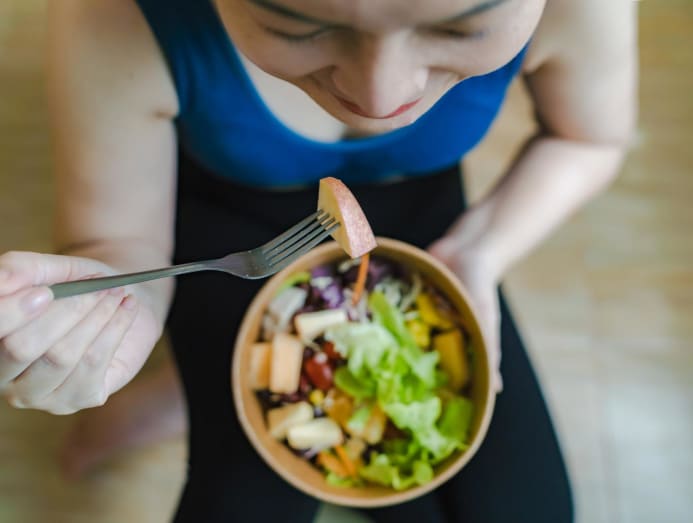
Fruit and vegetable juices: “The best way to yield the benefits of fruits and vegetables is to consume the flesh and its edible fibrous parts,” said Reutens. Furthermore, some nutrients in particular, such as lycopene in tomatoes and carotene in carrots, are better absorbed by your body after cooking, she said.
As for cold-pressed fruit and vegetable juices, which are purportedly better at retaining their nutrients, all they do is justify the higher price for the marketing hype. “Unfortunately, the proposed claims for the higher vitamin, mineral and antioxidant content in cold-pressed juice is not supported by evidence,” said Seto, who cited this study.
Cold-pressed juices don’t even contain more fibre than regular juices – as long as the pulp and skin are removed during the juicing process, said Seto. “Cold-pressed juice or regular juice will not help meet our fibre intake if we rely solely on juices.” What these juices do have more of is sugar. For example, one 250ml cup of fruit juice may contain the same amount of sugar as two to three whole fruits, said Seto, which is double or triple the amount of sugar you need.
But if you have one of those fancy juicers that let you retain the amount of pulp you want, then juice on as your beverage would contain more fibre.
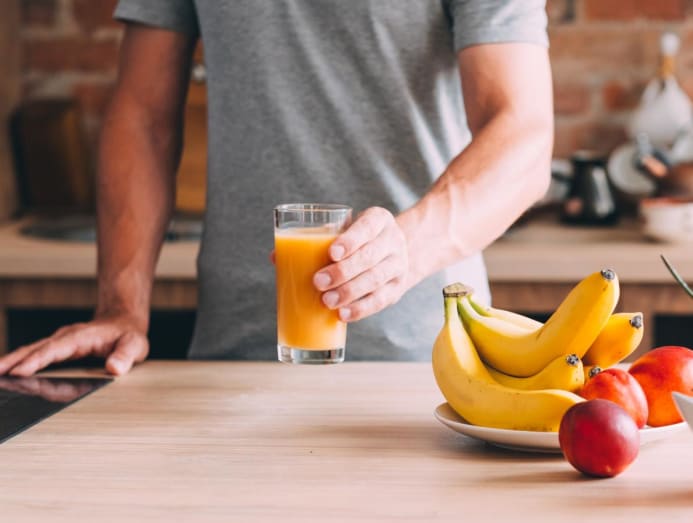
Vegetable-infused food: Although some phytochemicals that are heat-stable would still be present, the amount of vegetables found in foods such as pumpkin pasta, spinach ramen or beetroot ban mian may not be enough to meet your nutritional needs, said Reutens.
“As the name suggests, the vegetables are infused into these products. They are not eaten whole and the amount of fibre and nutrients retained after the infusion process would be very low. In fact, if you read the ingredient label, the vegetable is not the first ingredient," said Reutens.
Vegetable powders: These dietary supplements made by dehydrating vegetables and grinding them into powder rank even lower on the nutrition hierarchy. “The Vitamin C would be lost along with other water-soluble nutrients. Powders can never replace whole natural vegetables," said Reutens, even though fibre and other additives are sometimes added.
“As a precaution, vegetable powders are concentrated sources of Vitamin K that can interfere with some blood-thinning medications," she said. "Do check with your doctor before using them.”
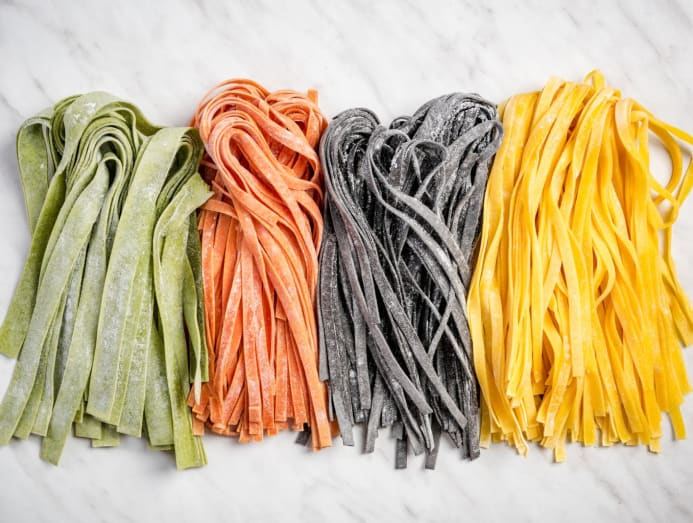
Supplements: Do you even need the vitamin supplement in the first place, asked Seto. Unless your doctor advises you to supplement because of certain deficiencies or increased risk of deficiency, chances are, you don’t need the boost, she said.
“Even if supplements are taken, they should never replace a healthy diet because the right foods in the right proportions provide the necessary vitamins and minerals we need,” said Seto. “Moreover, with supplement intake, there is always the risk that we over-consume any one nutrient due to high dosages in single-nutrient supplements.”
If you do benefit from vitamin and mineral supplements, check that you’re getting what you need and not fillers. These are usually labelled as magnesium stearate, soy lecithin, cellulose, gelatin, starch, stearic acid, silicon dioxide, titanium dioxide and sorbitol.
HOW TO UP YOUR FRUIT AND VEGETABLE INTAKE
When eating out: Choose stalls and eateries that let you customise your dish, so you can choose what and how much food goes onto your plate. For example, at the economy rice or yong tau foo stall, reduce your carb portion and choose more vegetables and a lean protein.
Ordering online: Use the filter on the app that lets you select healthier options that have more vegetables.
For each meal: Include at least two types of vegetables. You could opt for stir-fried cauliflower, broccoli or snap peas rather than just bok choy. You could also choose protein dishes with vegetables such as stir-fried broccoli with lean chicken, or stir-fried kailan with firm tofu. If you don’t like vegetables, start with a smaller portion of vegetables that you are willing to eat and branch out from there.
Leave fruits in the office: Get a bag or apples and pears and leave them in your office, so you’ll end your lunch with fruit.
Snack on fruits: Replace an unhealthy snack such as ice cream with a small apple.
Use fruit as sweetener: Add blueberries to oats and low-fat milk or yoghurt.
“To be fair, fillers are necessary for the supplement to maintain its form. As a guide, go for products with a shorter ingredient list,” said Reutens. Also, look for certifications such as COA (Certificate of Analysis), ConsumerLab, Banned Substances Control Group (BSCG) and Underwriters Laboratories (UL) that are more commonly known, she said.
And don’t be swayed by the price tag. “A more expensive supplement does not mean that it is better because the price of a supplement is affected by many factors, such as branding and marketing,” said Seto.
Still in two minds about supplements? Reutens suggested rationalising it this way: "There are many uncertainties when trying to find a good and reputable supplement. It is much easier and more affordable to buy whole fruits and vegetables locally. A bag of five apples cost about S$3 and a 200g bunch of leafy vegetables under S$2. Choose wisely".